Moscow’s Retaliation: Deutsche Welle Activities Banned in Russia
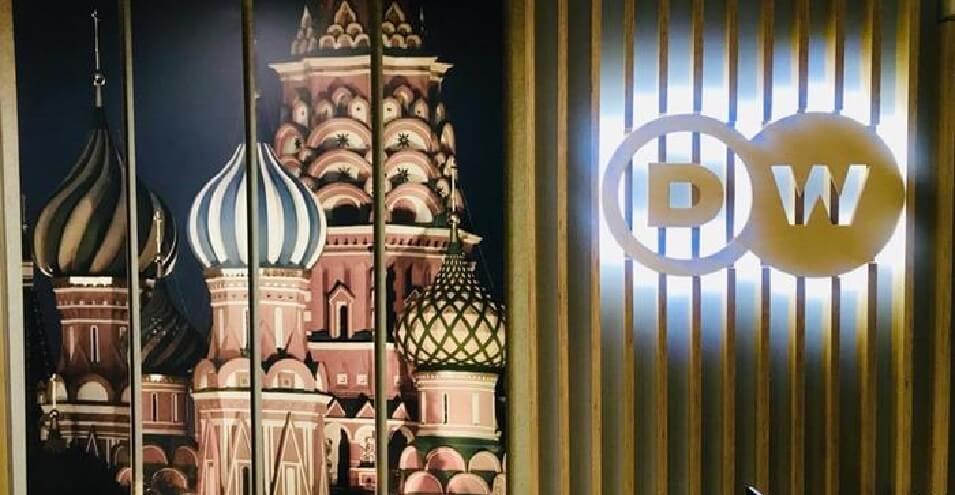
In response to the suspension of broadcasts of the German channel Russia Today (RT), the Russian Foreign Ministry issued an order to close Deutsche Welle’s office and ban the network’s programs. The CEO of Deutsche Welle says this extreme measure will be pursued through legal channels.
One day after Germany’s media regulatory commission decided to suspend broadcasts of the German-language programs of the “Russia Today” network, the Russian Foreign Ministry also issued an order to close Deutsche Welle’s office in Moscow.
According to this order, Deutsche Welle’s office in Moscow is prohibited from operating and the journalistic credentials of its staff members are revoked. In a letter to the office, it was stated that Deutsche Welle’s studio will be closed at 9 a.m. on Friday, February 4.
This comes despite the fact that Deutsche Welle has held a broadcast license for DW English and DW Deutsch television channels in Russia since 2005, and according to current licenses from Russia’s media authority, Deutsche Welle English is valid until 2025 and Deutsche Welle German until 2027.
Simultaneously, it was announced that measures are underway to designate Deutsche Welle as a “foreign agent.” The Russian Foreign Ministry’s statement said that sanctions are expected to be imposed against “representatives of the German government and public institutions involved in stopping the broadcast of Russia Today programs.”
The controversial “foreign agent” law in Russia requires individuals and organizations that receive financial support from outside the country to label all their media or cultural productions as “foreign.” Critics of the Kremlin view this law as a political tool to intimidate opponents and independent civil society groups.
The Russian Foreign Ministry’s controversial order against Deutsche Welle was issued in response to the decision by Germany’s media regulatory and supervisory commission to cut off the German-language programs of the “Russia Today” network. This channel announced the start of operations in late November 2021, but Germany’s media regulatory authority, which is one of 14 federal bodies responsible in this field, stated that these programs do not have broadcast licenses and requested that the satellite company Eutelsat 9B stop broadcasting Russia Today German. The German government also called this decision justified and proper.
The Russian Foreign Ministry previously stated that the action by the aforementioned commission was a clear and hostile message, leaving no choice but to take retaliatory measures against German media outlets operating in Russia.
The Russian Foreign Ministry threatened that sanctions would be imposed against “state and public structures involved in restricting Russia Today television programs,” and said the current action is “the first step” of Moscow’s retaliation. The ministry added that it will take “appropriate action at the appropriate time.”
The state-controlled Russia Today (RT) network broadcasts internationally in six languages and says its German-language programs promote diversity of opinion in Europe. However, critics insist that this network is the Kremlin’s mouthpiece through the dissemination of misinformation and propaganda.
“Incomprehensible and Extreme”
Peter Limbourg, CEO of Deutsche Welle, called the approach of Russian authorities a completely extreme and incomprehensible response, saying: “We will formally protest against these hollow measures and arbitrary treatment of the media. We will pursue the matter through legal channels.”
Limbourg emphasized that Deutsche Welle’s news coverage of Russia will not be affected by these measures, but will instead become more intensive and comprehensive, even if Deutsche Welle’s Moscow office is ultimately closed.
The German Journalists Association also responded to this decision by urging Vladimir Putin to immediately lift the ban on Deutsche Welle’s broadcasts in Russia and restore the press credentials of journalists working on these programs.
Frank Oberall, the association’s secretary, said: “There is no justification for this severe censorship.”
The German Journalists Association also called on the German government to formally protest Moscow’s action, saying: “The federal government is responsible for Deutsche Welle and its staff. Moscow must be immediately informed of this matter.”
Source: DW