Nuclear Negotiations Approaching Dangerous Deadlock
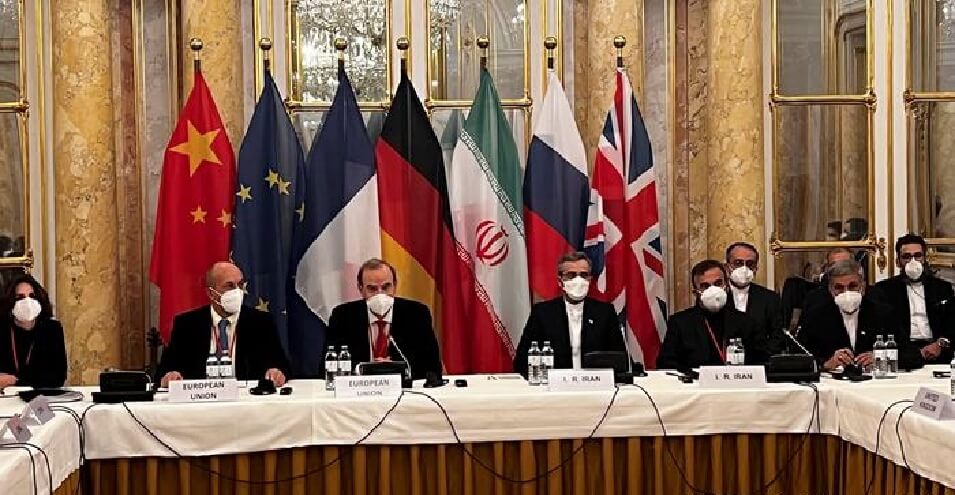
London officials say the pace of nuclear negotiations is insufficient and approaching a dangerous deadlock. The U.S. Secretary of State said in a detailed interview that America’s withdrawal from the JCPOA was one of the worst decisions in recent American diplomacy over the past decade.
Britain’s Foreign Secretary says nuclear negotiations with Iran aimed at reviving the 2015 JCPOA deal are reaching a dangerous impasse.
According to Reuters news agency, Liz Truss said on Tuesday, January 25 (5th of Bahman) in the British Parliament: “These negotiations are very urgent but lack sufficient pace.”
Britain’s Foreign Secretary stated that her country is cooperating with its allies in this matter, but the negotiations are reaching a dangerous deadlock.
Liz Truss added that Iran must now choose whether it wants to join this agreement or be responsible for the failure of the JCPOA. She said that in case of the JCPOA’s failure, all other options are on the table.
Blinken’s Clarifications on Iran’s Nuclear Problem
Anthony Blinken, U.S. Secretary of State, in an interview with the “Eisenstaedt Family Foundation,” addressed Iran’s nuclear problem in detail while discussing various areas of American diplomacy, including the Ukraine-Russia conflict, America’s approach toward China, and the Middle East and Afghanistan crises. This interview has been published on the U.S. State Department website.
The U.S. Secretary of State said the 2015 JCPOA agreement was reached during the Obama administration because of “Iran’s destabilizing activities in the Middle East and beyond.” He added that, on the other hand, the JCPOA agreement was able to halt Iran’s 2003 nuclear weapons production program.
Blinken stated that if Iranians really want to resume their nuclear weapons production program again, the weaponization component will be out of reach and it will be harder to do anything in this field, because if they are to obtain an actual weapon, they will likely do so somewhere in a room behind a computer and in relatively smaller facilities.
Blinken said: “An Iranian with a nuclear weapon or with the capability to produce one in a very short timeframe that they could acquire very quickly would be an Iranian operating with much greater impunity in all these areas. Also, an Iranian with a nuclear weapon poses a threat to Israel’s existence and to other countries in the region and constitutes a serious potential threat to us as well, not only in the region, but right here [in America].
“America’s Withdrawal from JCPOA Was the Worst Decision”
The U.S. Secretary of State said the JCPOA “was focused on fissile material and was able to effectively put Iran’s nuclear program back in the box, and I have to say, among all the decisions that have been made in American foreign policy over the past five to ten years, I think it was probably the worst of them to withdraw from this agreement.”
Blinken said that the U.S. administration at the time, led by Donald Trump, had promised to replace this agreement with a stronger one, but that did not happen: “Instead, Iran has since used this action as an excuse to resume the most dangerous aspects of its program, namely beginning to produce fissile material up to 20 percent, 60 percent, and threatened to do so up to 90 percent, the JCPOA had kept it at 3.67 percent. All of this means that fissile material can be produced at the weapons level very, very quickly. Iran began using more sophisticated centrifuges that were all prohibited by the agreement. It also began to obstruct the activities of international inspectors who gave us very high visibility into all aspects of this program.”
Regarding the possibility of returning to mutual commitment to the JCPOA, the U.S. Secretary of State said the U.S. government’s assessment is that “among all the imperfect options we have, this is still the best way to put Iran’s nuclear program back in the box while also creating an opportunity for us to address all of Iran’s other extremist policies.”
Blinken added that in the original JCPOA agreement, nothing “prevented us from pursuing, sanctioning, and addressing other matters that Iran does and we deeply oppose.”
“We Are Approaching the End of the Window”
The U.S. Secretary of State emphasized that nuclear negotiations are approaching the end of the window for returning to the JCPOA because Iran has made progress in its nuclear program.
Blinken said: “There are two issues about this. Iran is reaching a point where its breakout time, the time it takes to produce the fissile material needed for a bomb, is shortening to a matter of weeks, and this in itself is something that should not be allowed to drag on over time. Such a world is not a world we want to live in. Second, Iran continues to acquire knowledge and develop expertise in the nuclear field, such that at some point in the near future, even returning to all of the JCPOA’s restrictions will not be sufficient to regain adequate non-proliferation benefits. Because all the things Iran has learned and is allowed to do, even with the JCPOA’s restrictions, it can exceed those restrictions at a faster pace. So we are approaching that point.”
The U.S. Secretary of State, regarding the possibility of reaching an agreement on returning to the nuclear agreement in Vienna talks, said: “Tonight as I stand here, I cannot tell you whether we will return to mutual commitment or not. I think within a few weeks we will make a decision on this, because given what Iran is doing, we cannot allow this to continue. Our allies and partners in Europe think the same way. I can say that the Russians, who are also part of this process, also feel this urgency. We’ll have to see what happens.”
Anthony Blinken made clear that if the U.S. and its allies cannot reach an agreement with Iran, they will resort to other options to solve this problem, which they have been working hard on in advance.
Shamkhani’s View on Direct Negotiations with America
Following the remarks of Hossein Amirabdollahian, Iran’s Foreign Minister, about the possibility of direct negotiations between Iran and America on certain specific issues and America’s welcome of this approach, the National Security Council’s secretary has said that Iran’s method of communication with America will only be replaced by other methods when a “good agreement” is available.
Ali Shamkhani wrote in a tweet: “So far, communication with the American delegation present in Vienna has been conducted through informal written exchanges and there has been and will be no need for more than this. This method of communication will only be replaced by other methods when a good agreement is available.”
Source: DW