Khatibzadeh: Russia’s Withdrawal from JCPOA is Media Speculation; Shamkhani: Agreement Prospects Remain Unclear
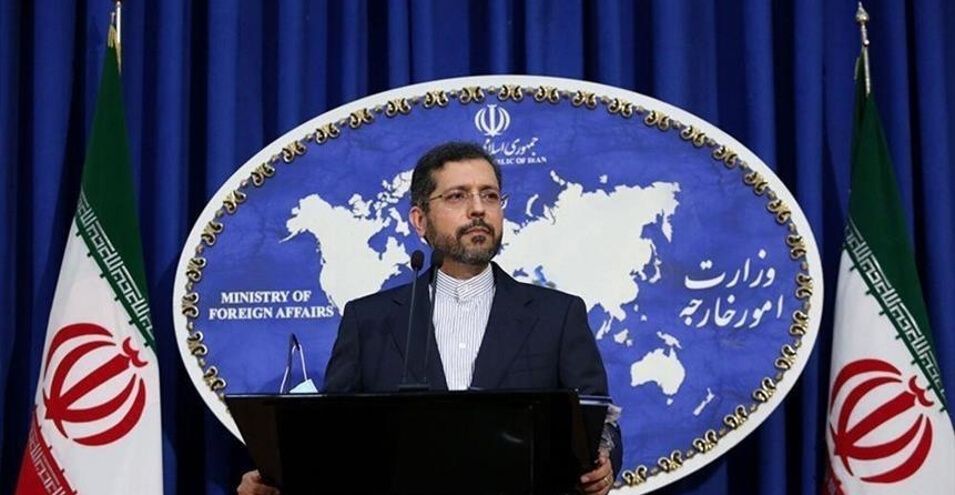
Saeed Khatibzadeh, spokesman for Iran’s Foreign Ministry, referring to progress in Iran-US negotiations on prisoner exchanges that have occurred simultaneously with talks on reviving the JCPOA, stated that Iran “will not accept any deadline” for nuclear negotiations.
In a press conference on Monday morning, March 7, while answering journalists’ questions, he described published reports about Russia’s possible withdrawal from the JCPOA as “media speculation” and said Iran is awaiting details of Russia’s request.
Sergey Lavrov, Russia’s Foreign Minister, said Saturday that the US must provide written guarantees that new sanctions imposed against Russia due to its invasion of Ukraine will not negatively affect trade relations between Tehran and Moscow. Reports of a similar request from China have also been published.
Iran’s Foreign Ministry spokesman refrained from answering questions about the details of China’s request and said: “What happens behind closed doors in Vienna, I will not discuss here.”
Ali Shamkhani, Secretary of Iran’s Supreme National Security Council, also alluded to the issue in a tweet, writing that “positive and negative actions of countries participating in Vienna negotiations are conducted to serve their interests and are understandable,” and Iran is “assessing new components affecting the negotiations.”
Russia’s request had previously faced a negative response from the US government. Anthony Blinken, US Secretary of State, said yesterday that sanctions imposed against Russia or to be imposed in the future are unrelated to the JCPOA.
He called Sergey Lavrov’s request for guarantees “irrelevant.”
Saeed Khatibzadeh, while commending China and Russia’s approach in Vienna negotiations, called their role “constructive,” and in support of Russia’s request to America, said: “Iran’s peaceful cooperation with involved countries, including Russia, should not be limited or restricted by any sanctions.”
IRNA news agency also published yesterday an interview with Mikhail Ulyanov, Russia’s senior representative in JCPOA revival talks in Vienna, in which Ulyanov, referring to Western sanctions imposed on Russia, said Russia is taking “reciprocal measures” and imposing sanctions on Western countries.
Russia’s representative in the negotiations stated that Iran “gained much more than expected” during the current negotiations.
He described China and Russia’s interaction with Iran as “excellent” and said: “When I see many assessments in Iran’s mainstream media and social networks suggesting that Russia is against Iran, Russia is Iran’s enemy and opposes the nuclear agreement, I am troubled.”
Russia’s Foreign Minister’s remarks about receiving written guarantees have also faced criticism in Iran.
Jomhouri-ye Eslami newspaper, Tehran edition, reported today that Russia’s request “can effectively prevent the conclusion of Vienna JCPOA negotiations” and referred to it as “taking the JCPOA hostage by Russia.”
The newspaper also criticized Ulyanov’s approach in negotiations, writing that he “considers himself more as Iran’s representative or even a decision-maker on behalf of Iran rather than Russia’s representative” and makes “exaggerated claims.”
Agreement Prospects Remain Unclear
Ali Shamkhani, Secretary of Iran’s Supreme National Security Council, in his latest position on the negotiations wrote in a tweet that “the prospect of an agreement in Vienna negotiations remains unclear due to Washington’s delay in making political decisions.”
He reiterated that “the priority of Iranian negotiators is to resolve and address remaining issues that are considered red lines.”
Iranian government officials have mentioned lifting all sanctions imposed by the Donald Trump administration, including nuclear and non-nuclear sanctions, providing US government guarantees against re-withdrawal from the JCPOA, and closing files related to Iran’s nuclear program at the International Atomic Energy Agency as their demands.
US government officials counter that they cannot provide guarantees against re-withdrawal and can only lift sanctions inconsistent with the JCPOA.
Regarding files related to Iran’s nuclear program, however, Iran’s Atomic Energy Organization and the International Atomic Energy Agency agreed two days ago on a timeline that extends until June 2022.
Based on this understanding, Iran is to provide “written explanations” by “no later than March 29” regarding three sites suspected of clandestine nuclear activities, and the Agency, after reviewing Iran’s responses, will submit its final report “before the IAEA Board of Governors meeting in June 2022.”
Source: Radio Farda