Land subsidence in Iran; Mashhad city council member: situation is ‘critical’
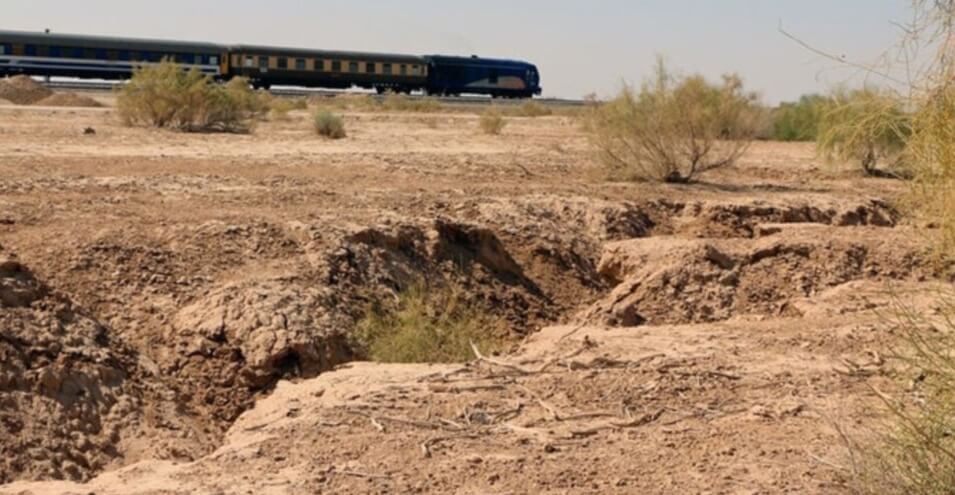
Hamid Zamiri, head of the urban planning and architecture commission of Mashhad city council, described the situation of land subsidence in Mashhad as “critical” on Monday, December 20.
According to the Iran Students News Agency (ISNA), Hamid Zamiri said in this regard: “Mashhad Plain is among the areas where land subsidence has reached a critical stage and has caused problems for many infrastructure projects.”
This Mashhad city council member cited land subsidence on the Tehran-Mashhad railway line as one of the prominent examples of “hazards” of subsidence in this province and attributed this phenomenon to 30 years of “unauthorized extraction” of groundwater.
Iran has been grappling with the phenomenon of land subsidence for many years, a phenomenon that environmental experts describe as a “silent time bomb,” but despite these warnings, officials of the Islamic Republic have not taken significant action in this regard.
In addition to Razavi Khorasan Province, land subsidence in Tehran and Isfahan provinces has also accelerated in recent years, putting residential units and historic structures at risk of destruction.
Over the past years, reports about this destructive phenomenon have been repeatedly published, with the most recent case being the evacuation of 12 residential units following land subsidence in Nesim Shahr, Tehran, which made headlines on December 10 of this year.
Land subsidence, in addition to the risk of building collapse, also damages historic structures, damage that may not be easy to repair.
Three months ago, the release of a video about the consequences of land subsidence in Isfahan made headlines and added to concerns about the possibility of destruction of historic structures in the province.
Apart from Tehran, Isfahan, and Razavi Khorasan, some other provinces, including Kerman Province, also face land subsidence and their situation is assessed as dire.
Experts consider “unauthorized well drilling” and “excessive extraction of groundwater” among the causes of land subsidence in Iran.
Alireza Shahidi, head of the Geological Survey of Iran, described the situation of land subsidence in Iran as a “silent earthquake” in June of this year.
Geologists and environmental experts say that the expansion of this destructive phenomenon is the legacy of years of neglect by officials of the Islamic Republic of Iran regarding excessive groundwater extraction and environmental issues.
Source: Voice of America