New accounts of intensified educational and employment deprivation in Sistan and Baluchestan
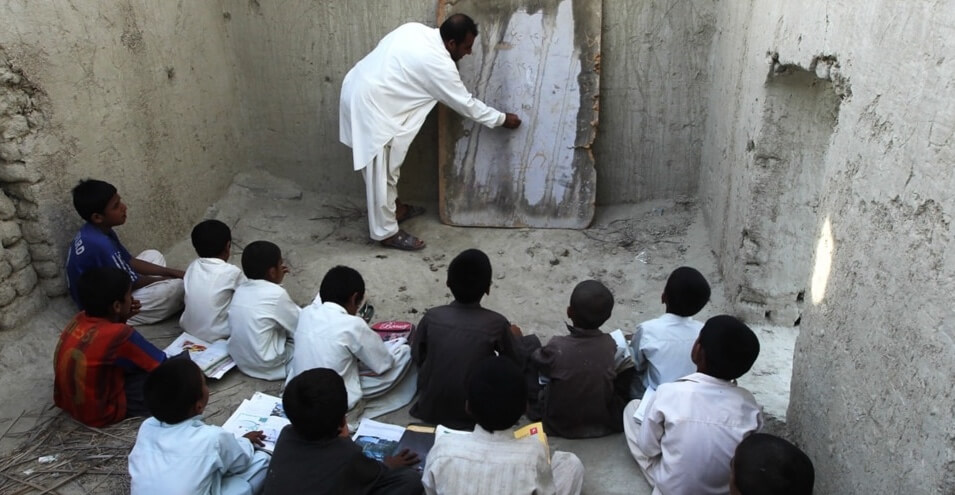
The former deputy director of the Planning Organization announced on Tuesday, February 24, that the school dropout rate in Iran has risen 42 percent, revealing statistics of approximately forty thousand primary school dropouts in Sistan and Baluchestan Province.
According to ILNA, Ahmad Reza Vaez Mahdavi added that this same number of primary school students who have dropped out in the province are those who possess identification documents, while “many students lack identification documents.”
In another report, the representative of Khash and Mirjaveh in parliament announced the inclusion of a note in the 1400 employment exam handbook, according to which residents of Sistan and Baluchestan Province have been deprived of points resulting from childbearing, which were considered for employment examinations.
Ismail Hossein Zahi, a parliament representative, stated that in the 1400 employment exam handbook, 2 points per marriage and per child, totaling a maximum of 10 points for employment candidates, were considered. He added that “in a peculiar measure on page 5 of the Assessment Organization handbook, there is a note according to which the mentioned points apply only to provinces where the fertility rate of the applicant’s city is not above 2.5.”
Based on official statistics, Sistan and Baluchestan Province with a fertility rate of 3.62 is the only province where the fertility rate exceeds 2.5, while the figures for all other provinces are below this number.
Mr. Hossein Zahi also alluded to this issue, but attributed this measure to “mischief by some individuals.”
Considering points for childbearing is among the Iranian government’s incentive measures following the Supreme Leader of the Islamic Republic’s emphasis on increasing the population. In this regard, people of the Sunni-majority Sistan and Baluchestan Province have been deprived of this benefit due to this note, and will have fewer chances of employment in government centers in the 1400 employment exam.
Sistan and Baluchestan Province has a population of approximately 2.8 million (predominantly Sunni), and is considered Iran’s most deprived province.
Annual statistics in recent years have consistently reported that the population living below the absolute poverty line in this province exceeds 45 percent.
Last Mehr, the director general of the nutrition improvement office at Iran’s health ministry warned about increased food insecurity in some areas of Iran, reporting that the malnutrition index in children in Sistan and Baluchestan, which was six percent before 1399, has now reached 12 percent.
Before him, Alim Yarmohammadi, representative of Zahedan in parliament, referring to the widespread dimensions of deprivation in the province, stated that approximately 74 percent of the province’s residents are “below the food security poverty line.”
Regarding the education of children and adolescents in the province, Ahmad Reza Vaez Mahdavi, while noting the high dropout rate from primary education in Sistan and Baluchestan, also reported the per capita share of educational infrastructure in the region as 3.2 square meters, while it should be upgraded to 5.2 to 5.6 square meters.
According to this former official of the country’s Planning Organization, Sistan and Baluchestan Province also has a different situation regarding urban and rural inequality compared to most other regions. While the average income of city residents is twice that of villagers, the province’s income is less than 50 percent of the average income of villagers.
The implementation of religious restrictions, widespread repression and execution of government opponents, and the extensive presence of military forces in local and executive positions, coupled with the consequences of widespread drought, have caused the people of Sistan and Baluchestan Province to constantly face multiple crises.
Source: Radio Farda