Scattered Cases of Omicron Identified in Iran; Increase in COVID-19 Hospitalizations in Some Provinces
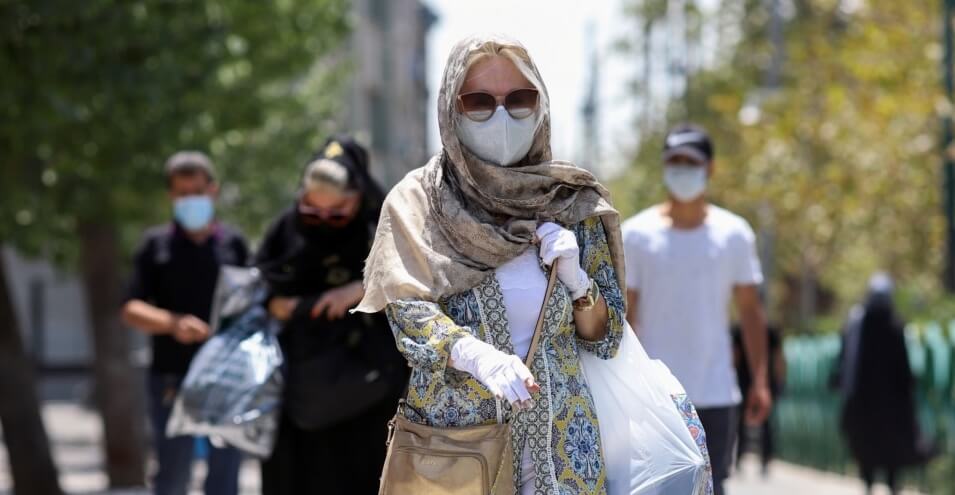
Two weeks after the first case of Omicron infection was identified in Iran, while the deputy minister of health announced the total number of Omicron cases in the country as 194 people, the director of the Pasteur Institute reported an increase to 244 cases.
This comes as the transmission speed of Omicron is extremely high. In a country like the United States, according to statistics from the country’s Centers for Disease Control and Prevention, within twenty days, cases rose from 0.6 percent to 77 percent and currently accounts for more than 95 percent of all COVID-19 infections. Europe also reported more than five million new cases of coronavirus in the last week of 2021.
In Iran, confirmation of Omicron cases is proceeding slowly. The acting head of the health affairs office at Saveh University of Medical Sciences announced the arrival of Omicron in Saveh and confirmed two cases of infection, saying the virus is now “circulating” in the city. Mojtaba Zakaiee stated that contacts between Saveh residents and cities like Arak, Qom, and Tehran, due to proximity and the transit of cargo vehicles from the Kaveh Industrial Zone to the south of the country, increase the possibility of more Omicron infections in Saveh.
The spokesperson of Isfahan University of Medical Sciences also reported 24 cases of Omicron infection in that province.
The actual number of Omicron variant COVID-19 cases in Iran is uncertain. Earlier, a member of the scientific committee of the National Coronavirus Control Headquarters emphasized that Omicron infection rates are higher than the existing figures.
Alireza Biglari had said: “We will reach 70, 80 thousand or 100 thousand cases per day.”
In Iran, due to a shortage of diagnostic kits and limitations in genomic sequencing, only a small number of samples are being tested.
Only 20,000 coronavirus tests are conducted daily in the country, and suspected cases for Omicron diagnosis are sent to specialized laboratories.
Payam Tabarsi, a member of the country’s scientific committee for combating coronavirus, says that Iran, with a population of 80 million, should conduct one million tests daily or at least 100,000 tests daily to obtain accurate statistics on Omicron cases.
Meanwhile, several regions of Iran have reported an increase in COVID-19 hospitalizations.
The head of the information committee of the coronavirus management headquarters at Kermanshah University of Medical Sciences stated that hospitalizations in the province’s medical centers have reached 121 people, which is 11 more than the previous day.
In Yazd, the spokesman for the University of Medical Sciences also reported an increase in “suspected coronavirus” hospitalizations in that province.
The head of Yasuj University of Medical Sciences also says the number of coronavirus patients in Kohgiluyeh and Boyer-Ahmad has increased.
However, there are still no red or orange zones on the coronavirus prevalence color map in Iran.
The current color-coding of the coronavirus prevalence map is based on hospitalization indicators, and the National Coronavirus Headquarters announced its decision to change the color-coding formula some time ago, which has not yet been implemented.
Official statistics from Iran’s Ministry of Health show that on December 6, within a 24-hour period, 1,579 new coronavirus patients were registered.
Source: Voice of America