One of the November 2019 Protesters in Kermanshah Committed Suicide Following Blindness and Financial Hardship
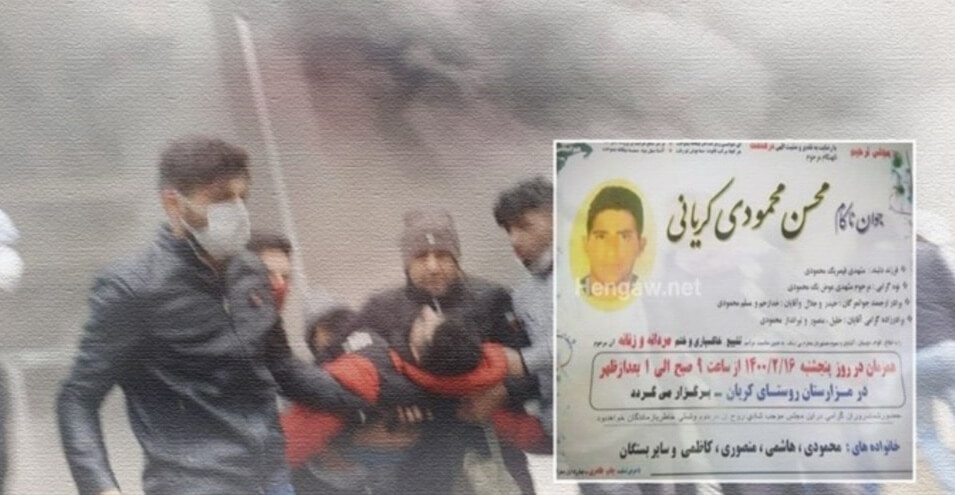
One of the November 2019 protesters in Kermanshah ended his life in early this year due to psychological problems resulting from blindness caused by a pellet round hit during the protests and financial hardship.
Hengaw, a human rights website covering news from Kurdish-populated regions of Iran, identified this citizen as Mohsen Mahmoudi Keriyan, 28 years old, and reported that on November 25, 2019, he was hit by a direct pellet round fired by security forces in Garage Square in Kermanshah and was arrested.
According to the report, both of Mr. Mahmoudi’s eyes were damaged and he became blind following deprivation of medical services during detention and delayed transfer to medical centers.
A source familiar with the situation told Hengaw that security agencies promised Mr. Mahmoudi’s family after his release that they would pay him blood money if the news were not publicized, but after 18 months they took no action in this regard. He ultimately hanged himself on April 5 of this year due to financial problems and psychological issues resulting from his blindness.
According to the report, security agencies and members of the village council of Kerian, which falls under Kermanshah, had prevented the publicization of his suicide by pressuring his family.
Hengaw previously reported that at least 32 citizens were killed in Kermanshah during the November 2019 protests.
Previously, another November 2019 detainee in Kermanshah, identified as Reza Omidi Yarijani, 22 years old, hanged himself in Diesel Abad Prison in Kermanshah in March 2020 after receiving his prison sentence from prison authorities.
The news of Mohsen Mahmoudi Keriyan’s suicide, one of the November 2019 protesters in Kermanshah, was made public 9 months later, while based on official confirmation by Iranian military authorities and videos released from the December 2019 protests in Isfahan, security forces conducted violent suppression of these protests through direct fire at protesters, particularly using pellet rounds.
The Iran Human Rights Organization also announced that approximately 40 people in the Isfahan protests lost at least one eye as a result of pellet round injuries.
Meanwhile, the second session of the International People’s Tribunal on November to investigate the suppression of protests during that period began on Friday, February 5, in London, and in this session several witnesses are scheduled to describe their experiences of protest suppression.
In the previous session of this tribunal held in November by organizations including “Justice for Iran,” “Iran Human Rights,” and the international organization “Together Against the Death Penalty,” 34 witnesses and six expert witnesses presented their documents and evidence.
Based on reports, the prosecution panel of this tribunal, after reviewing the documents of new witnesses, charged 27 other Iranian officials with “crimes against humanity” for their participation in the suppression of the November 2019 protests.
The November 2019 protests, which initially began as a reaction to a sudden increase in gasoline prices, quickly changed direction and targeted the Islamic Republic government. However, these protests faced severe suppression, resulting in hundreds of deaths.
The exact number of those killed in these suppressions is unclear, but Reuters news agency, while reporting that at least 1,500 people were killed in the November 2019 protests, quoted “three sources close to Khamenei’s circle” and “a fourth official” as saying that the leader of the Islamic Republic told senior officials of the country to “do whatever is necessary to stop” the protests.
Source: Radio Farda