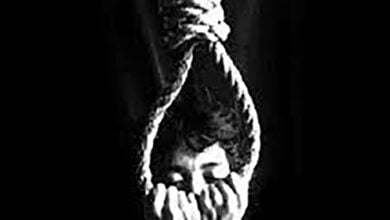
170 Women Executed in Iran Over the Past Decade
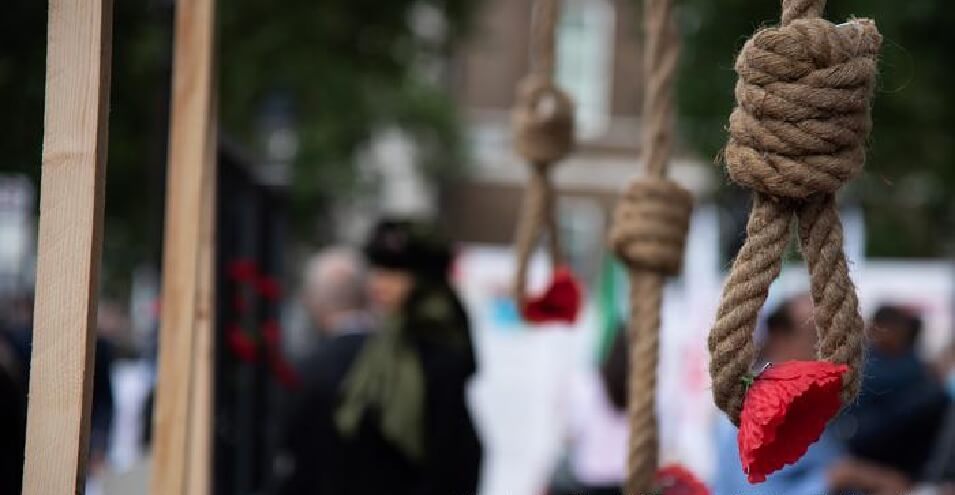
Despite amendments to execution laws for drug offenses in the Islamic Republic, 116 prisoners have been executed in the current calendar year, five of whom were women. This number was only 25 in the previous year.
According to human rights sources, more than dozens of women have been executed in Iran in the current calendar year. This has increased the concerns of human rights organizations regarding the unjust judicial process in Iran.
Based on reports from these organizations, most women executed in Iran have been convicted of murdering their husbands or life partners. These organizations consider Iran’s “qisas” (retribution) law as one of the reasons why domestic violence by husbands is not considered in cases of family murder trials.
Iran Human Rights Organization, headquartered in Oslo, the capital of Norway, has identified one of the women recently executed in Iran named “Sosan Rezaei Pour.” This woman was executed on November 5th for killing her husband, who was also her cousin.
According to Iran Human Rights Organization, Ms. Rezaei Pour spent six years in prison and the victim’s next of kin, who is this woman’s uncle, refused to pardon her and demanded qisas.
The organization reported from an informed source that Rezaei Pour stated in her confession that her husband returned home drunk on the afternoon of the incident and beat her. She also said: “I could no longer endure it.”
Iran Human Rights Organization has recorded the names of at least 15 women executed in the current calendar year alone. The total number of executed women from 2010 to the present is reported to be 170 persons.
Mahmoud Amiri Moghaddam, director of Iran Human Rights Organization, has emphasized that in addition to women’s executions, there are numerous other cases for concern regarding the status of women’s rights in Iran, including: “multiple cases of abusive relationships, child marriage, and in traditional communities, marriage to end disputes between two tribes.”
Amiri Moghaddam has also considered the qisas law to be in contradiction with international laws because according to this law, the responsibility for punishment is placed on the victim’s family.
One of the most famous cases of women’s qisas is that of Reyhaneh Jabbari. She repeatedly insisted that the victim, a former Iranian Ministry of Intelligence officer, intended to sexually assault her and was therefore killed by Reyhaneh. She also stated that she was tortured during interrogation. An international campaign was also launched to save her.
Despite all this and despite all domestic and international protests and criticism, Reyhaneh was hanged in the autumn of 2014 at the age of only 26, because the victim’s family refused to pardon her.
Patriarchy and Discrimination: Causes of Women’s Crimes
Julia Bourbon Fernandez, from the organization “Together Against Execution” in Paris, has attributed patriarchy and discrimination to the high rate of women’s executions in Iran. She told the French news agency: “Many [executed women] have tried to defend themselves against rape or other cases of domestic violence and faced explosive circumstances.”
Many human rights activists say that most of these cases occur in marginalized areas and among the marginalized sections of society.
Roya Boroumand, one of the founders of the Abdorrahman Boroumand Foundation in Washington, told the French news agency: “Most of these women are poor and have been rejected by their families. Therefore, they are very vulnerable and out of our reach.”
The Boroumand Foundation has collected approximately 100 cases in which women have been executed for murder or adultery during the Islamic Republic’s rule. Roya Boroumand says most of these women have either been victims of domestic violence or early marriage, or resorted to murder due to difficult divorce conditions in Iran.
Executions for Drug-Related Crimes
After China, Iran has the highest execution rate in the world. In 2017, a law was passed under which drug-related offenders would not be executed, which is why the execution rate decreased for a period of time, but it resumed its upward trend. In the current calendar year alone, more than 100 people have been executed solely for drug trafficking, many of whom were women.
One of the recent executions of women in connection with drug offenses was that of Maryam Khakpour, 41 years old, who according to Iran Human Rights Organization was executed on December 4th in the city of Isfahan. Her husband was also convicted but received only a prison sentence.
According to the organization’s report, on December 18th, six people were executed for drug offenses in Kerman, three of whom were women. The organization has listed the names of at least 116 prisoners, five of whom are women, who have been executed in connection with drug offenses in the current calendar year. The number of this category of executions in the previous year was reported to be 25 people.
Human rights activists believe that Iran’s judicial system fundamentally discriminates against women. For example, the age of criminal responsibility is 9 years for girls and 15 years for boys, the testimony of two women equals the testimony of one man, and women’s “diya” (blood money) is half that of men.
Bourbon Fernandez, however, points to the high statistics of executions and highlights a bright spot in the mobilization of society against capital punishment. This universal opposition to execution can be seen in the film “There Is No Evil,” directed by Mohammad Rasoulof, which won the Golden Bear at the Berlin International Film Festival in 2020.
Bourbon Fernandez considers the popular movement against execution in Iran to be very strong and in complete contradiction with the positions of Islamic Republic officials.
Source: DW