Teachers Strike Again in Protest Against Livelihood Problems in Dozens of Iranian Cities
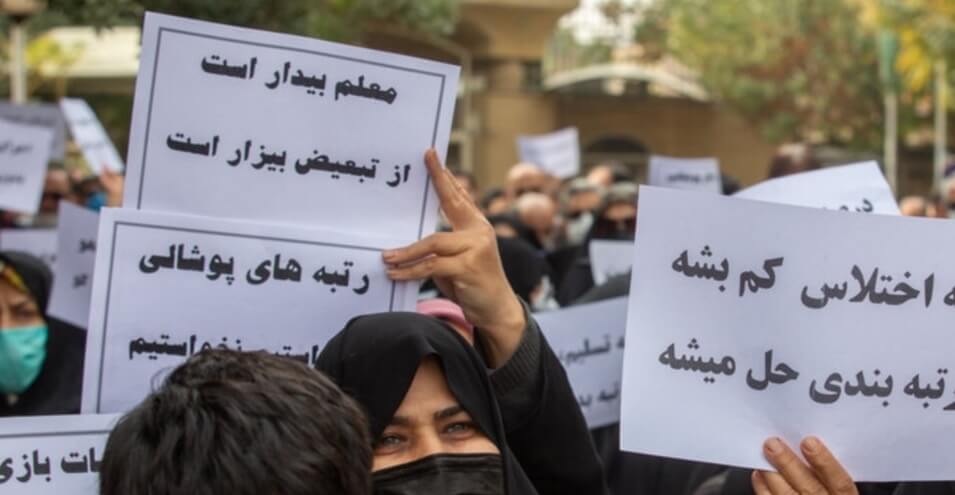
Protesting teachers demanding implementation of the “ranking plan” and “salary equalization law” went on strike and sit-in again on Saturday, December 11, in more than 60 Iranian cities.
This strike, which is planned to last two days and was initiated by the Coordination Council of Iran’s Cultural Workers’ Professional Associations, marks the third major protest action by protesting teachers in the past month.
Striking teachers, who are dissatisfied with the government and parliament’s failure to fulfill their promises and the worsening of their livelihood problems, have refrained from teaching classes and closed virtual education classes that are implemented through the SHAD plan.
On November 11, protesting teachers also gathered in approximately 50 Iranian cities, with these protests resulting in arrests and assaults on several teachers in some cities in Tehran Province. Iranian teachers again gathered in more than 60 cities on Thursday, December 2.
The Coordination Council of Iran’s Cultural Workers’ Professional Associations stated in its announcement that the government wants to “cobble together” the teacher ranking plan by allocating a budget of “12.5 trillion tomans,” and stated that the government and parliament have “nullified the complete implementation of the retiree equalization plan in accordance with the civil service management law.”
Based on the sixth chapter of the Fundamental Education Transformation Document approved in 1390 by the Supreme Council of Cultural Revolution, teachers’ salaries should be determined based on their qualification level, but this plan has not yet been implemented.
If the ranking plan is approved and implemented, the base salary and benefits of teachers would reach at least 80 percent of university faculty members with whom they have the same rank and seniority.
This comes despite the approval of the ranking plan’s general outline, as its details have not been reviewed in parliament’s open session for approximately five months.
The Coordination Council of Teachers’ Professional Associations stated that if teachers’ demands and gatherings continue to be ignored, it will organize larger protest gatherings in front of parliament and education ministry offices in the future.
In recent years, with the intensification of the economic crisis and the spread of poverty among various segments of society, Iranian teachers have engaged in numerous professional protests, most of which have been due to livelihood problems.
These protests have typically faced negative reactions from Iran’s government security institutions, and in addition to attempting to prevent teacher gatherings, some protesting teachers have also been arrested and threatened.
Source: Radio Farda