First Session of Hamid Nouri’s Trial in Albania; A Plaintiff and Another Witness Testified
The first session of Hamid Nouri’s trial in Albania began on Wednesday, November 19, and during it, Mohammad Zand, a member of the People’s Mujahedin Organization, testified as a plaintiff and witness that he saw Hamid Nouri in the death corridor with a blindfold after a group of prisoners were transferred to execution sites, which according to him were the blindfolds of executed prisoners.
Reza Zand, Mohammad Zand’s brother, was executed in 1988 at Gohardasht Prison in Karaj, according to his lawyer’s statement in court.
Count Louis, Mohammad Zand’s legal counsel, said at the court session that he resides in a camp near the city of Durrës in Albania and had multiple encounters with Hamid Abbasi (Nouri) in Gohardasht Prison and was taken to the death corridor three times.
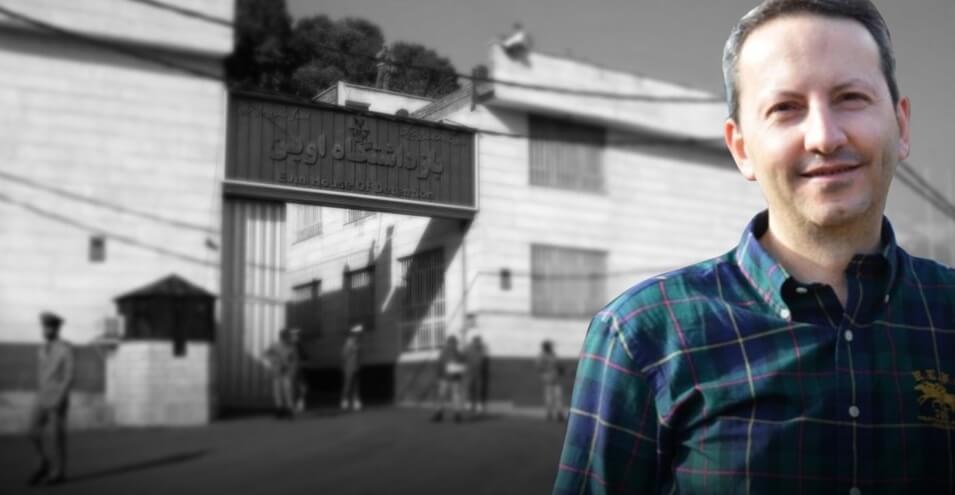
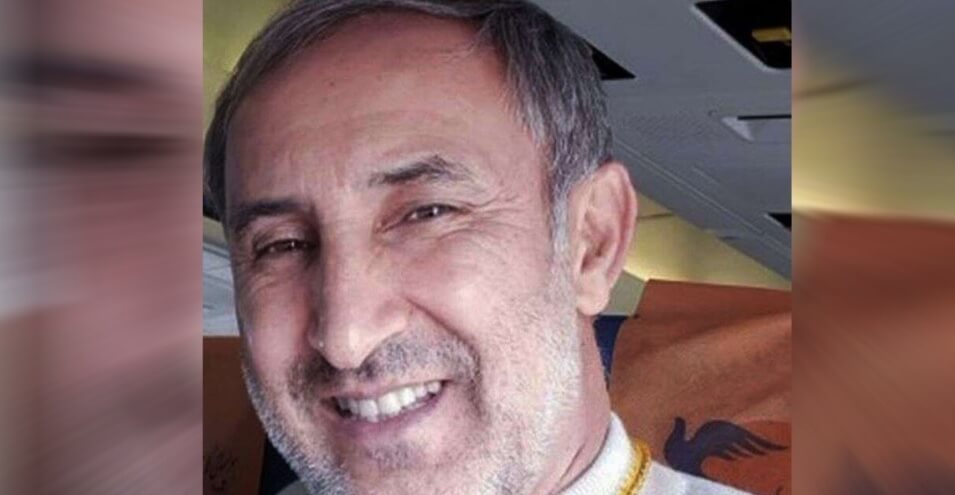
Hamid Nouri is not present at the Albania court sessions, and his lawyer is present in these hearings. He is accused of participating in mass executions of political prisoners as a former prosecutor of Gohardasht Prison in Karaj, an accusation he denies.
He entered Stockholm Airport on November 9, 2019, on a direct flight from Iran and was immediately arrested.
According to his legal counsel, in the coming days a model or scale model of Gohardasht Prison will be displayed in court.
Mohammad Zand said in Hamid Nouri’s trial that he and his brother were arrested on charges of supporting the People’s Mujahedin Organization, and his brother was 21 years old and an electrical engineering student at the time of his arrest.
He said his brother was sentenced to ten years in prison and he was initially sentenced to life imprisonment and then to 12 years in prison. Mohammad Zand was released from prison in April 1992 and went to Camp Ashraf.
According to him, on the sixth of Mordad, they stopped newspapers from being brought into the prison ward, and one day later the television was removed from the ward.
According to his brother, Reza Zand said in his last visit with his mother in June 1988: “Don’t wait for us anymore. We won’t come out of here alive. This regime won’t let us leave here alive.”
Mohammad Zand said that after his brother’s execution, a small bag was handed to his father at Evin Prison containing a shirt and a broken watch: “The watch was broken at two o’clock to indicate the time of my execution. My father asked why did you execute my son? He had served seven years in prison and had three more years to serve. My father was blindfolded and taken inside the prison. They said you have no right to hold a ceremony for your son. My father said I will hold a ceremony for him and I will hold a very large ceremony. He did the same and held a large ceremony for my brother Reza.”
Mohammad Zand said in Hamid Nouri’s court that from the window he saw Davoud Lashkari with a rope noose while armed, and he was certain it was about executions and heard “Death to hypocrites” from the lower sections of the window that same day.
Mohammad Zand, according to himself, was transferred on August 6 along with ten to fifteen others by Davoud Lashkari to the “death corridor”: “Naserian (Mohammad Moghise) took me into the death committee room and before I sat down told me they executed your brother and if you don’t accept what the committee says, we’ll execute you too. When I removed the blindfold, three people were sitting in front of me. There was Hossein Ali Niri and two people sitting on his left and right. There was (Mostafa) Pourmohamadi and (Morteza) Eshraqi, though I learned their names later. Two or three people were also standing on the left and right of these and I believe they were armed.”
Mohammad Zand said about his presence in the death committee room that Hossein Ali Niri asked about his particulars and sentence: “He said do you want the Imam to pardon you? I said my sentence will end and I’ll come out myself. I asked why did you execute my brother? He had served seven years in prison and had three more years to serve. He told Naserian to take him out.”
After being transferred to the corridor, according to him, he heard the voices of Davoud Lashkari, Hamid Abbasi (Nouri), and Naserian (Mohammad Moghise), with Hamid Nouri reading a list and being taken toward a Husseiniyeh or amphitheater which was the execution site.
Mohammad Zand said: “After about half an hour around 11 or 12 o’clock, I saw that Hamid Abbasi with Davoud Lashkari were coming from the same direction in the death corridor toward us. The distance between me and them was 10 to 15 meters and Hamid Abbasi was holding a bundle of blindfolds in his hand.”
He said he heard Davoud Lashkari say he was going to wash and saw that Hamid Abbasi (Nouri) had brought a new list.
Mohammad Zand named a prisoner named Naser Mansouri and said: “Naser Mansouri, who was on a stretcher, was brought and placed in front of me. Naserian (Mohammad Moghise) and Hamid Abbasi (Nouri) had put him under pressure to tell them about the relationships and connections inside the prison ward. He, in order not to commit this betrayal, threw himself from the third floor where he was in solitary confinement and broke his spine. Naser Mansouri had no movement and just lay down. He was taken along with several others to the same Husseiniyeh, meaning the execution site.”
He was transferred to solitary confinement and on August 18 was again taken to the death corridor: “I heard again the names that Hamid Abbasi (Nouri) was reading. On August 22, Hamid Abbasi (Nouri) was again reading the list.”
On August 22, Mohammad Zand was again transferred to the death corridor and death committee room: “They said if you don’t accept we’ll execute you. Unfortunately, I couldn’t have the courage like those kids and defend the Mujahedin identity. I couldn’t say I’m a Mujahed. They took me back to solitary. That day or the next, Naserian (Mohammad Moghise) and Hamid Abbasi came. Naserian threw some papers and a pen into the cell and said you must write all the relationships and connections in your prison ward. At dinner time four or five guards came and started hitting me with fists, kicks, and boots. They hit my head on a pipe that was there. This continued for a few days to put me under pressure to give them those names they wanted.”
He said he was in solitary for three months and in late February was transferred from Gohardasht Prison to Evin Prison.
Mohammad Zand later in Hamid Nouri’s court trial, in response to the prosecutor’s question, said that when Hamid Nouri spoke in court he recognized his voice: “This voice stayed in my mind. I first saw Hamid Abbasi (Nouri) in early winter 1986 at Gohardasht Prison. This same Abbasi (Nouri) gave me the verdict reducing my sentence from life to 12 years.”
He said that Hamid Nouri “was thin-bodied. He was tall and had sparse facial hair, and unlike ordinary people, wore civilian clothes. His nose also resembled my own nose. Because I have breathing problems due to the shape of my nose, when I see someone with a nose like mine, it catches my attention.”
Mohammad Zand said that after his release from prison, he was doing ride-sharing and saw Hamid Nouri at Azadi Square in Tehran: “I was doing ride-sharing. Hamid Abbasi (Nouri) said Karaj. I stopped. He came to the front of the car and when he saw me he regretted it and said I don’t want to. Because he recognized me. I also recognized him.”
The prosecutor then showed a photograph of Hamid Nouri and Mohammad Zand said this person is the same Hamid Abbasi (Nouri). I will never forget that nose.
Later in the court session, Hamid Nouri’s lawyer said that Mohammad Zand’s statements in court do not match what he said in police interrogation. He said the names Mohammad Zand mentioned in court are different from those he mentioned to police.
Hamid Nouri’s lawyer said to Mohammad Zand: “You claim that mass executions in the prison happened by hanging. Here you say you saw a rope noose from the window and heard ‘Death to hypocrites’. But you didn’t tell this to police. Didn’t you think it’s important that police know?”
Mohammad Zand replied: “You’re right, it was my mistake, I should have told them. But there were also questions asked afterwards that I didn’t answer them.”
Hamid Nouri’s lawyer also said that Mohammad Zand in a letter to a human rights organization and also in police interrogation mentioned Hossein Ali Niri’s name as Jafar Niri and Morteza Eshraqi’s name as Pourashraqi.
Mohammad Zand said: “We knew Niri by the name of Jafar, just as we knew Hamid Nouri by the name of Abbasi. I said Eshraqi as Morteza Pourashraqi which was wrong.”
He said: “I had told police that both names and memories, I would remember them later and tell them.”
Mohammad Zand also said that some matters had slipped from his mind and then he remembered them, and he also read the Mujahedin book and listened to previous sessions of Hamid Nouri’s trial.
This was his answer to Hamid Nouri’s lawyer who asked him whether he remembered today or read the Mujahedin book.
Hamid Nouri has denied the charges. He is scheduled to testify on December 2 in court. According to his lawyer, Hamid Nouri’s position is that “these executions never happened and he cannot accept the charges.”
Hamid Nouri’s lawyer claims that his client was on leave due to the birth of his child during the time of the executions in August and September 1988.
Holding Hamid Nouri’s trial, which will continue at the Stockholm court in Sweden until April next year, has also drawn a reaction from Iranian Islamic Republic officials.
Saeid Khatibzadeh, spokesman for Iran’s Foreign Ministry, on the first day of Shahrivar called Nouri’s trial “a design by the hypocrite cult” and claimed that Sweden’s court “has relied on a series of false stories, documentation, and witness fabrication, all done by a cult.”
Source: Radio Farda