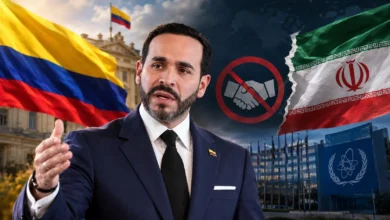
Experts Warn of Inflation and Price Hike Consequences in Iran: People Won’t Wait for Permission to Protest
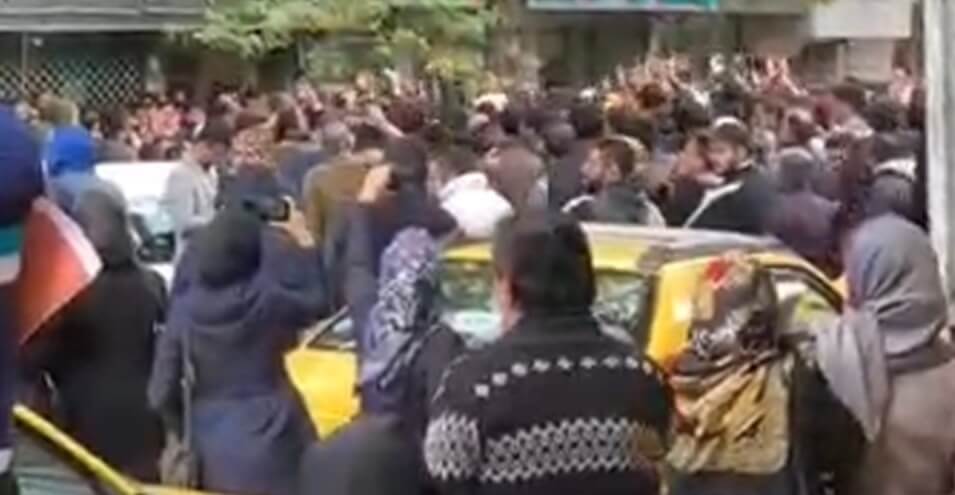
Inflation in Iran’s economy has reached a stage where media outlets are constantly warning about its consequences. While reports suggest that the Islamic Republic is delaying return to JCPOA negotiations, inflation growth is worsening, the dollar rate has increased, and a former parliament representative has warned that people’s tolerance is running out.
According to the latest reports, the average dollar exchange rate at authorized Iranian exchange offices has been estimated at 28,225 tomans with an increase of around 160 tomans.
- Farsi News Agency Reports Possibility of Worsening Inflation Conditions
In the latest reactions to rising inflation and price increases, Farsi News Agency expressed concern about “the possibility of worsening inflation conditions” in a report and called on the Ibrahim Raisi government to “as quickly as possible implement appropriate solutions to reduce inflation, which has placed double pressure on the living conditions of various social groups, especially low-income deciles.”
Farsi, citing an economic expert, mentioned the first step in controlling inflation as “establishing an independent central bank committed to price stability.”
Mohammadhassan Sabouri Delami, an economic expert, noted several indicators including “a 73 percent increase in producer inflation in spring 1400,” “high monthly inflation rates of three percent” during the three summer months, “increased liquidity by the government to compensate for budget deficit,” and failure in financing through securities sales as signs of “the possibility of worsening current conditions.”
- An Economic Expert: Improving the Economy Without Lifting Sanctions is Daydreaming
Another economic expert emphasized that if Iran’s trade relations do not improve, “no program will result in improving the country’s economic situation, including reducing inflation rates,” and “this government will also get stuck in the economy.”
Mortaza Afqahi, in an interview with Iran Labor News Agency, ILNA, stressed the necessity of determining the fate of the government’s foreign relations and considered compensating the budget deficit through taxation as “oversimplified.” He said the method that Ibrahim Raisi’s government has adopted “to compensate for the budget deficit” is “not correct.”
According to this economic expert, without lifting sanctions, “improving the economic situation” is “daydreaming,” and “it seems” the government “fundamentally has no plan.”
He suggested that “perhaps the delay in reviving the JCPOA is to increase bargaining power in negotiations.”
- Jaludarzadeh: People Have Nothing to Lose; They Won’t Wait for Permission to Protest
Sohila Jaludarzadeh, a former parliament representative, warned in an interview with ILNA that “people’s endurance has a limit,” and when they see “they have nothing to lose, they won’t wait to see if we give them permission to protest or not.”
Ibrahim Raisi’s government says it has pursued “economic diplomacy” and expansion of economic relations with neighboring countries. In this regard, on Wednesday, October 7, Saeid Mohammad, secretary of the Supreme Council of Free and Special Economic Zones, met with a group of Russian government economic managers and called for activating the North-South Corridor.
According to IRNA, Russian officials also mentioned “Vladimir Putin’s serious determination” to develop activities in this corridor at the meeting. Also, following an agreement between the foreign ministers of the Islamic Republic of Iran and Iraq over gas debts, reports indicate Iran’s readiness to extend the gas export contract to Iraq. On Wednesday, the Deputy Minister of Oil for Gas announced that Iran is ready to extend the gas export contract to Iraq.
However, earlier, Navid Jamshidi, an analyst of Iran issues, had told Voice of America that no signs of economic diplomacy are seen in the Raisi government.
Referring to recent reports by the International Atomic Energy Organization, he stressed: “For diplomacy, our economic relations with other countries in the world must be functioning, which they are not. There are major obstacles like FATF that we see no signs of resolving and passing the two remaining bills.”
- US Return to JCPOA May Be Possible
Also on Wednesday, October 7, a member of the parliament’s energy commission made the agency’s access to recorded footage from surveillance cameras at nuclear centers conditional on the United States’ return to the JCPOA and operationalization of “its commitments.”
According to Farsi News Agency, Hadi Bigijnezad, a member of the Islamic Consultative Assembly from Malayer, criticized the previous government’s foreign policy and emphasized that the Raisi government should go “country to country” and explain the “Iranian narrative of the story.”
The US representation at the International Atomic Energy Agency on Monday, October 5, issued a statement warning that Iran must without further delay allow IAEA inspectors access to a uranium enrichment centrifuge assembly workshop in Karaj, as agreed two weeks prior, or face diplomatic reaction in the coming days at the agency’s Board of Governors.
The facility in Karaj produces parts for special uranium enrichment centrifuges.
Source: Voice of America