Trump’s Hesitation Between Blockade and Attack; Economic Pressure Becomes Washington’s Main Weapon Against Iran
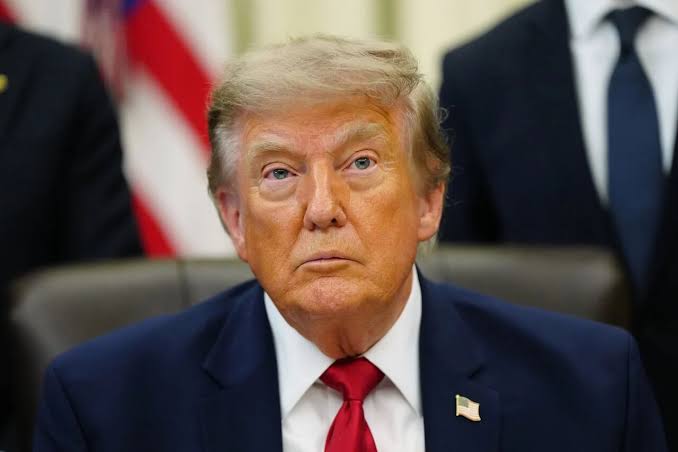
U.S. President Donald Trump has spoken of three paths to force the Islamic Republic into retreat, while Washington is currently focusing on naval blockade and economic pressure rather than an immediate escalation of military attacks. This strategy, pursued simultaneously with the collapse of the national currency’s value, high inflation, and worsening economic hardships in Iran, could further strain the country’s economy.
In a television interview, Trump attributed Iran’s current condition to American economic and financial pressures, saying Washington currently has three options: “Continue pressure and blockade, deliver severe military strikes, or use economic pressure to force Tehran to change its behavior.”
Regarding the economic path he envisions, Trump stated: “Economically, they are broken. They cannot borrow money. We control their money, the money they had and it was a lot. I am their banker.”
Trump also claimed Iran’s inflation rate has reached 300 percent, the national currency has sharply declined in value, and military personnel salaries face payment problems. These figures, particularly on inflation, are not necessarily consistent with official statistics and independent assessments, and should be understood as Trump’s evaluation of Iran’s situation.
However, the principle of economic pressure on Iran is not new. U.S. sanctions over recent years have restricted Iran’s access to financial resources, foreign trade, oil revenues, and international banking networks. In 2026, Washington has sought to increase the economic cost of pressure on Tehran by intensifying naval blockades.
Reports published in international media show that the options presented for America’s future policy toward Iran are essentially summarized in three paths: “reaching an agreement, continuing blockade and economic pressure, or returning to widespread military attacks.”
Reuters reported on Donald Trump and Benjamin Netanyahu’s late July meeting that three options were seriously considered: “An agreement, continued blockade and economic pressure, and a widespread attack.”
Axios also reported that during this meeting, continued naval blockade combined with increased economic pressure alongside negotiations and resumption of military attacks were considered as three main paths. However, recent signs indicate that the Trump administration is pursuing economic pressure as an alternative to immediate military attack, at least for the current moment.
The Wall Street Journal also reported today that after the failure of military attacks and negotiations to quickly achieve Washington’s objectives, Trump has again turned toward economic pressure. According to this report, the U.S. government is pursuing naval blockades and financial sanctions to weaken Iran’s economy and force Tehran to accept Washington’s demands.
The Associated Press has described this change of course as a “renewed shift toward financial sanctions” and reported that the Trump administration hopes economic pressure will force Iran to accept America’s demands. Meanwhile, some analysts doubt the success of economic pressure as a quick solution to end the crisis.
Trump’s rhetoric about Iran’s economy shows that the U.S. president views financial pressure as part of a power struggle with Tehran. In describing America’s role in Iran’s economy, he stated: “We control their money, the money they had and it was a lot. I am their banker.”
These statements come at a time when Iran’s economy has long faced a declining rial value, high inflation, limited access to foreign resources, and reduced household purchasing power.
Iran’s Parliament dismissed “Abdolnasser Hemmati,” the then Economy Minister, in March 2025 amid severe depreciation of the rial and rising prices of essential goods, which had become one of the main targets of criticism by representatives. Reuters reported that the rial lost nearly half its value against the dollar during Hemmati’s tenure as minister.
The Financial Times also wrote when reporting Hemmati’s dismissal that Iran’s economy faced a roughly 60 percent depreciation of the national currency, increased prices of essential goods, and mounting pressure from sanctions.
Therefore, even if some figures mentioned by Trump about inflation rates are not accurate, the substance of his claim about Iran’s economic fragility aligns with significant portions of economic reports and statements by Iranian officials.
On the other side of the matter, some Iranian officials explicitly speak of the necessity to reduce economic pressure. “Kazem Gharibabadi,” Iran’s Deputy Foreign Minister and one of the main faces of the negotiating team, has emphasized in recent months the necessity of finding a way to reduce sanctions. Regarding negotiations with America, he has stated: “Negotiations are neither a miracle nor a betrayal.”
This position reveals an important divide in Iran’s political sphere: on one side, currents that view negotiations under American pressure as futile or costly, and on the other, groups that believe without reducing sanctions, overcoming the economic crisis will be difficult.
Reuters also previously reported that Gharibabadi warned regarding new European sanctions that the return of sanctions could complicate Iran’s nuclear program situation, and Tehran continues to seek ways to manage the crisis through negotiations.
American economic pressure is intensifying at a time when Iran’s economic problems were already deep before the current phase. Abdolnasser Hemmati, who now again heads Iran’s central bank, previously spoke of a sharp decline in real per capita income for Iranians. Various sources have cited declining purchasing power, rial depreciation, and rising essential commodity costs as key indicators of Iran’s economic crisis.
This situation extends beyond monetary indices alone. Declining real income, labor market pressure, increasing poverty, and reduced access to essential goods have amplified the social effects of the economic crisis. Under such circumstances, naval blockades can increase pressure on Iran’s export revenues, especially if Tehran’s ability to sell and transfer oil and access to foreign currency sources becomes further restricted.
The Wall Street Journal has reported that the Trump administration believes economic pressure may have greater long-term impact on Iran’s government’s ability to continue compared to military attacks. This is where the distance emerges between Washington’s claims and expert assessments.
Trump believes economic pressure can bring Tehran to a point where continuing the current situation is not feasible for the Islamic Republic. However, experience with sanctions over recent years has shown that Iran’s economy, despite heavy damage, has managed to adapt to some of the constraints.
The Associated Press also emphasized in its report on the Trump administration’s new strategy that critics doubt the effectiveness of sanctions as a quick solution and have recalled that previous economic pressures did not necessarily lead to the political changes Washington expected. From this perspective, the issue is not only how weakened Iran’s economy has become; the more important question is at what point economic pressure will lead to a change in Tehran’s political calculations.
Trump continues to present the nuclear issue as the main reason for his policy toward Iran. He has stated: “I’ve essentially entered this matter for one main reason: Iran cannot have nuclear weapons, and now it cannot.”
The U.S. president has also claimed that his withdrawal from the JCPOA prevented Iran from acquiring nuclear weapons. He stated in this regard: “If I had not cancelled it, they would have obtained nuclear weapons five years ago.”
This claim is part of Trump’s political narrative about the 2015 nuclear agreement. America withdrew from the JCPOA in 2018 during Trump’s first presidency and subsequently reimposed sweeping sanctions against Iran.
Now, however, the issue has gone beyond a simple nuclear agreement revival. Iran’s file in 2026 has become intertwined with matters related to naval blockades, regional security, the Strait of Hormuz, missile capabilities, and the consequences of war.
Reuters reported in late July that Trump and Netanyahu examined all possible paths to curb Iran’s nuclear program, with three options—agreement, economic pressure, and military action—remaining on the table. Now the Islamic Republic faces a complex duality.
On one hand, accepting negotiations could provide the opportunity to reduce sanctions and open some economic channels; but on the other hand, negotiating under the pressure of blockade and military threats could carry high political costs within Iran.
In contrast, continued resistance also has its economic costs. The longer the blockade continues, the greater the pressure on Iran’s trade, exports, foreign currency, and financial resources.
Under such circumstances, Tehran’s decision is not only about a nuclear agreement; it is about whether it is willing to accept part of America’s demands in exchange for reduced economic pressure, or prefers to bear the costs of continued confrontation.
In Washington, the calculation is also not simple. If economic pressure lasts too long, it could have consequences for the energy market, the regional economy, and even the American economy. The Associated Press has pointed to this very issue, noting that continued crisis could also affect the energy market and fuel prices.
Ultimately, what is evident in Trump’s current policy toward Iran is a transfer of part of the confrontation from the skies and battlefields to banking networks, foreign trade, oil exports, and currency resources. Trump has kept three options on the table: agreement, economic pressure, blockade, and return to military attack. But under current circumstances, it appears Washington prefers to test the effects of economic pressure before moving toward broader military options.
For Iran, the issue is not only foreign sanctions. Domestic economic crisis, declining purchasing power, national currency depreciation, and structural economic problems have increased the country’s vulnerability to external pressure.
For this reason, perhaps the most important question in the coming months is not when Trump will attack again; rather, it is whether economic pressure can bring Tehran and Washington back to the negotiating table, or will the economic blockade ultimately lead once again to military confrontation? The answer to this question could shape Iran’s future path, American policy in the Middle East, and even the global energy market.