Execution of Marziyeh Neiry, Child Marriage Victim, as Domestic Violence Leads to the Gallows
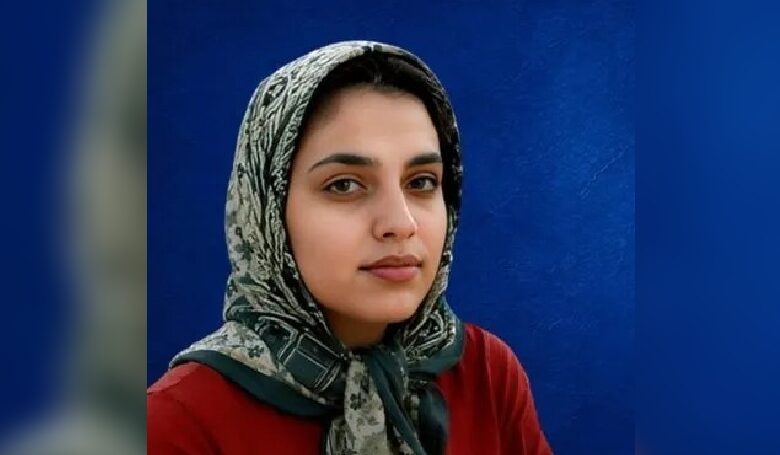
Marziyeh Neiry, a 24-year-old woman who, according to human rights reports, was married at age 17 under family pressure, was executed by qisas (retaliatory justice) on charges of killing her husband after years of living in violent conditions at the central prison in Qazvin. Her case once again draws attention to the connection between child marriage, domestic violence, and the execution of women in Iran.
The execution of Marziyeh Neiry, 24, a victim of child marriage and forced marriage, was carried out early Saturday morning, Mordad 17, 1405 (August 8, 2025) at Qazvin Central Prison, known as Choubindar Prison. As of the time this report was compiled, neither Iran’s official state media nor judicial authorities had announced the execution.
According to reports published previously, Marziyeh Neiry, who was only 18 years old in early Mehr 1400 (September-October 2021), defended herself with a kitchen knife during a confrontation with her husband and one of his friends who, according to informed sources, intended to assault her. During this altercation, her husband was killed. After the incident, Marziyeh fled for four days and sought refuge at her brother’s home, but he turned her over to the police.
Iran’s Human Rights Organization also reported that Marziyeh Neiry, from a village between Qazvin and Karaj, was forced into marriage to a man named Davoud approximately six years earlier when she was only 17 years old. According to the organization’s information, her husband’s home had become a gathering place for his friends to use drugs and alcohol, and her husband showed no reaction to their harassment and attempts to assault Marziyeh.
Consequently, Marziyeh’s case cannot be viewed simply as that of a woman accused of “intentional murder.” The account presented by human rights sources of her life portrays a woman who entered into forced marriage as an adolescent, lived in an environment filled with violence and substance abuse, and ultimately, following a fatal confrontation, was sentenced to death.
Marziyeh Neiry’s case did not occur in a vacuum. UN and UNICEF statistics show that child marriage remains a social reality in Iran.
According to UNICEF data, approximately 17 percent of women aged 20 to 24 in Iran were married before reaching age 18. UN data records the same figure for the rate of marriage before age 18 in Iran.
Iran’s civil law has not completely prohibited marriage of girls at young ages. Human Rights Watch reported that under this law, girls may marry from age 13, and marriage is even possible at younger ages with judicial permission.
This situation means that girls who are still psychologically, physically, and economically in the position of children may enter into relationships from which it is extremely difficult to exit, particularly when combined with poverty, family pressure, economic dependence, and the absence of effective legal protection for domestic violence victims.
UNICEF also considers child marriage to be a harmful practice that violates children’s rights, endangers their health and well-being, and is connected to gender inequality and the disempowerment of girls.
One of the most important aspects of Marziyeh Neiry’s case is an issue that human rights organizations have repeatedly warned about: “Some of the women executed in Iran for killing their husbands were themselves victims of domestic violence prior to committing the crime.”
Iran’s Human Rights Organization, in its review of women’s executions in 2024, stated that many women who have been executed were victims of domestic violence, child marriage, or severe economic and social deprivation. The organization documented at least 31 executions of women that year, with 19 of them related to qisas sentences in murder cases. At least two executed women were child brides, and nine women were executed for killing their husbands.
The situation worsened in 2025. Iran’s Human Rights Organization announced that at least 48 women were executed in Iran that year—the highest recorded figure in over two decades of systematic documentation of women’s executions. Of this number, 32 women were executed by qisas in murder cases, and at least 21 women were hanged for allegedly killing their husbands or fiancés. At least two of the executed women were child brides.
These statistics are not merely dry numbers in a human rights report; behind each case lies the life of a woman, many of whom spent years struggling with violence, forced marriage, poverty, or lack of legal protection before being placed in line for execution.
In December 2025, Rana Farajaghaei, a 24-year-old woman from Tabriz, was also executed for allegedly killing her husband. Iran’s Human Rights Organization reported that Rana was married at age 16 under family pressure to a man 19 years her senior, and her family imprisoned her in a room for two days to force her to accept the marriage.
An informed source said of her condition that Rana’s years of life after marriage were, in her own words, “like death.” She was ultimately sentenced to qisas for killing her husband and was executed at Tabriz Central Prison.
In another case, Golly Koohkan, a 25-year-old Baloch woman, was forced into marriage with her cousin at age 12 and endured years of physical and psychological violence. After an incident that resulted in her husband’s death, she faced a qisas sentence. UN experts in 2025 explicitly described her case as an example of “systematic gender discrimination against women victims of child marriage and domestic violence” and called on the Islamic Republic to halt her execution.
Golly Koohkan was ultimately saved from execution by collecting blood money and obtaining the family of the victim’s consent; however, this fact itself demonstrates one of the structural problems of the qisas system in Iran. The fate of a woman sentenced to death can largely depend on her family’s or supporters’ ability to collect blood money and secure the victim’s family’s forgiveness.
Human Rights Watch has emphasized in its annual report on Iran that Iran’s laws still do not adequately criminalize domestic violence and marital rape, and the government has failed to provide effective protection for women against gender-based and domestic violence. The same report states that child marriage remains legal in Iran, with approximately 17 percent of girls marrying before age 18.
This legal gap becomes even more significant when a woman is trapped in a violent marriage. If a woman cannot effectively and safely exit a violent relationship and lacks adequate legal protection, the likelihood that a domestic altercation becomes a fatal incident increases.
In such circumstances, critics of Iran’s judicial system argue that focusing solely on the moment of the killing, without examining the history of violence and the circumstances that brought the woman to that point, can re-victimize the victim—once in married life and again in the judicial process.
Marziyeh Neiry’s execution also took place at a time when the number of executed women in Iran has experienced significant growth in recent years. Iran’s Human Rights Organization announced in July 2026 that with the execution of Parvin Chardolee, the number of executed women in Iran since 2010 has reached at least 300. The organization stated that the Islamic Republic has the highest recorded number of women’s executions in the world. In 2025, at least 48 women were executed, and by the time that report was published in 2026, at least 11 more women had been executed.
Meanwhile, a considerable portion of these executions is not even announced by official state media. In 2025, according to Iran’s Human Rights Organization’s report, only four of the 48 women’s executions were announced by official sources.
This situation means the actual figure is likely higher than the numbers human rights organizations are able to document and verify.
In 2024, the UN High Commissioner for Human Rights criticized the alarming increase in executions in Iran and emphasized the absence of fair trial processes in a number of cases. The UN also expressed concern about the execution of death sentences without informing the prisoner’s family or lawyer in some instances.
In murder cases, Iran’s judicial system employs the mechanism of qisas, a system in which the victim’s family may choose between executing the sentence, accepting blood money, or granting pardon.
Iran’s Human Rights Organization believes that one of the fundamental problems of this system is that the law does not sufficiently distinguish between different types of “intentional murder” in terms of circumstances and degree of responsibility, and in many cases, contextual factors such as domestic violence and women’s social and economic status do not play a role proportionate to their importance in the final verdict.
For this reason, cases like Marziyeh Neiry raise a serious question: “If a woman has been trapped in a forced and violent marriage for years, should justice only begin from the moment blood is shed?”
The answer to this question is not merely a legal debate; it is a human issue concerning the fate of girls who may enter into marriage and a shared life in childhood that they did not choose, and who may face the most severe possible punishment as adults if they react to violence.
Marziyeh Neiry’s case confronts this painful contradiction: a girl who, according to human rights reports, was married at age 17 under family pressure; a woman who, according to those same reports, faced violence and the danger of assault in her home; and ultimately, at age 24, after being sentenced to qisas, was executed.
Her death was finalized even as news of the execution’s implementation had not, by the time of this report’s compilation, appeared in Iran’s official state media.
Marziyeh Neiry is now one of dozens of names recorded in the statistics of women executed in Iran; but behind this number lies the story of a girl whose childhood ended with forced marriage, whose brother turned her over to police, and whose life ultimately ended at the noose. Her case once again demonstrates that for many women in Iran, domestic violence, child marriage, lack of family support, lack of legal protection, and execution can be links in a single chain.