UK Parliament Foreign Affairs Committee Calls for Designation of IRGC as Terrorist Organization
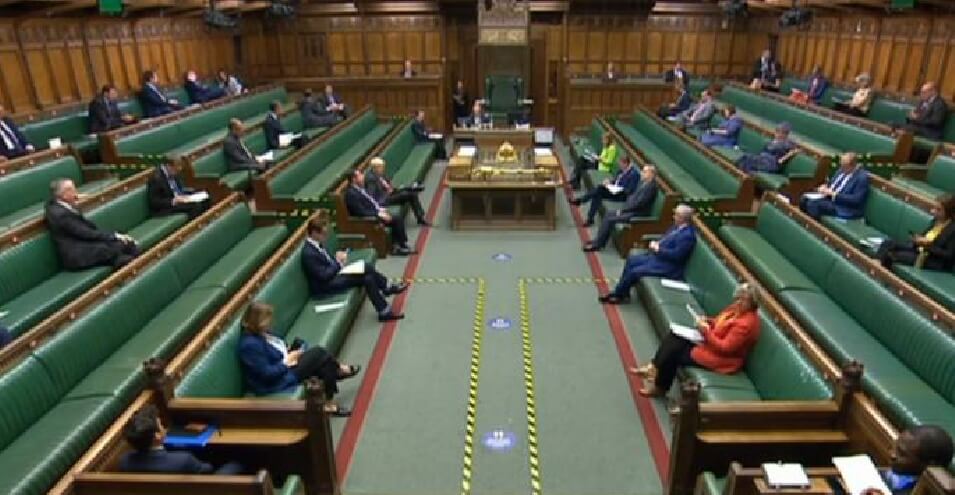
Britain’s House of Commons Foreign Affairs Committee has called on the government to place Iran’s Islamic Revolutionary Guard Corps (IRGC) on the list of terrorist groups. The committee members have also called for new negotiations with Iran over its missile program and regional activities.
The Foreign Affairs Committee of the British Parliament has called on the government to designate Iran’s Islamic Revolutionary Guard Corps on the list of terrorist organizations. According to a report by the British newspaper The Guardian, the committee, which has members from both the Labour and Conservative parties, has formally described the detention of dual Iranian-British nationals in Iran as “state-sponsored hostage-taking” and has urged the government to take further action for these individuals.
The Foreign Affairs Committee of the British Parliament believes that the current government approach to freeing imprisoned dual nationals in Iran has been ineffective. Currently, at least four imprisoned dual Iranian-British nationals are in Iran, one of whom is Nazanin Zaghari-Ratcliffe.
Tom Tugendhat, chair of the committee, stated: “The British government must call the arbitrary detention of foreign nationals what it is: hostage-taking.”
According to the committee chair, the allegations, trials, and sentences of imprisoned British citizens in Iran are a “farce of the judicial system.” He characterized the use of “young mothers and retirees” as leverage for negotiations as an “unacceptable” form of politics.
In its report, the committee requested that the British Foreign Office change its approach to negotiations aimed at freeing dual nationals and include preconditions for respecting human rights standards in discussions with President Hassan Rouhani to normalize relations with Iran.
The Foreign Affairs Committee of the British Parliament has also called on Boris Johnson’s government to use Magnitsky sanctions laws to target human rights violators in Iran.
British representatives have also called for the Islamic Revolutionary Guard Corps to be placed on the list of terrorist organizations due to “overt and sustained support for terrorists and non-state actors operating to undermine stability in the region.”
“The Collapsed Nuclear Agreement”
In another section of the report, the Foreign Affairs Committee of the British Parliament recommended that the “collapsed nuclear agreement” with Iran be renegotiated to add necessary commitments to limit Iran’s missile program.
The report states that the committee’s assessment of the 2015 atomic agreement with Iran is that what remains of this agreement is only a “incomplete and failed deal,” noting: “Of course, this assessment will not be welcomed in Tehran.”
The report authors have called for amendments to what is known as the “sunset clause” in the JCPOA and have requested that binding commitments to limit Iran’s ballistic missile program and increased inspection powers for the International Atomic Energy Agency be included in negotiations.
Under the “sunset clause,” Iran can increase enrichment centrifuges after 10 years (starting in 2025) and is permitted to increase its stock of less enriched uranium after 15 years.
Iran’s Regional Activities
Members of the British Parliament have also called on the British government to clarify the main points of its long-term plans for reviewing Iran’s “extensive destabilizing activities.”
The committee has emphasized that Britain is well-positioned to consult with the United States and its allies in the Persian Gulf to develop a joint strategy.
The Foreign Affairs Committee of the British Parliament has rejected the U.S. decision to withdraw from the JCPOA and the policy of maximum pressure on Iran, stating: “Disagreements over how to address the nuclear issue, particularly between the United States and the E3 (Britain, France, and Germany), have not served British interests.”
According to the report authors, the U.S. withdrawal from the JCPOA has left Iran with no incentive to engage with the West and has given Russia and China the opportunity to pursue their programs in the Middle East.
Members of the Foreign Affairs Committee of the British Parliament believe that without determined leadership and comprehensive cooperation, there is a risk that Iran will move further toward Russia and China to improve its economic situation, which would be politically less costly for Iran.
Source: DW