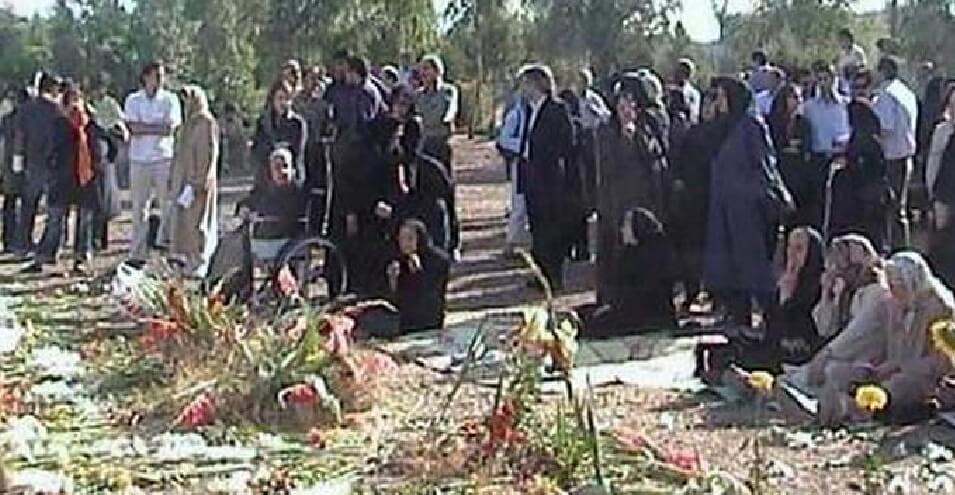
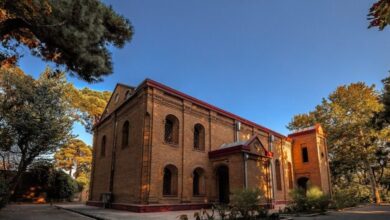
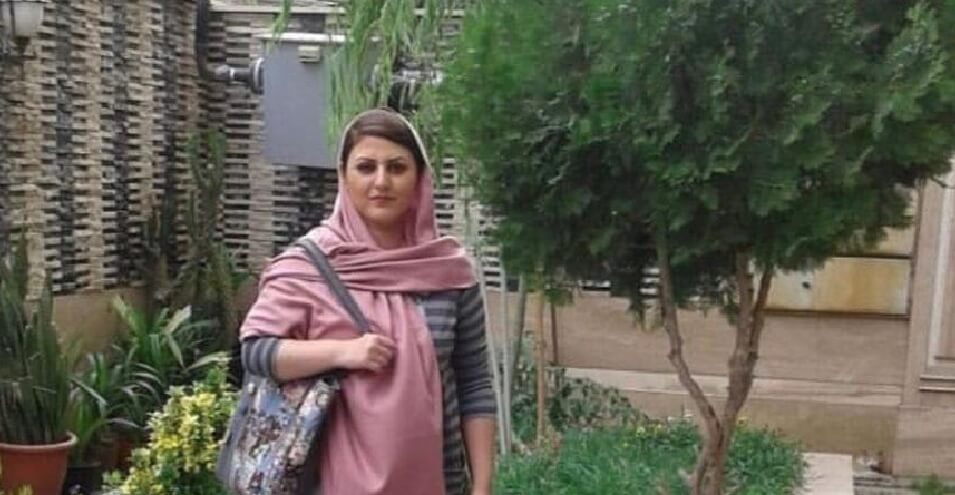
Final Court Session of Hamid Nouri in Albania; Witness Describes Body Bags of Executed Prisoners
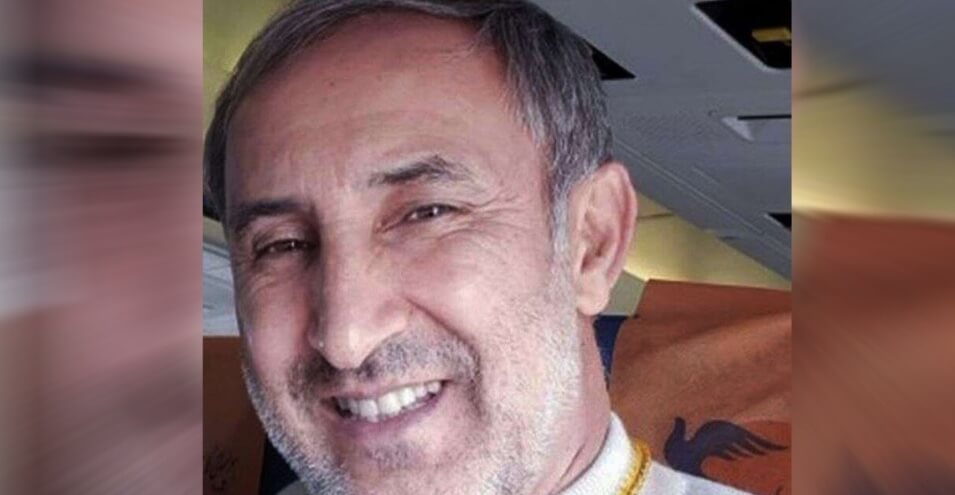
Hassan Ashrafian, a member of the People’s Mujahedin Organization, stated in the final court session of Hamid Nouri’s trial in Albania that he witnessed more than 30 bags containing the bodies of prisoners being removed from the prison by truck.
Hassan Ashrafian said that Hamid Abbasi (Nouri) told prisoners who had survived executions: “If we wanted to fully implement the Imam’s fatwa, we would have had to arrest and execute half the people of Iran.”
Hamid Nouri is accused of participating in mass executions of political prisoners while serving as a former prosecutor at Gohardasht Prison in Karaj; an accusation he denies.
Hamid Nouri arrived at Stockholm airport on November 9, 2019, on a direct flight from Iran and was immediately arrested.
Members of the court’s judicial panel traveled to the city of Durrës in Albania, and the court session on Thursday, November 27, is the seventh and final session of seven sessions being held in this country.
Hamid Nouri is not present in the Albanian court sessions and his lawyer attends on his behalf. He is present at the Stockholm court along with his other lawyers and watches the Albanian court sessions via video.
Hassan Ashrafian said in Hamid Nouri’s court session that he was arrested in December 1982 on charges of supporting the People’s Mujahedin Organization and was transferred to Gohardasht Prison in 1985. He added that he was transferred to Evin Prison in February 1989 and released in December 1992.
He stated that on the eighth day of Mordad he saw two wagons full of thick ropes: “I saw Davoud Lashkari armed and in military uniform. A few people in civilian clothes were with him and two Afghan prisoners in prison uniforms were carrying two wagons that were full of thick ropes.”
Hassan Ashrafian said that on the 12th of Mordad he saw two trucks transporting the bodies of executed prisoners: “One truck was silent. The other truck was running and I could see small red lights at the bottom of the truck. I saw body bags. One of the guards had gone over the bodies and was spreading a sheet over the truck.”
When asked by the prosecutor how he knew there were bodies in the bags, he said: “It was obvious from the bags and I saw approximately 30 bags and bodies.”
Hassan Ashrafian explained encounters he had with Hamid Nouri and said he saw him several times in Gohardasht Prison: “A few months after we were transferred to Gohardasht Prison, he came to our ward. We didn’t know him. The boys said it was Hamid Abbasi (Nouri) and Nasserian (Mohammad Moghadase) and we raised the problems we had in the ward. According to their program they would visit the wards to supervise and learn about the condition of the prisoners.”
He said that another time when he and several other prisoners were moved to the gas chamber due to collective exercise, when leaving “I heard Hamid Abbasi’s voice saying ‘beat these hypocrites.’ I remembered his voice.”
Hassan Ashrafian said that the last time he saw Hamid Nouri was in November 1988, after the executions: “It was late November when Hamid Abbasi came with a few others. We raised health and medical issues and he said ‘go thank God that you are alive.’ He said that if we wanted to fully implement the Imam’s fatwa, we would have had to arrest and execute half the people of Iran. I was not blindfolded and could see him.”
When asked by Hamid Nouri’s lawyer about Hamid Abbasi’s (Nouri’s) personal characteristics, Hassan Ashrafian said that he was a quiet man and spoke less than others.
Hamid Nouri’s lawyer said that Hassan Ashrafian’s statements in court contradict his statements in police investigations. He added: Hassan Ashrafian was questioned by police about his conduct with Hamid Abbasi (Nouri) after the executions but did not mention his conduct. Regarding the rope wagon, the date he told police differs from the date he stated in court.”
Hassan Ashrafian said he may have stated the date incorrectly and now doubts whether those events occurred on the seventh of Mordad.
According to him, Hamid Nouri usually wore prison uniform, which was khaki and green clothing, but he had also seen him a few times in ordinary and personal clothes.
Q&A with Asghar Mahdi-zadeh
Later in the session, Hamid Nouri’s lawyers questioned Asghar Mahdi-zadeh, who testified as a witness and complainant on November 12.
Hamid Nouri’s lawyer had requested an extraordinary session that day and said he had many questions for Asghar Mahdi-zadeh.
The court judge also said they would ask Asghar Mahdi-zadeh to appear in another opportunity for further investigation.
According to his counseling lawyer, Asghar Mahdi-zadeh was sentenced to 15 years in prison in 1982 on charges of supporting the People’s Mujahedin Organization, was released after 13 years, and was taken to death row several times but did not enter the death chamber.
Hamid Nouri’s lawyer said that Asghar Mahdi-zadeh claimed to be present in the execution room and according to his own account saw 12 prisoners who “were hanged from a gallows and Nasserian (Mohammad Moghadase), Abbasi (Hamid Nouri) and Davoud Lashkari were there. He said that Nasserian ordered to empty the ground under the prisoners’ feet, but from the fourth person onwards, the people themselves removed their feet from the chair and threw themselves into the air. He said that the guards hung from the hanging bodies to make the executions finish faster…”
Hamid Nouri’s lawyer asked Asghar Mahdi-zadeh to elaborate further on this matter and he said: “Nasserian (Mohammad Moghadase) kicked two chairs….”
Hamid Nouri’s lawyer said that Asghar Mahdi-zadeh’s statements in court contradict his statements to police, and he did not mention Abbasi (Hamid Nouri) and (Davoud) Lashkari to police and said that Nasserian (Mohammad Moghadase) knocked over five or six chairs, and after police questioning said that Abbasi (Hamid Nouri) and (Davoud) Lashkari were also present.
He said that Asghar Mahdi-zadeh’s account in this regard appears word-for-word on the Mujahedin website and it appears that he is presenting this account from this website.
According to Hamid Nouri’s lawyer, Iraj Mesdaghi, a 1980s political prisoner, questioned this account in his book.
Asghar Mahdi-zadeh replied that Iraj Mesdaghi wrote his book based on hearsay. He accused Iraj Mesdaghi of complicity with the Islamic Republic and said: “Iraj Mesdaghi insults us and our organization and repeats everything the Revolutionary Guards and the Islamic Republic regime say.”
Hamid Nouri’s lawyer also mentioned regarding the date of execution of Kazem Saneatifar, another prisoner, that the date in Asghar Mahdi-zadeh’s account differs from the date in Iraj Mesdaghi’s and Mahmoud Royaee’s books.
Asghar Mahdi-zadeh replied that Iraj Mesdaghi was in the ward until the 15th of Mordad, did not come to death row and collected his information from various people.
Nouri’s lawyer then questioned Asghar Mahdi-zadeh about another prisoner and said that he told police that this prisoner was taken to execution in a wheelchair but in court said he was taken in a stretcher. He asked whether it was ultimately a wheelchair or stretcher?
Asghar Mahdi-zadeh replied that it was a stretcher and they did not provide him with facilities.
Nouri’s lawyer also mentioned other dates in Asghar Mahdi-zadeh’s accounts, including the execution date of a prisoner named Kheirollah Jalali, which he said contradicts Iraj Mesdaghi’s book as well as Mahmoud Royaee’s book.
Asghar Mahdi-zadeh said: “Iraj Mesdaghi wrote that Kheirollah was executed on Sunday while Kheirollah was in the same ward with us and Iraj Mesdaghi was not there that day.”
Hamid Nouri has denied the charges raised in court sessions. He is scheduled to answer questions in court on December 2. According to Hamid Nouri’s lawyer, his position is that “these executions never happened and he cannot accept the charges.”
Hamid Nouri’s lawyer claims that his client was on leave during the executions in Mordad and Shahrivar of 1988 due to his son’s birth.
The trial of Hamid Nouri, which will continue until April next year at the Stockholm court in Sweden, has also drawn reactions from Iranian authorities.
Saeid Khatibzadeh, spokesman for the Islamic Republic’s Foreign Ministry, on September 1 called the trial of Mr. Nouri “a design” by the People’s Mujahedin Organization and claimed that the Swedish court “has relied on a series of false stories, documentation and witnesses created by a small group.”
Source: Radio Farda