Iran’s Budget Trapped in a Cycle of Repeated Lies

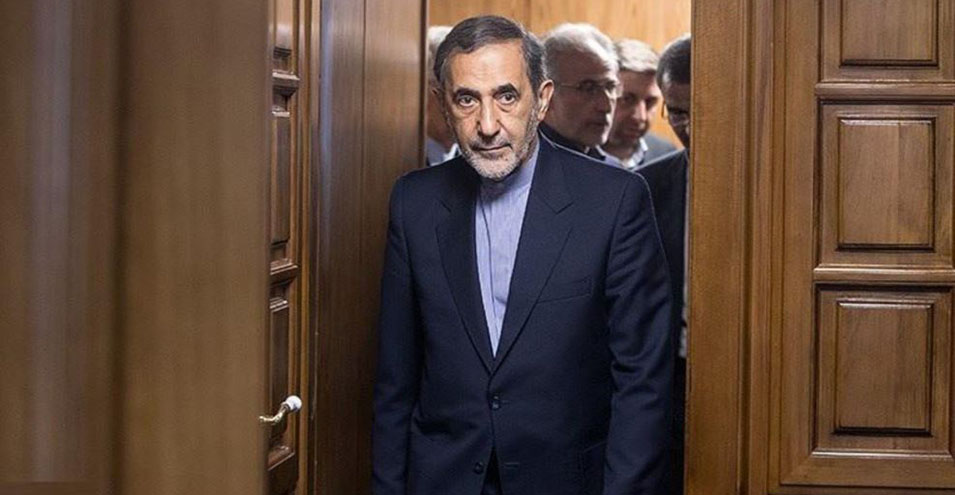
Hassan Rouhani left the final budget of the fourteenth century in the Persian calendar for his successor with an astronomical deficit, and Ibrahim Raisi, who submitted the first budget bill of the fifteenth century in the Persian calendar to parliament, will most likely not have better achievements than his predecessor.
The comedy of preparing a budget bill and submitting it to parliament and having it approved by representatives is repeated each year in somewhat similar ways, providing a financial document for the country that undergoes transformation by the will of the government from the moment it enters the implementation phase, to the point that by the end of the fiscal year, it bears little resemblance to what the legislative body had approved.
The 1401 budget bill that Ibrahim Raisi submitted to parliament on Sunday, December 21, has remained faithful to Iran’s budgeting tradition in form and content. This bill also comprises the country’s total budget from two sectors: general budget (belonging to ministries and government institutions) and the budget of state companies and banks.
In the first budget bill presented by the thirteenth government, the general budget is 1,372 trillion tomans and the budget of state companies and banks is 2,200 trillion tomans.
One can compare these figures with similar figures presented in budget bills of previous years. One can also address the sources of income and expenditure in the general budget and give priority to verifying them. Such efforts are certainly not unimportant and help better understand the mechanisms of the country’s most important financial document. But what is more important is revealing the lies that, especially in recent years, have been repeated along with the submission of budget bills, to the extent that from the intensity of repetition, their contradictions with reality have remained hidden from a large section of the country’s public opinion.
Here we refer to four major lies that burden the first budget bill of the thirteenth government, as well as many previous budget bills.
First Lie: It is This Parliament That Decides on the Budget
The approval of the country’s income and expenditure by the legislative branch composed of people’s representatives is the most important symbol of democracy throughout the world. In Iran, based on Article 52 of the Constitution, the government prepares the annual budget and submits it to parliament for review and approval. The government executes the parliament-approved budget, and any subsequent changes to the figures of this document are subject to law and approval of the people’s elected representatives.
In practice, however, parliament’s review of the government’s submitted budget bill faces many ifs and buts. The country’s financial document is shrouded in ambiguity, the leader and the government have the first say in preparing, approving, and executing it, and parliament, despite impassioned speeches by representatives in support of or opposition to the budget bill, plays a very marginal role in this arena.
In this very proposed budget bill by Ibrahim Raisi, parliament’s review, even superficially, does not go beyond the scope of the general budget, and nearly 60 percent of the country’s total budget consisting of the budget of state companies and banks (2,200 trillion tomans) remains excluded from any oversight by representatives.
The argument is that parliament principally does not have the opportunity to deal with the accounts of nearly 400 state companies. Parliament representatives are even unaware of the income and expenditure of the National Iranian Oil Company, the country’s most important state company. In other words, the presentation of the budget of state companies and banks to parliament is only a matter of appearance, and this empire generating massive rents, and the main source of systematic corruption, is effectively not under parliament’s control.
What remains is the review of the country’s general budget (1,372 trillion tomans), and there is much to say even in this regard. In a report titled “Analyzing the Role of Parliament in Budgeting in Light of International Experience and Reform Requirements,” published in December 2021, the Parliamentary Research Center classified the inefficiency of the budget review process in the Islamic Consultative Assembly around 14 axes, one of which is: “The lack of transparency in parliament’s authority in approving the structure and content of the country’s annual budget.”
Second Lie: The Budget Has No Deficit
A parliament that plays such a marginal role in reviewing the government’s proposed financial document naturally cannot properly address whether the budget sources are real or not, prevent the executive branch’s sleight of hand, and from the very beginning prevent the emergence of a budget deficit, especially in such devastating proportions.
In fact, many budget bills in the Islamic Republic are presented to parliament with unrealistic resources and often approved by parliament while maintaining these incorrect assumptions. In the worst conditions of sanctions, governments present figures for oil exports as a source of budget revenue that make no logical sense. Taxes, another source of government revenue, increase in conditions where the country’s economic growth hovers around zero, and there is no sign of necessary reforms to expand tax capacity fairly.
The most eloquent example of an unbalanced financial document relying on unrealistic resources is the 1400 budget in the Persian calendar, which is the product of Rouhani’s government and the current parliament, and according to various sources, because it was based on severely unrealistic estimates, particularly in the field of oil exports, its deficit hovers around 50 percent, while Hassan Rouhani, then president, and also the head of his Planning and Budget Organization, swore to its balance.
Regarding the 1401 budget bill, it too revolves on the same heel. Masoud Mir-Kazemi, Vice President and Head of the Planning and Budget Organization, says this bill was “prepared based on sustainable resources and without deficit” and Ibrahim Raisi also describes it as a budget that, since it has no deficit, is a source of stability and assurance for producers and consumers.
Both of these gentlemen should explain how they were assured that Iran can export 1.2 million barrels of oil per day next year at a price of $60 per barrel so that the 1401 budget’s share from oil exports (381 trillion tomans) can be secured? Should not the fate of nuclear talks in Vienna, the health crisis caused by coronavirus, and its impact on the global economy and future oil demand levels have urged them to greater caution?
Third Lie: Borrowing from the Central Bank is a Red Line for the Government
All economic officials in the executive branch say that even if there is a budget deficit, the government will not resort to borrowing from the central bank. Ibrahim Raisi also said when presenting the budget bill to parliament: “Borrowing from the central bank and increasing the monetary base is a red line in the budget, and the plan is for this not to happen, because it creates serious problems for the country, as it is that in the past few months of our government, our effort has been to be able to run the country without borrowing from the central bank.”
“Borrowing from the central bank” is a polite term for printing banknotes by this institution. When the government faces a budget deficit (for example, cannot pay its employees’ salaries), it asks the central bank (which in the Islamic Republic lacks independence) for money, the inevitable consequence of which is an increase in the monetary base, disproportionate surge in liquidity, and inflation surge. In other words, budget deficit and how to compensate for it is the root cause of the calamity that has gripped the throats of the Iranian people and driven a large portion of them below the poverty line.
Does the Islamic Republic’s government no longer resort to borrowing from the central bank? It appears that direct borrowing from the central bank has been limited, but the executive branch in recent years has resorted to indirect borrowing from the central bank, which is merely a facade and brings the same devastating inflationary consequences to the people.
In fact, instead of directly going to the central bank to finance its budget deficit, the government has chosen the method of pressuring banks and putting its expenses on their shoulders. It goes without saying that banks also go to the central bank to collect their claims from the government, which meets their requests by printing money. In fact, the real victim of borrowing from the central bank to compensate for budget deficit, whether direct or indirect, is the people who feel the dire consequences of unrealistic budgets with their flesh and blood.
Fourth Lie: Without Lifting Sanctions, the Budget Can Be Balanced, Anti-Inflationary, and Generate Economic Growth
Over the past 43 years, Iran has never enjoyed “normal” conditions in the international economy, and sanctions pressures, related to various issues, especially the nuclear file, have always weighed heavily on its relations with the world. The country’s foreign trade, particularly in the very sensitive field of oil and gas exports, attracting foreign investment and technology, access to the huge tourism market, have all been affected by tensions in the country’s international relations and have changed macroeconomic data, from growth rates and employment to inflation and the value of national currency. Without these tensions, Iran today would be a different country both at the level of the Middle East and on a global scale.
It goes without saying that the annual budget is also one of the main victims of the choices that the Islamic Republic has imposed on the country’s foreign policy. In fact, Iran’s economic difficulties in international relations naturally affect budget resources and expenditures. The budget deficit, which has taken astronomical proportions in the current year in the Persian calendar, is largely a product of Iran’s being “abnormal” at the international level.
Of course, over the past 43 years, the Islamic Republic’s leadership system has invented mechanisms to circumvent sanctions and found ways to export goods, including oil, and also import some of the goods it needs. But the difference between a country that must constantly overcome difficulties created by a hostile environment, and another country that has unrestricted access to markets, financial institutions, capital and technology throughout the world, is very great.
In his speech on Sunday, December 21, on the occasion of submitting the 1401 budget bill to parliament, Ibrahim Raisi accused his predecessor and his officials (without naming them) of having “tied the economy to the will of foreigners.” According to him and his government officials, he has prepared the budget bill while taking into account sanctions conditions and claims that without relying on “the will of foreigners,” he can make the inflation rate single-digit and bring the growth rate to eight percent.
The reality is that by insisting on being “abnormal,” one cannot achieve a “normal” budget that generates non-inflationary growth. All the affluent countries in the world, with such dynamic and flourishing economies, have not bowed their heads to “the will of foreigners.” Instead, few countries like Iran have tied the fate of their economy to this extent to what happens beyond their borders.
The fate of the 1401 budget and its future ups and downs are also dependent on the talks taking place in Vienna.
Source: Radio Farda