Hamid Noori Trial Resumes; Correspondence Between Montazeri and Khomeini on Executions Read in Court
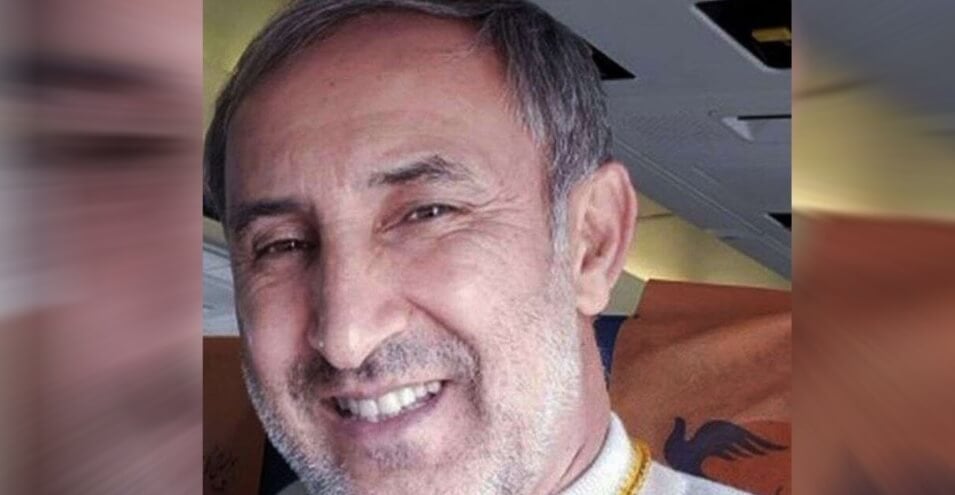
At the fourth session of the trial of Hamid Noori, former judicial official at Gohardasht Prison in Karaj, held in Stockholm, the continuation of his indictment was read, which traced back to the first and second waves of executions in the 1960s based on documents and prisoners’ memoirs.
According to reports from attendees at the court session on social media, the prosecutor placed considerable emphasis on the correspondence between Hosseinali Montazeri, the former deputy of Ruhollah Khomeini, with Noori in this regard.
At this session, all correspondence between Montazeri and Khomeini was read aloud, and the prosecutor stated that unlike the first wave, which was caused by Ruhollah Khomeini’s fatwa leading to widespread killings of Mujahedin-e Khalq members, in the second wave that resulted in widespread executions of leftist forces, no such fatwa exists.
Laden Bazargan, whose brother Bijan Bazargan was executed in 1988, wrote on Twitter that the prosecutor also read the names of a number of those executed in the session based on the memoirs of former political prisoners such as Mehdi Aslani.
Part of the indictment read by the prosecutor at this session focused on evidence of political prisoners on the left being flogged five times daily, those who were unwilling to pray in prison, being subjected to ideological interrogation and torture until they agreed to pray.
The prosecution specifically emphasized Hamid Noori’s role in selecting political prisoners to appear before the death committee, including presenting questionnaires to them.
Reports indicate the presence of members of the Mujahedin-e Khalq organization outside the courtroom, as in the three previous sessions, with their slogans heard inside the session.
This is the second week of the trial of Hamid Noori, a former judicial official of the Islamic Republic and accused of participation in Iran’s 1988 executions.
He arrived at Stockholm airport on November 9, 2019, on a direct flight from Iran and was immediately arrested following the efforts of Iraj Mesdaghi, a civil activist and former political prisoner.
Iraj Mesdaghi, a political activist and one of the complainants in this case, explained to the media how the “trap” was set for this former official of the Islamic Republic’s judiciary, saying that in addition to family matters, he had traveled to Sweden for a “luxury recreational trip around Europe and visiting relatives.”
Swedish television networks also mention in their reports that Hamid Noori was brought to Sweden as a result of a “planned trap.”
It is also reported that all these steps and bringing Hamid Noori to Sweden were filmed by Nima Sarvestani, an Iranian-born filmmaker living in Sweden, and are set to be shown soon in a documentary film entitled “The Executioner.”
Source: Radio Farda