Khamenei’s Comprehensive Defense of Parliament and Guardian Council
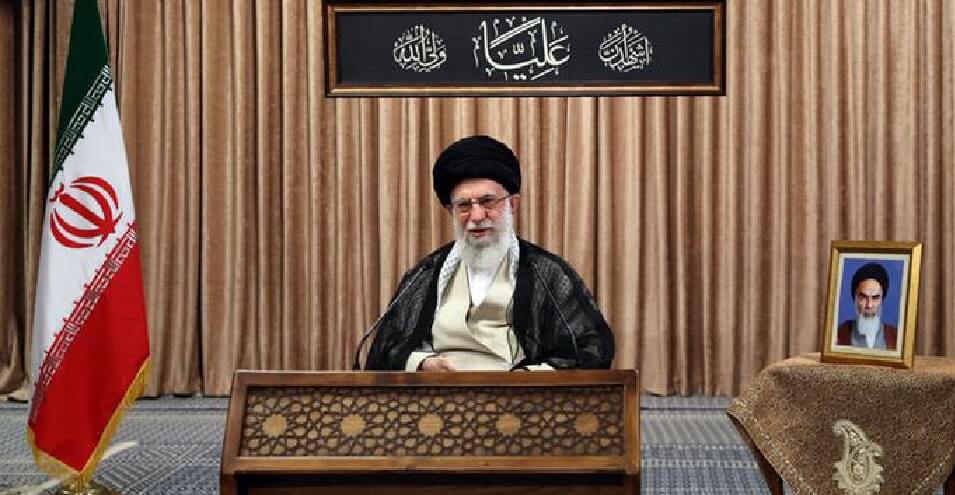
The Leader of the Islamic Republic of Iran, in a virtual meeting with parliamentarians, encouraged people to participate in elections and urged them not to listen to those who say don’t vote. He also stated that the Guardian Council has acted in accordance with its duty.
Ali Khamenei on Thursday, June 6, defended the performance of the Guardian Council and the current parliament in a video meeting with parliamentarians.
He asked people not to listen to those who encourage non-participation in elections and said, “These people are not well-wishers of the nation.”
Khamenei, in defending the Guardian Council’s performance, also said: “The esteemed Guardian Council, in accordance with its duty, did what it should do and deemed necessary, and determined the candidates.”
The Guardian Council, as in previous rounds, disqualified a large number of presidential election candidates in this round. The difference in this round from previous ones, however, was that well-known conservative figures such as Ali Larijani and Ezzatollah Zarghami were also among those disqualified.
However, Khamenei distinguished between non-approval of qualifications and disqualification, saying: “Not passing the qualification test does not mean disqualification. Not passing the qualification test means that the Guardian Council was unable to determine that this person is qualified. Not that they determined he is not qualified—no, it is possible that he even has high qualifications, but now the reports, facilities, permit me to say, the Guardian Council’s acquaintances were unable to determine this.”
One of the other disqualified candidates was Mahmoud Ahmadinejad, who was president for eight years and had the most support from Khamenei. However, in a statement published after his disqualification, he said he would not remain silent and considered this situation “causing the overthrow of the system.”
Without naming Ahmadinejad, Khamenei said in his remarks: “Some people’s solution to be seen more, to be heard more, is to violate norms, to break what they call the system’s red lines.”
He described the Islamic Republic system as “an established, enduring and rooted system” and said: “It should not be that they try now to break these important boundaries and gaps of the Islamic Republic system to create a position for themselves, a position they won’t even get.”
“Foreign Policy is Not the Main Concern of People”
Khamenei considered “concern about low public participation in elections” unfounded and also described the question of “who from which faction, with what name and title enters the arena” as unimportant. On this, he said: “In my view, it seems that the general public, ordinary people are not looking for the names of this one and that one; ordinary people are looking to see who can solve the country’s problems.”
While Iran, according to government critics, is currently facing the harshest sanctions and severe economic turmoil due to “anti-Americanism” and “anti-Zionism” and chronic challenges in its foreign policy and regional situation, and even in controlling corona, along with mismanagement, these pressures are considered as restraining factors, the Leader of the Islamic Republic in his speech denied the connection of economic problems with the government’s foreign policy. Predicting that “high participation” in the presidential election would take place, he said: “The people’s main concern is not cyberspace and foreign policy and relations with this government or that government; the people’s main concern is other things; the people’s main concern is youth unemployment, the people’s main concern is the livelihood of the weak classes of society, the people’s main concern is the import mafia that breaks the back of domestic production, the people’s main concern is wrong policies that disappoint an innovative young person who could do the job.”
Regarding the “import mafia,” this has been a slogan and discussion topic in the Islamic Republic for years, but internal critics of the government attribute the failure to combat this phenomenon to its entanglement with systematic corruption at various levels of the Islamic Republic’s structure, and in this regard point to the role of “smuggler brothers” and unauthorized ports and harbors that the Revolutionary Guards and various institutions operate outside supervision. According to the latest estimates by the Islamic Consultative Assembly’s Research Center published in 2019, “contraband goods constitute between 22 to 33 percent of imported goods in different years, and only 1 to 8 percent of it is discovered. In other words, on average about 95 percent of contraband reaches the domestic market.” The report states that this volume of contraband is imported by powerful circles close to the government or with lobbying in the government from official and unofficial sources.
Khamenei also praised the current parliament in his continued remarks, describing it as “hardworking and efficient.” According to the Leader of the Islamic Republic, this parliament has achieved “good accomplishments” and has passed “bills and proposals on important matters.”
This is while many observers of the current parliament have considered it one of the weakest parliaments since the revolution. Among the controversial actions of this parliament are the interference in the current year’s budget bill, the parliament speaker’s trip to Moscow and his rejection by Putin, and one representative slapping a soldier while performing his duty.