Twelfth Session of Hamid Nouri’s Trial Held, Accused of Participation in 1987 Executions
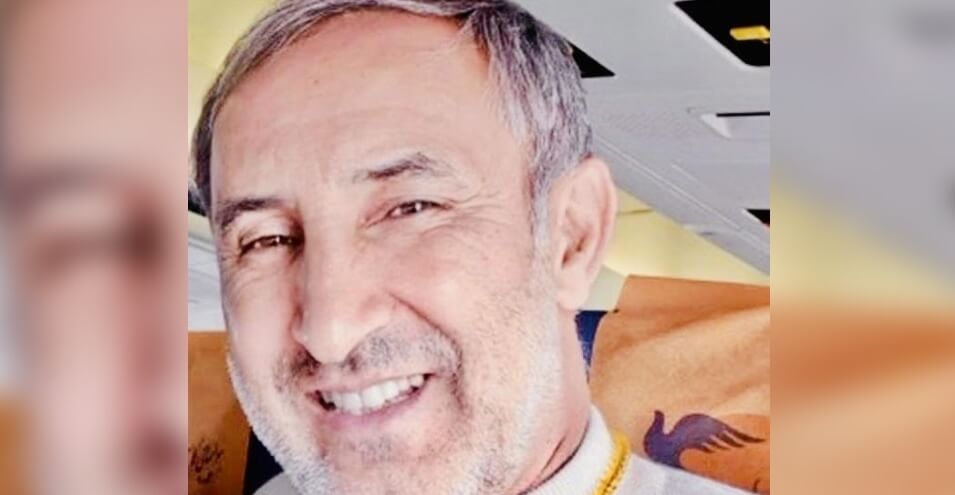
The twelfth session of the trial of Hamid Nouri, accused of participating in the executions of summer 1987, was held on Monday, September 6th, and was devoted to the testimony of Homayoun Kaviyani, a former prisoner, and questioning by prosecutors and defense attorneys representing the defendant.
Homayoun Kaviyani, who was arrested at age 17 following his participation in the June 30, 1981 demonstrations, was sentenced to life imprisonment during a brief court hearing on three charges: “support for the Mujahedeen organization,” “participation in the June 30 demonstrations,” and “opposition to the Islamic Republic system.”
Mr. Kaviyani testified in the twelfth session of the trial that he first met Hamid Nouri without a blindfold in prison in 1987. He stated that in Gohardasht Prison, Naserian, the prison’s prosecutor, introduced Hamid Nouri to him and a group of his fellow inmates as his deputy and right-hand man.
The fourth witness in this trial spoke of the day when Hamid Nouri took him and several other prisoners to the “corridor of death” and Naserian directed him to the “death committee.” Kaviyani testified that he saw Hamid Nouri in that corridor wearing civilian clothes and carrying files, moving back and forth and calling out to others.
The witness continued, stating that Hosseinali Niri in the death committee asked him what he thought about the Mujahedeen’s attack on the western part of the country. Subsequently, Naserian, at the request of the death committee, gave him a piece of paper in which he condemned the Mujahedeen’s attack on the western part of the country and requested a pardon from Ayatollah Khomeini, thus escaping execution.
Kaviyani said he was in the corridor of death when he read the following sentence on the wall next to his shoulder: “Nine children from Mashhad went to be executed.” This was the moment he learned about the executions. He confirmed the statements of other witnesses regarding matters such as increased food rations on execution days, the arrangement of halls and cells, multiple tortures, the existence of a gas chamber, and the prohibition of collective exercise.
Kaviyani testified that during several nights he was in the interrogation corridor, he heard women’s voices saying: “Don’t touch me, you bastard. Let me go.” He said that after being transferred to Evin Prison in 1981, he heard gunfire two or three nights a week. He said that prisoners, based on counting the number of bullets fired each night, became aware of the number of executions.
Kaviyani spoke of several other instances of direct contact he had with Hamid Nouri, one of which occurred after his transfer to Evin Prison.
During that period, Homayoun Kaviyani’s mother was diagnosed with breast cancer and was dying. His father asked him to do what he could to have one last visit with his mother. Kaviyani requested a leave of absence from Hamid Nouri, and Nouri said he would respond. Nouri later reported that Kaviyani’s request for leave had been denied. Another example of these meetings occurred after Kaviyani’s release from prison.
The witness explained that after his release, he received a request from the Evin prosecutor’s office to conduct an interview. He was taken to a Husseiniyeh on the day of the interview and placed in front of a camera. That day, Kaviyani, without a blindfold, sat a few meters away from Hamid Nouri.
When questioned by Hamid Nouri’s defense attorney regarding this interview, the witness stated in another part of his testimony: “Hamid Abbasi had placed a small camera and a chair up there. I went up and condemned my entire life and thoughts, and came back down.”
Kaviyani testified that after the executions, he approached Hamid Nouri several times for various matters, including surgery for his jaw and knee that had been damaged during interrogations. When asked by the prosecutor what his feelings were upon confronting Hamid Nouri in court, Kaviyani said: “It is very difficult. One does not forget someone who has taken one’s loved ones.”
Another part of Homayoun Kaviyani’s testimony was devoted to how he became aware of Hamid Nouri’s arrest. The witness said that Iraj Mesdaghi told him in a phone call that he was legally prohibited from saying important news but would tell him in due time.
Kaviyani testified today that he has seen a photograph of Hamid Nouri at the police station and during Swedish police interrogations. The prosecutor asked him whether he had seen a picture of Nouri on social media before seeing his photograph at the police station. Kaviyani answered: “No.”
Later in the trial, Daniel Markus, one of Hamid Nouri’s defense attorneys, claimed that Kaviyani’s testimony regarding the time of seeing Nouri’s photograph differed from his statements at the police station and to the prosecutor.
Yoran Yalmarsion, Mr. Kaviyani’s attorney, emphasized at the beginning of today’s court session that the witness has been suffering for years from psychological and physical problems resulting from incidents inside the prison and is undergoing treatment in Switzerland, where he is a refugee and resident.
The next court session will be held on Wednesday, September 8th in Stockholm, Sweden. The next witness in this trial will be Siamak Naderi.
Source: Voice of America