Avian Influenza Outbreak Becomes ‘Dangerous’ in South Khorasan
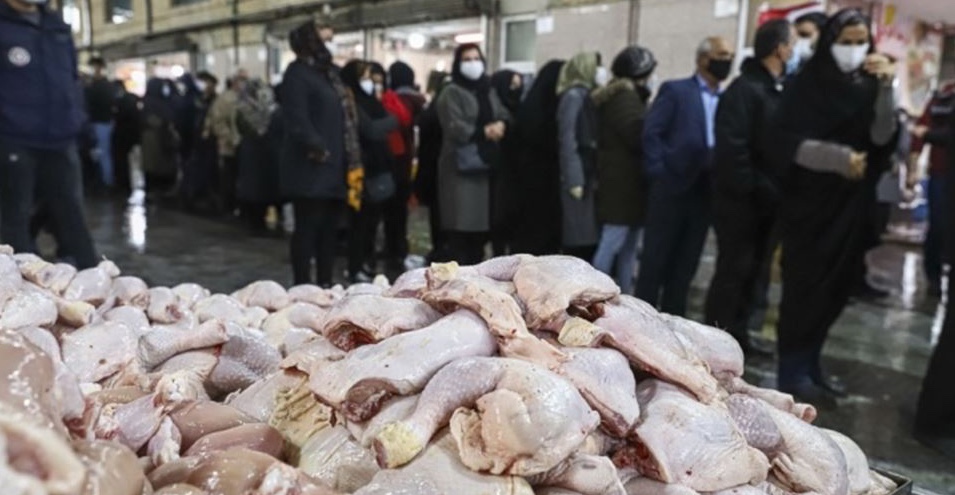
As the highly pathogenic avian influenza outbreak continues to spread across several Iranian provinces, South Khorasan has now become one of the dangerous areas in this regard with 19 outbreak centers.
According to the ISNA news agency, Bahman Naghiib, deputy for health and disease prevention in livestock and poultry at the country’s veterinary organization, announced on Monday the identification of 33 centers of highly pathogenic avian influenza in the country.
On Tuesday, Mohammad Asgarzadeh, director general of veterinary services in South Khorasan, told ISNA that out of 33 national outbreak centers, 19 are now located in South Khorasan province, particularly in Birjand and Khosf.
Avian influenza is a zoonotic disease whose virus is mainly transmitted to humans through contact with infected birds or infected bird feces, though rare cases of human-to-human transmission have been documented in this disease.
On Tuesday, Mehdi Tabatabai, deputy for health at Zahedan University of Medical Sciences, told ISNA in a meeting: “If a recombination occurs between the highly pathogenic avian influenza virus and highly pathogenic human influenza, it could result in a widespread epidemic in society, and there are currently concerns about this.”
According to reports, this virus causes the deaths of many people annually worldwide, and its outbreak in some areas is considered a serious threat to human health.
Reports also indicate that with the culling of 923,140 birds in industrial units in South Khorasan, many of these facilities, some of which are 30 to 40 years old, have now gone bankrupt.
The crisis management office of South Khorasan’s governorate announced that some of these units “lack necessary insurance information.”
Previously, Jabar Kouchakinezhad, vice-chair of the environmental fraction in the Islamic Consultative Assembly, with reference to the deaths of several migratory birds around Lake Chitgar in Tehran, had warned about the possibility of Tehran residents contracting highly pathogenic avian influenza.
Mehr News Agency reported in 2017 that highly pathogenic avian influenza in Iran had become “a major challenge,” naming “insufficient measures by government agencies” as the main factor in the disease’s spread and the culling of more than 40 percent of poultry in Iranian chicken farms.
Source: Radio Farda