Two-Week Closure in Iran, an Attempt to Control Coronavirus Spread
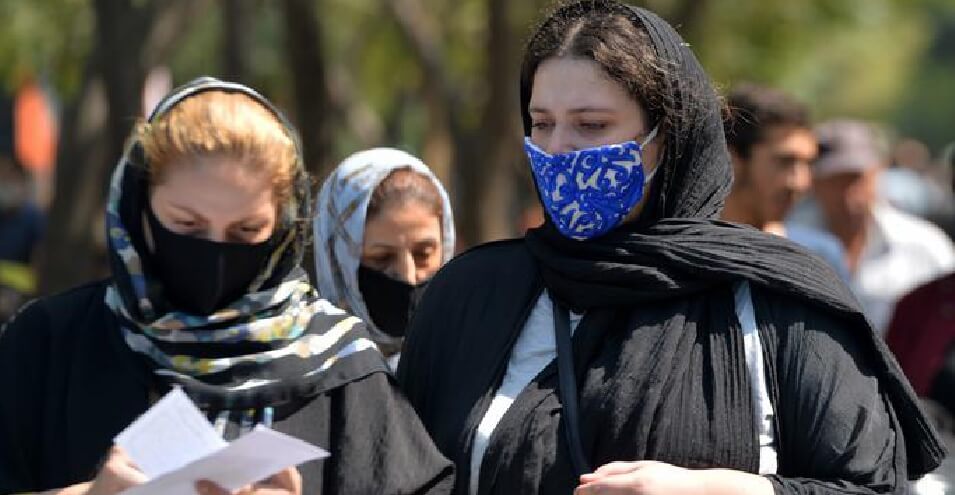
The total number of coronavirus victims in Iran has surpassed 40,000. The actual figure is far higher. The government wants to review a two-week closure plan across the country. Breaking the cycle of coronavirus spread is not practical without adequate resources.
According to Sima Sadat Lari, spokesperson for Iran’s Ministry of Health, the total number of coronavirus victims on Thursday, November 12 (Aban 22) exceeded 40,000 people. In just the past 24 hours, 457 people died from this disease. During the same period, 11,517 new cases of coronavirus were identified.
The total number of infected people in Iran to date, according to official statistics, is 726,585 individuals. 5,614 patients with COVID-19 are in severe condition.
According to the same report, a total of 5,384,988 COVID-19 diagnostic tests have been conducted in Iran so far. A figure that is very modest for Iran’s 80-million population. In many countries, including Germany, more than 1.5 million tests are conducted every week.
According to experts and some government officials in Iran, field data on mortality rates in hospitals and burials in cemeteries show that the actual figure in this country is far higher than the official statistics.
According to the health ministry spokesperson, 28 Iranian provinces are in a red situation, which include Tehran, Isfahan, Qom, East Azerbaijan, South Khorasan, Semnan, Qazvin, Lorestan, Ardabil, Khuzestan, Kermanshah, Kohgiluyeh and Boyer-Ahmad, Gilan, Bushehr, Zanjan, Ilam, Razavi Khorasan, Mazandaran, Chaharmahal and Bakhtiari, Alborz, West Azerbaijan, Central, Kerman, North Khorasan, Hamadan, Yazd, and Kurdistan. Hormozgan, Fars, Golestan, and Sistan and Baluchestan provinces are also in orange and yellow situations.
The Trend is Not Declining
According to Qasem Jonbabai, Deputy Minister of Health, a decision on a two-week closure in Iran is to be made on Saturday, November 14 (Aban 24) at the National Corona Taskforce. Referring to the closure plan for groups two, three, and four occupations, he said: “In a one-month closure, there are multiple layers, closing stores alone cannot be effective, in addition to it, preventing travel, families not gathering in family meetings and celebration and mourning ceremonies, wearing masks, maintaining social distance and health protocols, and so on, all of these must be observed together.”
According to him, the cycle of coronavirus transmission has a cyclical pattern that must be broken, otherwise it cannot be reduced to zero.
These occupational groups include all businesses that are not directly related to people’s essential needs. Such as shops that sell goods other than food items, like confectioneries, furniture stores, car sales markets, and many other businesses such as barbershops and beauty salons, gyms, universities, schools, cinemas, museums, and mosques.
Occupations that continue their activities include those that provide essential supplies for people such as hospitals, health care centers, clinics, pharmacies, fire departments, grocery stores, and supermarkets.
On Wednesday, November 11 (Aban 21), a meeting was held with Iraj Harirchi, Deputy Minister of Health, Anushiravan Mohseni Bandpay, Governor of Tehran, and Alireza Zali, the coronavirus management commander in Tehran. The Tehran governor said at this meeting that he is in favor of a two-week closure of Tehran.
He also said it has been approved that public transportation should be active until 8 p.m., and if, with the implementation of this decision, the volume of passengers increases, it should be reconsidered.
The plan to limit the hours of public transportation vehicles, like many other plans, requires the creation of adequate facilities, meaning increasing these vehicles for citizens so they don’t have to travel to their workplaces in crowded metros and buses. Furthermore, a two-week closure of the country requires creating a support umbrella for millions of families who are deprived of minimum wages. The government has been unable to provide the necessary financial resources and facilities in both of these cases.
Formation of Control Patrols in the Absence of Adequate Facilities for Full Closure
In the absence of adequate resources to support the people, only plans such as police patrols to monitor people are being implemented; creating teams that oversee the compliance of health protocols by people. The Wednesday meeting was held with the presence of Tehran Municipality, Shemiranat Municipality, and representatives from SMET, Disciplinary Organization, Guild Union, and law enforcement.
In this session, it was decided that 16 combined teams would oversee the implementation of the closure decision for stores from 6 p.m. onwards. According to the Tehran governor, 100 motorized police teams were also activated “to warn and caution violators, and those who do not comply with the decision despite warnings are subject to store sealing fines.”
According to statistics he provided, on November 21, 45 percent of stores and occupational groups two, three, and four were closed from 6 p.m. onwards and, according to the Tehran governor, “complied with the decision.” Nevertheless, officials have increased monitoring teams “so that all stores comply with the national corona taskforce decision regarding closure from 6 p.m. onwards.”
Source: DW