Health Minister: If People Don’t Comply, Coronavirus Deaths Will Reach Four Figures

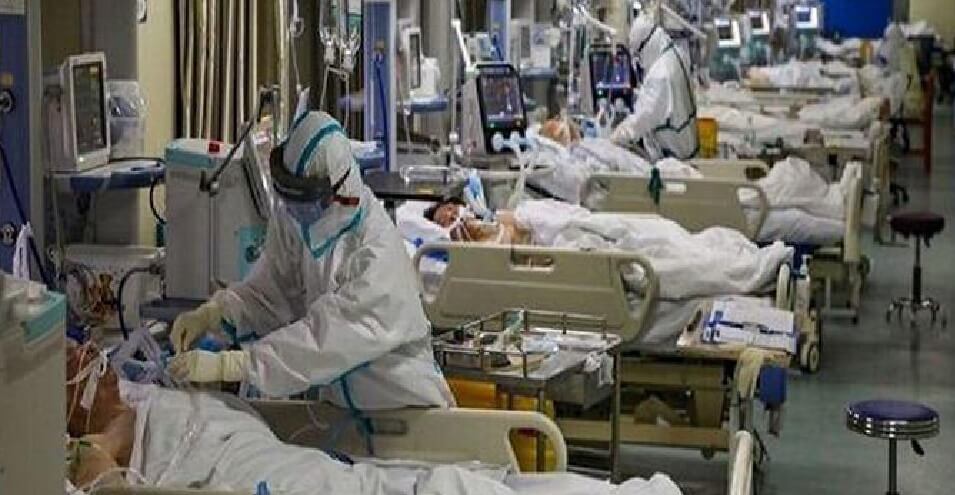
Iran’s health minister has warned that the country is facing a “coronavirus bomb” and if new restrictions are not taken seriously, the number of coronavirus deaths in Iran will reach four figures. He spoke of an “abyss” from which it is difficult to escape.
Saeed Namaki, Iran’s health minister, on Tuesday, November 17, in a meeting with officials at Isfahan University of Medical Sciences, referred to a “strange and sorrowful” letter that he had written to Ayatollah Khamenei, the Supreme Leader of the Islamic Republic, and Hassan Rouhani, the President. Apparently, this letter prompted Ayatollah Khamenei to task the Health Ministry with “determining the scope of restrictions” and ordered that “whatever this ministry says must be implemented”.
Now, 150 Iranian cities are scheduled to shut down for two weeks starting Saturday (December 1st). In this meeting, the health minister referred to next Saturday as “one of the most critical dates for coronavirus management” and said “if people don’t comply, we lose the game and reach four-figure (daily) deaths.” Saeed Namaki added: “Four-figure deaths mean we will reach an abyss from which it is difficult to escape, just as when deaths reached three figures we faced a package of problems.”
The Health Ministry had previously called for a two-week nationwide lockdown to reduce the burden on hospital staff and slow the spread of coronavirus. It was supposed to be decided in a meeting on Saturday, November 14, but there was opposition to a nationwide lockdown. Apparently, the system’s leaders, in a short timeframe and given the fact that the number of daily victims is setting new records in Iran, decided to implement the lockdown plan.
The government’s main problem in implementing this plan is the lack of financial resources to manage society. The health minister also referred to “the worst days of lack of resources in the central bank and heavy financial constraints” and said he knows “there is no worse plague for a country’s economy than lockdown and prolonging the period of disease epidemic” but “lockdown is better than a tradesperson being infected, falling ill for a month, and God forbid, losing their life to the disease.”
What Happened to That One Billion Euros?
The health minister in his remarks today also referred to Khamenei’s order to allocate one billion euros to fight coronavirus and said that this money “was to be placed at the disposal of the Health Ministry, and until a month ago we had received 30 percent of it and received the rest in recent days in several installments.”
The promise to allocate this one billion euros to fight coronavirus was made to the Health Ministry in Farvardin (March-April) this year. But even by Mehr (September-October) this year, it was unclear what happened to the rest of the money besides a small portion.
The “Tasnim” news agency on Tuesday, November 17, in a report titled “What Happened to the One Billion Euro Allocated to Fight Coronavirus?!” wrote that with the outbreak of coronavirus, the country faced a serious crisis, including treatment costs and business closures “to the point that the government could no longer bear the heavy costs of coronavirus from the country’s budget resources”.
In this turmoil, Hassan Rouhani, the President, in a letter to Ayatollah Khamenei, requested one billion euros from the National Development Fund. Ayatollah Khamenei also on April 8 of the current year, seven months ago, agreed to the request for withdrawal of funds.
Tasnim news agency wrote that one month later (Ordibehesht), the allocation of one billion euros for coronavirus was announced and Mohammadbaghir Nobakht, head of the Planning and Budget Organization, “announced the deposit of the first installment of the equivalent rial value of one billion euro aid from the National Development Fund resources to fight and manage the consequences of coronavirus spread in the country by the central bank to the treasury account.”
But on the third of Ordibehesht, Saeid Namaki wrote on his Twitter account “Thank God and through the sacrifice of my colleagues in fighting coronavirus, we have surpassed the most powerful countries, but in financial constraints and in comparison with those who have spent billions of dollars, my colleagues with poor conditions are asking what happened to at least one billion euros of the National Development Fund?”
Last month, the health minister complained again: “From the one billion euros that the leader agreed to, for months except for a small portion, I haven’t received it, I don’t know for which more important task they saved this budget?”
Tasnim wrote that these statements show that “there is no transparency in spending and how the one billion euros was received”. This news agency referred to a panel discussion in the radio program “Dadresaneh with an advocacy and transparency approach” with the presence of Kianush Jahanpour, director general of public relations of the Health Ministry, Fateme Mohammad Beigi, first secretary of the Parliament’s Health Commission, Mehdi Esfandiar and two health experts from Young Radio “so that the issue of currency allocated from the National Development Fund becomes transparent.”
The program moderator asks “One billion euros from the National Development Fund was allocated to the Health Ministry for managing coronavirus disease; in your opinion what happened to the budget and where was it spent?” One of the experts answers: “Unfortunately, the lack of transparency in this unfortunate story is always a characteristic of our health system which also exists in other economic systems; where this amount was spent and why the health minister says this budget has not reached him is a matter of reflection and surprise and it is necessary that complete investigations be conducted in this regard.”
Probably one of the other results of the health minister’s “strange and sorrowful” letter to Khamenei was that after months the rest of that one billion was finally given to this ministry.
We Face a Virus Bomb
According to the health minister, Iranian citizens are facing a “virus bomb” and “negligence” at this point, whether by officials or the public, “means firing the last arrow from the quiver of disease management”. He spoke of a virus bomb that “has increased its transmission power tenfold.”
According to official statistics, 13,352 new COVID-19 patients were identified in Iran within 24 hours and the total number of COVID-19 patients in the country has reached 788,473.
During the same period, 482 patients died and the total number of victims of this disease in Iran has reached 42,461.
According to the Health Ministry spokesperson, the provinces of Tehran, Isfahan, Qom, East Azerbaijan, South Khorasan, Semnan, Qazvin, Lorestan, Ardabil, Khuzestan, Kermanshah, Kohgiluyeh and Boyer-Ahmad, Gilan, Bushehr, Zanjan, Ilam, Razavi Khorasan, Mazandaran, Chaharmahal and Bakhtiari, Alborz, West Azerbaijan, Markazi, Kerman, North Khorasan, Hamadan, Yazd and Kurdistan are in the red situation.
Hormozgan, Fars, Golestan and Sistan and Baluchestan provinces are also in orange and yellow situations.
How Will the Plan Be Implemented?
The Health Ministry’s plan includes different levels. From restricting movement at certain hours of the day to monitoring the mobile phones of “coronavirus” patients.
According to the health minister, in the new plan, cities are divided into three groups; first yellow cities where for every 100,000 people there are four PCR-positive patients (active virus in the body) hospitalized, orange areas are those that have six PCR-positive patients per day for every 100,000 population and finally red cities where there are 10 positive patients per 100,000 population. Health Ministry officials say that in such a city for every one million people, 1,500 hospital beds and 300 emergency (ICU) beds are needed.
From the beginning of Azar, traffic in red cities will be forbidden from 9 PM to 4 AM. A system has also been considered for “tracking individuals in quarantine” and those who don’t follow the rules will be fined; “in the first phase, a positive person who moves in society will be fined 200,000 tomans, and in the next phase will be placed in mandatory quarantine.”
The second group of quarantine includes at-risk individuals; people over 65 or those with underlying diseases. This population group represents 11.7 million people in Iran and according to Saeed Namaki, 88 percent of deaths are also in this group.
Saeed Namaki said that currently 51 percent of disease-causing factors are gatherings. He emphasized that “we cannot lock down cities and during these long winter nights have 60 people gathered in one house”. He spoke of forming groups in neighborhoods for public awareness.
Monitoring “coronavirus patients’ mobile phones” is also among the measures anticipated by the coronavirus task force. An issue that has also fueled security concerns.
Source: DW