‘Emptying Evin to Prepare for Mass Arrests’; Reason for Prisoner Transfers
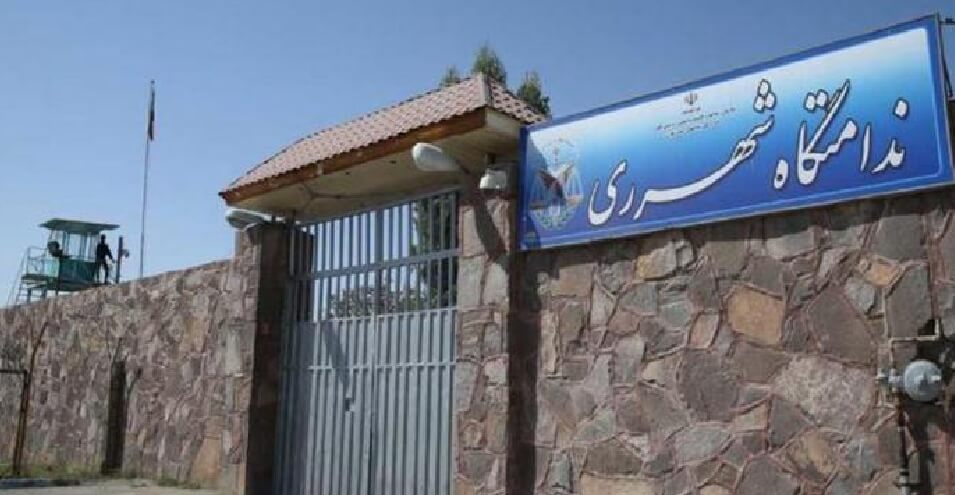
In recent days, Nasrin Sotoudeh and four other prisoners were transferred from Evin to Qarchak. Shirin Ebadi and a lawyer in Tehran believe the main reason for these transfers is “emptying Evin in preparation for potential riots in the future.”
Following Nasrin Sotoudeh’s transfer, a prisoner’s lawyer from Evin Prison to Qarchak Varamin, at least three other female prisoners were also transferred from Evin to other cities.
Babak Paknia, a lawyer, wrote on Twitter Wednesday night that he was told three of his clients that Paknia was coming and wanted to see them, and when they left their cells, they were transferred to another prison.
Nasrin Sotoudeh was also told she would be transferred to a hospital, but instead was taken to Qarchak Prison.
Manirah Arabesahi and her daughter Yasaman Aryani, two civil activists and protesters against mandatory hijab, were transferred from Evin to Kachchoi Prison in Karaj and Samane Nowruz Moradi was transferred to Roudsar Prison.
Babak Paknia continued in his tweet from last night: “Samane Nowruz Moradi’s physical condition is not suitable at all. We were in the process of conducting legal medical examinations to document inability to withstand imprisonment. They didn’t even allow my clients to take their medications and warm clothes with them! What kind of situation is this?”
Samane Nowruz Moradi was arrested in September 2018 on charges of activity on social networks such as Telegram and participation in the “Campaign for the Return of Prince Reza Pahlavi” by security agencies, and was sentenced to 8 years in prison by Branch 26 of the Tehran Revolutionary Court on charges of “supporting anti-government groups on social networks.” This sentence was reduced to 3 years and 9 months in the appeals court.
This political prisoner was arrested on April 24, 2019 for enforcement of the sentence and transferred to Evin Prison.
Samane Nowruz Moradi is seriously ill, and despite having conditions of “inability to withstand imprisonment,” judicial and security authorities have not paid attention to her physical condition and addressing this matter.
Manirah Arabesahi and her daughter Yasaman Aryani were also sentenced in August 2019 on charges of “gathering and conspiracy with intent to act against national security, propaganda against the system and inciting and facilitating corruption and indecency,” each to a total of 16 years imprisonment.
This sentence was reduced on appeal for each of them to 9 years and 7 months imprisonment. According to Article 134 of the Islamic Penal Code, the most severe punishment of five years and six months imprisonment for each of them is enforceable.
Behind the Scenes of Prisoner Transfers from Tehran
Besides Nasrin Sotoudeh, Manirah Arabesahi, Yasaman Aryani and Samane Nowruz Moradi, Elham Barmaki, a dual-national prisoner, was transferred from Evin to Qarchak on October 6 without a clear reason.
Previously, Kylie Moore-Gilbert, an Iranian-Australian prisoner, had also been transferred to Qarchak Prison.
This is while Qarchak Prison in Varamin lacks minimum required standards and does not even have clean drinking water. This issue has heightened concerns about the transfer of these prisoners.
Shirin Ebadi, a lawyer and Nobel Peace Prize winner, believes the main reason for these transfers and the release of two other prisoners on electronic monitoring—Fariborz Adlkhah and Nazanin Zaghari—is “emptying Evin for future mass arrests.”
Ms. Ebadi tells Deutsche Welle: “Right now arrests are happening individually and those they think have organizing power are arrested on the slightest pretext. An example is the confirmation of Sedighe Vasmeghi’s sentence for signing a letter signed by 77 people, while other signatories have not been arrested.”
Sedighe Vasmeghi, who protested the November 2019 killings by signing a statement known as the ’77 signatories,’ was sentenced to one year imprisonment by the Revolutionary Court, a sentence that was confirmed exactly in Branch 36 of the appeals court without holding a hearing.
She continues: “Therefore, arrests are not currently widespread, but people, intellectuals, and even government officials are predicting and preparing for street protests. This is precautionary preparation. It’s exactly like two days before the presidential elections [2009] when they knew what would happen and for that reason issued blank arrest warrants.”
Relying on a Law No Longer Valid
Regarding the reason for Nasrin Sotoudeh’s transfer from Evin to Qarchak, the spokesperson for the relations of the Tehran Province Prison Organization said that since Ms. Sotoudeh’s crime, for which she must remain in prison for 12 years, is a public crime, she should be transferred to a public prison.
The head of the Prison Organization’s public relations said: “Based on clause B of Article 7 of the regulation regarding the method of separation and classification of prisoners approved on November 30, 2006, prisoners sentenced for one of the public crimes applicable to Nasrin Sotoudeh do not have the eligibility to be held in the security ward.”
This is while according to a lawyer in Tehran, the law passed in 2006 has no longer been valid after the adoption of the new Criminal Procedure Code, which was announced for implementation in June 2015.
According to this lawyer who does not want his name disclosed, at that time the Prison Organization was given six months to prepare a new regulation, but this regulation has still not been prepared and the Prison Organization relies on a law that is actually no longer valid since six months after June 2015, that is, since December 2015.
This lawyer also believes that the main reason for the transfer of prisoners from Evin is something else. According to him, since last year the intent of security and judicial authorities was to transfer all female prisoners to Qarchak, but the Prison Organization objected, arguing that Qarchak does not have a political ward and all prisoners should be held in one ward.
Apparently, this objection by the Prison Organization was unable to prevent the determination of security authorities to transfer prisoners from Evin this year.
According to this lawyer, “predicting future riots in Tehran” and thereby keeping Evin empty is the real reason for these transfers.
He says that based on this, Evin should only be used for the arrest phase until sentencing, and after sentencing, prisoners should be transferred to other prisons.
Source: DW