Mustafa Salehi, Detainee from December 2017 Protests, Executed
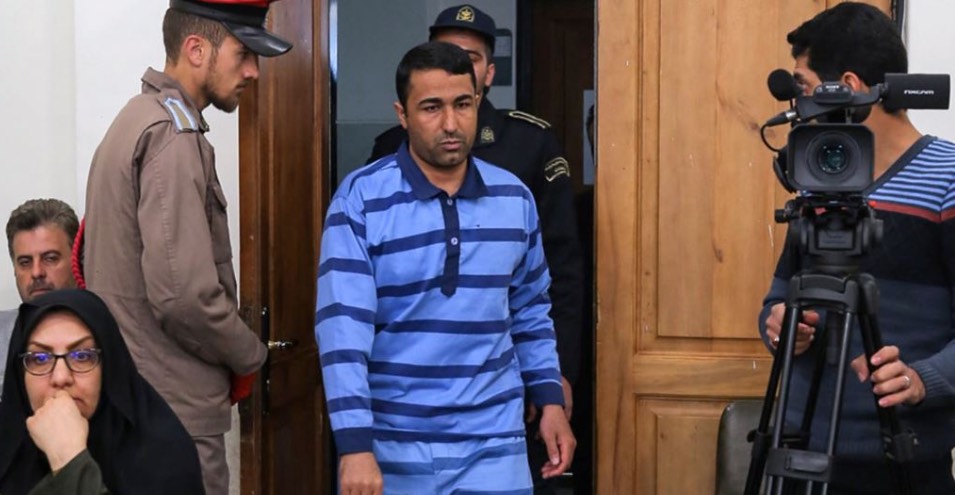
The Judiciary News Agency says the death sentence of Mustafa Salehi, one of those detained during the December 2017 protests in Kahrizi village near Najafabad, has been carried out.
Previously, the website of Human Rights Activists in Iran (HRANA) had reported that with the publication of reports about the transfer of Mr. Salehi to solitary confinement for execution, concerns about carrying out his death sentence have increased.
On Tuesday, HRANA quoted the relatives of this prisoner saying that Mr. Salehi had no contact with his family in the last 24 hours (until 14 Mordad), and “this situation and the continued lack of information about him has added to concerns about the fate of this citizen.”
According to reports, Mustafa Salehi was among those detained during the widespread protests of December 2017 in Kahrizi, Isfahan.
These reports indicate that Mr. Salehi had been accused of “murder” of one of the Basij forces.
Misan News Agency wrote on Wednesday that Mustafa Salehi had “shot with a hunting rifle” and “killed Basij member Sajjad Shahsanai.”
Morad Ali Najafpour presided over the court. However, no clear and detailed information was provided following the court announcement, and it is not even clear who represented him as his lawyer.
Misan News Agency reported the execution of the sentence on the morning of 15 Mordad, yet provided no details other than the initial charges.
Oversight bodies and human rights defenders have repeatedly accused the Islamic Republic’s judicial system of violating basic principles, including the right to access to a chosen lawyer, and say many verdicts, especially against political prisoners, have been issued following severe torture.
The Judiciary of the Islamic Republic has rejected these accusations and emphasized that it will not “surrender” to these criticisms and protests.
At the same time, the executions themselves have faced widespread criticism, especially as the Islamic Republic, along with China, ranks among the leading countries in executing its citizens.
Death sentences have included several protesters who were detained in recent years during mass protests or after them. Protests against existing political, economic and social conditions that were also suppressed on the streets.
Recently, following the publication of reports about the imminent execution of three protesters arrested in November 2019, a widespread virtual wave of protest formed against the death sentences, which gained international attention.
Following widespread protests, although the execution of three protesters, Messrs. Amirhossein Moradi, Mohammad Rajabi and Saeid Tamjidi, has been temporarily suspended, the spokesman for the Judiciary had said “we do not owe them our attention at all.”
Source: Radio Farda