Reopening a Key Question: How Much Do Asymptomatic Coronavirus Patients Transmit the Virus?
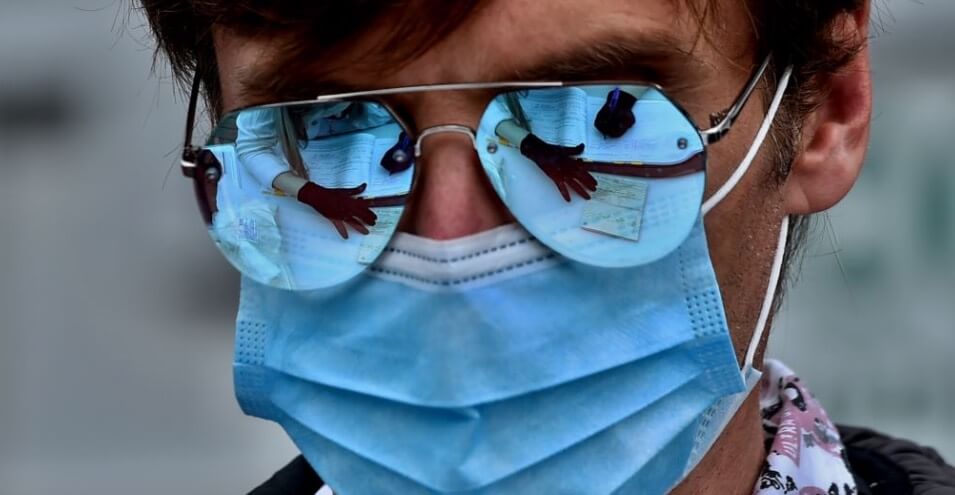
Initial statements by the technical director of the World Health Organization regarding the extent and likelihood of transmission of the new coronavirus by patients who never show symptoms have generated widespread repercussions, ultimately prompting the organization itself to respond with fresh clarifications.
Maria Van Kerkhove, an epidemiologist and director of technical affairs at the World Health Organization, said on Monday this week during a press conference that “based on available data, it appears that transmission of the virus from people who never show symptoms to another person remains a rare occurrence.”
Asymptomatic individuals are different from those who have not yet manifested symptoms of illness but are infected with the virus. In the first case, the patient never shows any signs even though the coronavirus is present in their body. In the second case, the person is not yet aware they are sick, but symptoms will eventually become apparent.
Van Kerkhove’s remarks generated widespread attention. Particularly because governments are attempting to reopen and lift restrictions, and such comments could have significant impacts on policy-making.
Asymptomatic, Pre-symptomatic, and Other Ambiguities
The statements by the World Health Organization’s director of technical affairs regarding one of the most crucial questions about the prevalence of the virus have met with notable reactions in the scientific community and among researchers.
For example, Dr. Eric Topol, an American researcher and author, wrote on his Twitter account that these statements “specifically create confusion.”
Two days earlier, Harvard’s School of Public Health had stated that “evidence suggests that asymptomatic individuals can transmit SARS-CoV-2… and some evidence even suggests that people transmit the most virus several days before symptoms appear.”
Of course, Harvard’s clarifications do not specifically refer to individuals who never show symptoms, but rather focus more on those in the pre-symptomatic phase who will eventually develop symptoms.
Jeremy Faust, an emergency medicine specialist from Harvard University, wrote on Twitter that “in my opinion, asymptomatic illness is exactly the reason we have reached this global pandemic.”
Nevertheless, Dr. Faust also expressed doubt about how the statements from the senior official of the World Health Organization were received, saying it is likely that the organization meant to indicate that it has not recorded many cases of asymptomatic individuals in the patient tracking process.
This issue had in fact been raised before. In the early stages of the disease outbreak, fewer asymptomatic individuals were tested, and even then mostly by chance; as a result, few were traceable. However, now in some countries, mass testing is being conducted in virus outbreak centers, and for this reason, statistics and estimates may provide a better picture in the coming weeks.
Attempting to Clarify a Key Question
On Tuesday, Maria Van Kerkhove herself provided fresh clarifications regarding her statements.
She said the initial interpretation of her remarks was not accurate: “What we need to better understand the situation is to know what proportion of people in society never develop any symptoms of illness. And we also need to understand what proportion of these people transmit the virus to others.”
Some current estimates and assumptions by the World Health Organization suggest that infected individuals transmit the highest levels of virus early on when symptoms first appear.
Some research, including studies from the United States and Germany, suggests that people with mild COVID-19 cases are able to transmit the virus for between 8 to 9 days, and the more severe the illness, the longer the transmission period to others.
Nearly three weeks ago, Singapore’s National Center for Infectious Diseases published research estimating that infected individuals transmit the virus until the eleventh day after symptom onset.
The World Health Organization continues to collect information regarding the extent and severity of virus transmission in different patients.
According to the organization, based on current estimates from research in different populations, between 6 percent and 41 percent of people infected with coronavirus are asymptomatic. However, these figures are quite far apart.
Some estimates also show that most people without symptoms are younger individuals and those without other illnesses. Of course, these results are not universal and are currently in early stages.
Maria Van Kerkhove herself said, “For every question we find an answer to, there are 10 other questions that need answers.”
Source: Radio Farda