UN Human Rights Experts Condemn Execution of Navid Afkari

Five United Nations human rights experts stated that the purpose of extrajudicial executions was to create terror by the Iranian government. The UN human rights experts issued a statement calling for an end to such sentences against protesters in Iran.
Five United Nations human rights experts issued a statement strongly condemning the execution of Navid Afkari, while expressing condolences and solidarity with his family. The statement by these five human rights experts was published in both English and Persian on the official website of the United Nations.
Javed Rahman, UN Special Rapporteur on human rights in Iran, and Agnes Callamard, Special Rapporteur on extrajudicial, summary or arbitrary executions, are among those who signed the aforementioned statement.
Beyond these two, Clement Nyaletsossi Voule, Special Rapporteur on peaceful assembly, Nils Melzer, Special Rapporteur on torture, and Irene Khan, Special Rapporteur on freedom of opinion and expression, are among the other experts who signed the statement condemning the Iranian government and declared the execution of Navid Afkari as unlawful.
Text of the experts’ statement
In the UN human rights experts’ statement, it stated: “It is deeply disturbing that the authorities apparently used the execution of an athlete to intimidate people amid social unrest.”
The UN human rights experts also referred to the manner of the trial in Navid Afkari’s case and the extraction of confessions through torture, considering the use of such tools to issue an execution sentence as arbitrary and extrajudicial acts.
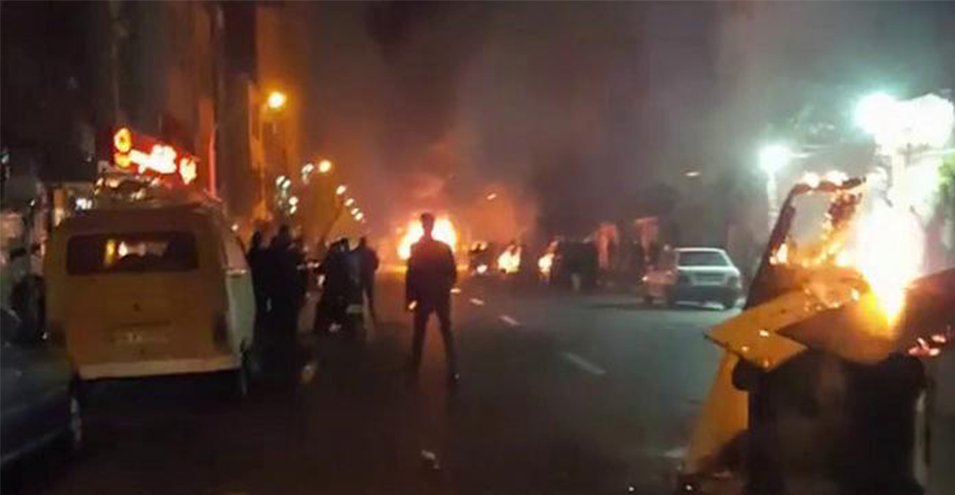
The statement noted that the execution of Navid Afkari is the second execution in the past two months carried out in connection with recent protests in Iran.
The signatories of the aforementioned statement considered addressing such cases of gross violations of international law and disregard for international human rights obligations by the Iranian government not to be an interference in Iran’s internal affairs, but rather a duty of international bodies.
The statement also stated: “If Afkari committed murder, why was he tried in secret and based on confessions extracted under torture? The execution of Navid Afkari was arbitrary and extrajudicial, issued in a court lacking minimum standards of procedural and substantive due process, under the cover of a murder charge.”
Furthermore, the UN human rights experts considered the holding of Navid Afkari’s trial behind closed doors as another reason for this extrajudicial execution.
The UN human rights experts also cited the hasty and secret execution of Navid Afkari as further evidence of the arbitrary nature of this execution.
The statement also referred to Navid Afkari’s torture and his complaint against the judiciary. According to the statement, quoting Navid Afkari: “Officials severely beat his hands, stomach, and legs with batons and hard objects, wrapped plastic around his face, brought him to the brink of suffocation and death, and poured alcohol in his nose.”
The aforementioned experts called on the authorities of the Islamic Republic of Iran to immediately suspend all execution sentences against protesters.
The announcement of Navid Afkari’s execution on Saturday, September 12, triggered strong international reactions, including from human rights and sports organizations.
Source: DW