UN: Iran Must Conduct Independent Investigations into Violence During November 2019 Protests
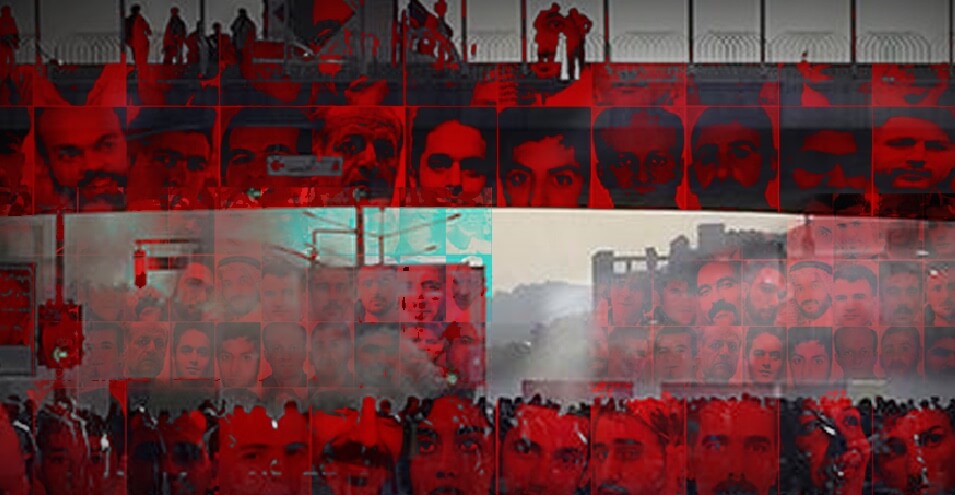
Nasrin Sotoudeh and other arbitrarily detained and imprisoned prisoners must be released immediately
Javed Raman, senior expert at the United Nations and UN special rapporteur on human rights in Iran, stated on Tuesday, October 27, 2020, in his annual human rights report on Iran: “The Islamic Republic of Iran government must establish an independent, impartial and transparent investigation process into the violent suppression of protesting citizens in November and December 2019, and bring human rights violators to trial.”
This statement, attached to the special rapporteur’s annual report presented to the UN General Assembly’s Third Committee, states that “acts of violence against protesters continue” and “Iran’s government and judiciary have recently issued and executed death sentences for protesting citizens to further restrict the space for peaceful protest by citizens.”
Javed Raman, in his annual report, warned about the situation in Iran’s prisons during the coronavirus pandemic and, referring to the decision of Iranian judicial authorities to release some prisoners following the escalation of the disease, stated: “Most imprisoned human rights activists in Iranian prisons were not included in this decision.” The report also called for the immediate release of Nasrin Sotoudeh and other prisoners who have been arbitrarily detained and unjustly imprisoned by judicial authorities. The United Nations released the following statement on this matter.
UN Expert Demands Iran’s Accountability for Violent Suppression of Protesters
New York (October 27, 2020)- A United Nations expert states: “The Islamic Republic of Iran government must establish an independent, impartial and transparent investigation process into the violent suppression of protesting citizens in November and December 2019, and bring human rights violators to trial.”
Javed Raman, UN special rapporteur on human rights in Iran, in his annual report presented to the UN General Assembly today, emphasized that “while those responsible for suppression and violence against protesters must be held accountable, clear violations of protesters’ rights continue.”
The UN special rapporteur on human rights in Iran states: “Despite existing evidence and documentation of violence and use of force by security forces in suppressing protesters, which resulted in the deaths of over 300 people including women and children, Iranian authorities have refrained from conducting independent investigations in accordance with international law more than a year after these events occurred.”
Available evidence indicates that many security and judicial officials have subjected thousands of detained persons to psychological and physical torture, including threats and forced confessions. Confessions that ultimately led to heavy prison sentences and death sentences.
According to Javed Raman: “It appears that the Islamic Republic of Iran’s government and judiciary have resorted to imposing severe sentences against protesters to restrict the space for peaceful public protests. A striking example is the execution of Navid Afkari, a detained protester, in August 2020, who was hanged.”
In Javed Raman’s annual report on the human rights situation in Iran, concerns have also been raised regarding the treatment of responsible authorities toward the families of prisoners, including the detention of some families of political prisoners who sought justice in the cases of their imprisoned loved ones, as well as the application of pressure on some families to cease their demands after receiving compensation.
In Javed Raman’s annual report, reference is also made to the issue of the COVID-19 pandemic and its negative impact on people’s economic conditions, as well as the intensification of economic crisis due to sanctions during the pandemic. The report requests the international community to do whatever it can to reduce the impact of sanctions on Iran, especially during the coronavirus outbreak when the discussion centers on the right to human health.
The UN special rapporteur on human rights in Iran states: “I reiterate the request of UN Secretary-General Guterres and the High Commissioner Michelle Bachelet that, given the negative consequences of economic sanctions on the health crisis, countries imposing sanctions on Iran should reduce the pressure of sanctions against this country. Currently, the Iranian people need easy access to medical equipment, medicines and other medical products.”
Javed Raman, referring to the encouraging decision by Iranian authorities to temporarily release approximately 120,000 prisoners due to the coronavirus outbreak, expressed concern that justice has not been observed in the implementation of this decision, and most human rights activists, lawyers, environmental activists, journalists and dual-national prisoners remain imprisoned. This is while many of these individuals are susceptible to COVID-19 due to previous health conditions.
Javed Raman states: “I am particularly concerned about the health condition of human rights lawyer Nasrin Sotoudeh in prison. She and other prisoners who have been arbitrarily detained and imprisoned must be immediately released.”
In the annual report of the UN special rapporteur on human rights in Iran, emphasis is placed on the continued restriction of space for civil protest by Iranian authorities. The continuation of issuing and executing death sentences for protesters and extensive gender and ethnic discrimination are among other matters mentioned in this report.
Source: Iran Human Rights Campaign