Arsham Rezaei Sentenced to 8.5 Years in Prison; He Says His Lawyer Was Denied Access to Case File
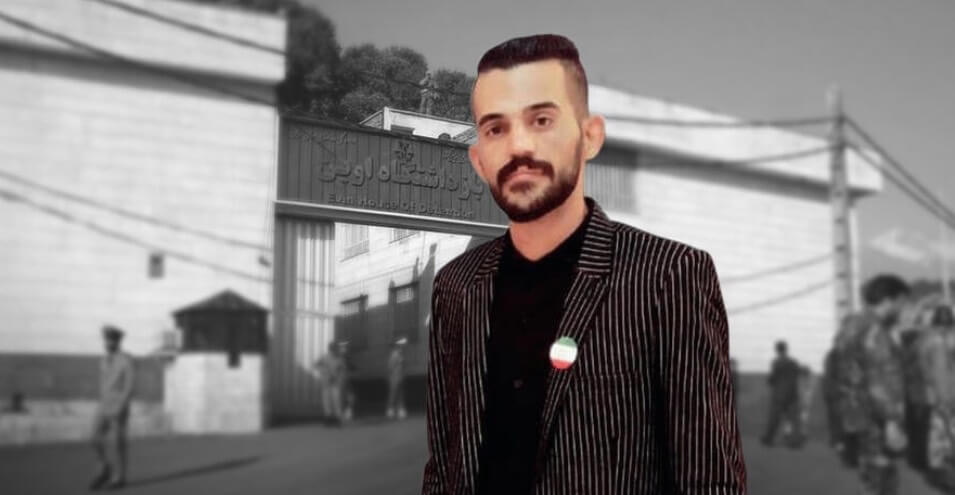
Arsham Rezaei, a civil activist, says his 8.5-year prison sentence has been upheld by an appeals court while his lawyer has been denied access to his case file.
Arsham (Mahmoud) Rezaei told Voice of America that Branch 36 of Tehran Province’s Court of Appeals upheld the exact 8.5-year prison sentence that was issued by Branch 28 of Tehran’s Revolutionary Court. He was sentenced to this prison term on charges including “propaganda against the system,” “gathering and collusion,” “insulting the leadership,” and “possession of alcohol.” Under Islamic Republic law, after “consolidation of sentences,” he should serve 5 years in prison.
Mr. Rezaei explained the specifics of the charges to Voice of America, saying that following “violent arrest by Tharallah Sepah intelligence forces” and confiscation of his mobile phone, security forces sent messages to all contacts in his phone and arranged meetings with them at the detention location. During this period, two of his friends were arrested by their presence at the scene, and their presence was cited in the case as evidence of the charge of gathering and collusion.
According to Arsham Rezaei, the charge of propaganda against the system stems from his membership in certain Telegram groups and the publication of a photo of him holding a placard reading “No to Execution,” which was to demand a stop to the execution sentence of Ramin Hossein Panahi, a political prisoner.
This civil activist also said that when he was taken for a home search after his arrest, one of the confiscated items was a notebook on which “Death to the Dictator” was written, and this writing was cited as evidence of the charge of insulting the leadership.
Referring to his rejection of the sentence, Arsham Rezaei told Voice of America: “I certainly object to the issued verdict. Because I did not incite unrest and was not present at any protest during my detention.”
He said that when his defense lawyer is not allowed access to the case file, he cannot submit a defense statement on the issued verdict to the court.
According to Mr. Rezaei, Judge Moghaddas has not permitted the lawyer to access the case file, and despite several visits to the judge’s office, the lawyer has been unable to review the file to this day.
He believes that the judges on the case, including Judge Moghaddas and Judge Salwati, are not the individuals who issue verdicts for activists; rather, the verdicts are issued beforehand by the detention authorities and only read by the judges.
This civil activist also discussed forced confessions during his interrogation with Voice of America.
According to Arsham Rezaei, during interrogation he was taken to a room where at least 6 people with two cameras were present. In that room, a sheet of paper was given to this civil activist with statements written against him, and the people present, under threat, coerced him to read the written statements on the paper in front of the camera.
The issue of forced confessions on Iranian government television has been raised many times before. This method of extracting confessions has been repeatedly criticized by human rights organizations, although it continues to be used by the Islamic Republic’s judiciary.
Arsham Rezaei, a civil activist, was arrested on Monday, December 9, 2018, by Tharallah Sepah forces with violence on the street. After 10 months of detention, he was finally released on November 13, 2019, from Evin Prison on bail of 200 million tomans, provisionally and until the end of legal proceedings.
The U.S. State Department has repeatedly condemned the violent conduct of the Islamic Republic regime toward the Iranian people under various pretexts, as well as the repeated and continuous violation of the rights of Iranian citizens by regime officials.
Source: Voice of America