Four Million Iranian Households Receive ‘Supplementary Coronavirus Loan’
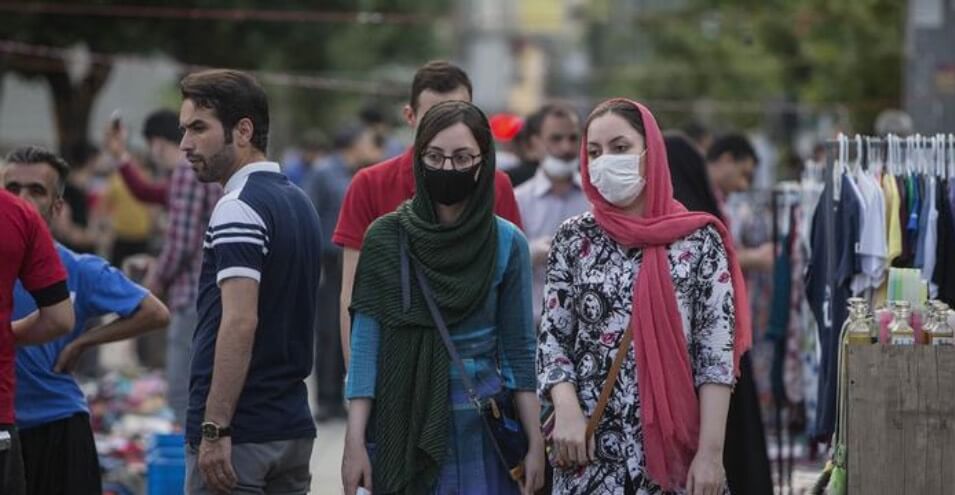
Four million Iranian households, in addition to the loan paid to all subsidy recipients, are receiving a one million toman “supplementary loan.” This loan is provided to support vulnerable groups during the coronavirus crisis, and its installments are deducted from monthly subsidies.
The spokesperson for “Coronavirus Support Facilities” announced that according to a government cabinet resolution, four million households identified as vulnerable groups can apply for a supplementary one million toman loan if they wish.
Hossein Mirzaei told IRNA news agency on Thursday, July 9, that this loan is in addition to the one million toman loan that has been deposited into the accounts of all subsidy recipients.
According to the report, Mirzaei expressed lack of information about the timing of the supplementary loan disbursement and said: “The beneficiaries of this scheme include street vendors, van drivers, and construction workers whose information has been collected by the Ministry of Interior and Social Security Organization.”
He added that the supplementary loan also covers families of five or more members, and information about these families has been obtained from the Subsidy Targeting Organization.
The Rouhani government recently decided to pay all subsidy-receiving families in Iran a one million toman loan to compensate for economic losses caused by the coronavirus crisis, with installments to be deducted from monthly subsidies over 30 months.
“Support Loan,” Advance Subsidy Payment
In this way, this “support loan” is, in a sense, an advance subsidy payment. According to official statistics, 23 million households in Iran receive subsidies, and as of last month, slightly more than 21 million households have applied to receive the one million toman loan.
According to Mirzaei, the monthly installment for the one million toman loan is 35,100 tomans, which is deducted from the subsidy starting July 20. With this calculation, a single-person household will receive only 10,400 tomans in subsidy from July until two and a half years later, instead of the usual 45,500 toman subsidy.
The entry of the coronavirus and the spread of COVID-19 disease in Iran was officially confirmed on the last day of the previous year’s February month. The number of daily COVID-19 victims in Iran, after a long period of two-digit figures, became three-digit starting from the final week of June and this trend continues.
New Record in Daily Death Toll
The Health Ministry spokesperson in his latest press conference announced that in the 24 hours until noon on Thursday, July 9, 221 people died from coronavirus infection. The previous highest number of daily coronavirus deaths was on Tuesday with 200 fatalities.
According to Sima Sadat Lari, 2,079 new cases of COVID-19 were identified in Iran in the past 24 hours, and the total number of infected people in the country reached 250,458. The total number of deaths has reached 12,305.
The Health Ministry spokesperson says the situation in different regions of Iran regarding coronavirus spread has not changed significantly in recent days, and 19 provinces remain in red alert status.
19 Provinces in Red Alert Status
He noted that currently, the provinces of Khuzestan, Hormozgan, Bushehr, Kermanshah, Kurdistan, Ilam, West and East Azerbaijan, and Razavi Khorasan are in red alert status, and the provinces of Tehran, Isfahan, Mazandaran, Golestan, Alborz, Kerman, Yazd, Sistan and Balochestan, Hamadan, and Ardabil are in alert status.
Saeed Namaki, the Health Minister, on July 7, referring to the fact that some time ago the death toll had been reduced to 30 people per day, expressed regret that many citizens did not take seriously the warnings about observing health protocols. One day later, he acknowledged that the government, given security agencies’ reports of the dire economic situation of the people and the possibility of unrest and riots, was forced to lift restrictions despite their risky nature, which resulted in a resurgence of the coronavirus wave in the country.
Namaki says “a new wave” of COVID-19 disease that “especially in very important provinces, particularly border provinces” has emerged is the “price” of not taking health warnings and recommendations seriously.
The Health Minister said: “Unfortunately, travels took place and during them we carried the virus bomb with us and trapped ourselves and others.” Many observers believe that the premature lifting of restrictions and the lack of necessary infrastructure to maintain social distancing played an important role in the resurgence of the coronavirus.
It is said that overcrowding in the subway and other public transportation in a populous city like Tehran has been very influential in the city’s alert status. Saeed Namaki says he has points to make about issues such as how to strengthen the urban transportation fleet, but he raises them not from public platforms, but in letters to officials.
Source: DW