Hunger Strike at Evin Prison in Opposition to Release of Political Prisoners
With the outbreak of coronavirus in Iran and the judiciary’s opposition to furloughs for political and ideological prisoners, several inmates, including Nasrin Sotoudeh, have gone on hunger strikes. Meanwhile, it has been reported that two prison guards at Evin have contracted coronavirus.
Based on the latest reports from human rights websites, following the possibility of coronavirus spreading to Iranian prisons, a number of political prisoners, civil activists, and protesters from November 2019 uprisings have gone on hunger strikes in protest against the judiciary’s refusal to grant them temporary release and furloughs, and the unresolved status of their cases.
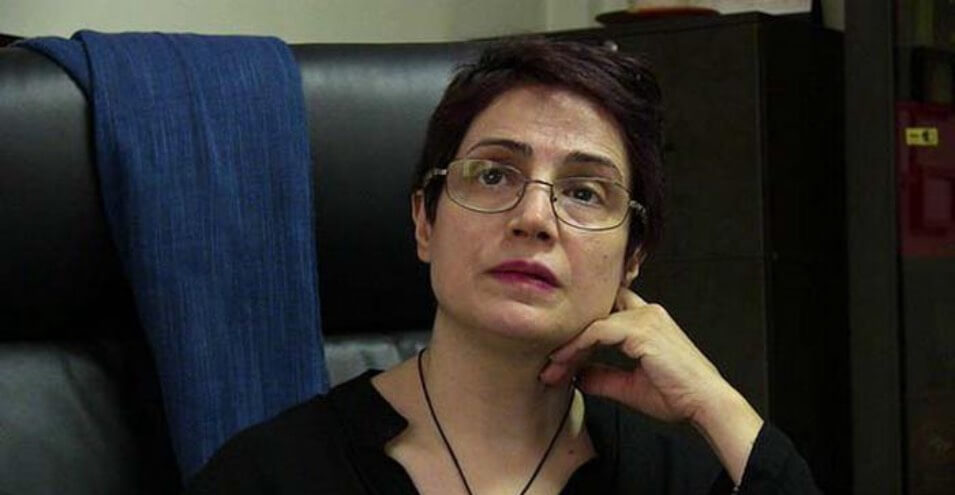
Nasrin Sotoudeh, a lawyer and human rights activist, on Monday, March 16, launched a hunger strike by issuing a statement in protest against officials’ prevention of the release of political prisoners.
Ms. Sotoudeh, who has gone on hunger strike at Evin Prison, referred in her statement to the spread of coronavirus in Iran and worldwide, writing: “Military and intelligence institutions that have undermined national security through their imposed hostile management, continue to insist on the continued imprisonment of political prisoners under current dangerous conditions.”.
“Death of Political Prisoners in the Coronavirus Storm”
Ms. Sotoudeh’s concern is that with the continued detention of political prisoners and the coronavirus becoming “deeper and more widespread,” “the storm of this deadly virus may destroy political prisoners or their families.”
According to the Health Ministry statistics until noon on Monday, March 16, the official death toll from coronavirus in Iran at the time of this report has reached 853. From noon on Sunday to noon today (Monday, March 16), 1,053 new cases of COVID-19 were identified in the country, bringing the total number of infected in the country to 14,991.
Among the newly identified patients, 129 died, and the total number of COVID-19 deaths in Iran reached 853 by Monday.
Previously, families of political and ideological prisoners had requested that the judiciary authorities send these prisoners on furlough and temporary release to prevent them from contracting coronavirus.
The spokesman for the judiciary said a few days after this request that, in accordance with a circular from the head of the judiciary, 70,000 prisoners had been sent on furlough. However, this circular did not include political and ideological prisoners.
In another part of her statement, Ms. Sotoudeh considered the closure of many wards in the country’s prisons, including the women’s ward at Evin Prison, a “national necessity” and emphasized that based on this national necessity, “the government should engage in reconciliation with the world to benefit from knowledge and technology to combat coronavirus.”
“Psychological Torture of Political Prisoners”
Meanwhile, the human rights news agency Hrana reported the hunger strike of Ravaneh Ahmadkhanbigi, a civil activist, in the women’s ward at Evin Prison. Her hunger strike, which began today, March 16, is in protest against the denial of furlough.
A source close to this prisoner’s family told Hrana: “In recent days, the names of political prisoners were repeatedly added to and removed from the list of those who would be granted furlough. This has caused severe psychological torture for political prisoners and their families. Especially those who, despite having medical conditions and meeting the criteria, are still not being sent on furlough.”
The circular from the head of the judiciary regarding consent to prisoner furloughs only applies to prisoners convicted of financial crimes and prisoners with sentences of less than five years.
Recently, U.S. officials and the United Nations, in various statements and referring to reports of coronavirus spreading to Iranian prisons, called for all political and ideological prisoners, as well as dual-national and non-Iranian prisoners in Iran, to be temporarily granted furlough.
Javaid Rehman, UN human rights rapporteur on Iran, has also requested that the Islamic Republic authorities not discriminate in the process of granting furloughs and temporary release to prisoners.
“Combat Readiness”
Concerns over the spread and pandemic of coronavirus in Iran have led provincial forces of the Islamic Revolutionary Guard Corps, alongside medical universities, to enter “combat readiness.”
According to Hossein Salami, commander of the Islamic Revolutionary Guard Corps, so far 6,000 patients have been admitted to Baqiyatallah Hospital (affiliated with the Guards), and nearly 500 patients are hospitalized daily in this hospital, which he described as “a huge cycle.”
“Two Women’s Ward Guards at Evin Contract Coronavirus”
Concerns about the lack of consent to furloughs for political and ideological prisoners come amid reports by Hrana citing its sources that “two guards from the women’s ward at Evin Prison have been prevented from coming to work for the past 10 days due to suspected coronavirus infection.” It has been reported that in recent days, the coronavirus test result of one of these two officers came back positive.
It has also been reported that over the past week, Yasaman Aryani, Saba Kordafshari, Atena Daemi, and Nazanin Zaghari—four women detained in this ward—have fallen ill with symptoms similar to a cold.
Meanwhile, human rights organizations reported that a number of women political prisoners in Qarchak Prison in Varamin are “despite meeting the conditions” still serving their sentences in prison.
Hunger Strike at Tehran’s Large Prison
Hrana news agency also reported that Abolfazl Karimi, one of those arrested during November protests in Iran, has been on hunger strike since the morning of Monday, March 16.
The reason for Mr. Karimi’s action was reported as “protest against the continuation of detention and the unresolved status of his case.” He is 18 years old and, four months after his arrest, remains imprisoned in Tehran’s large prison.
According to Hrana, he wrote a note describing his interrogation period, stating that Intelligence Ministry of the Guards interrogators, during the interrogation process, “beat him and pulled out his nails.”
Source: DW