Entry to Iranian Cities Banned for Non-Residents
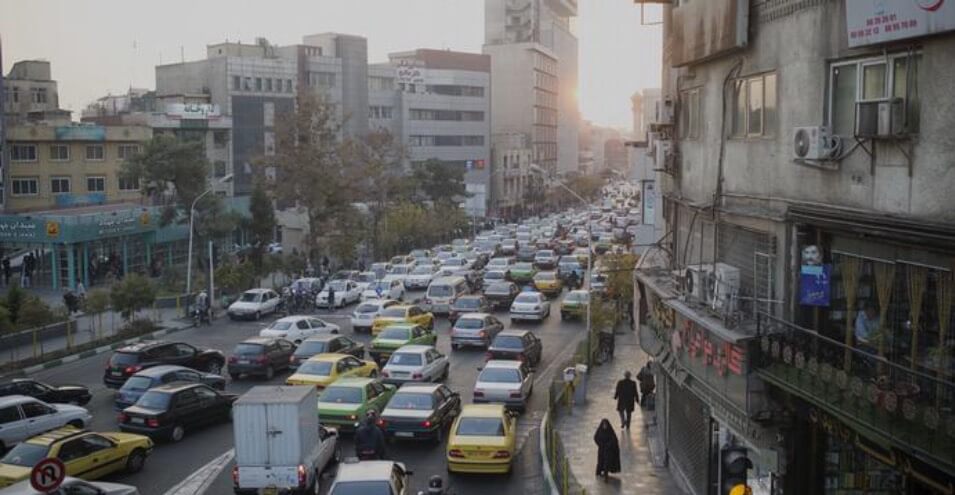
Contrary to Rouhani’s previous statements that “we have no such thing as quarantine,” the government is now announcing new restrictions on travel and movement. The announcement of these restrictions coincides with millions of Iranians traveling to coronavirus-affected areas.
Hassan Rouhani, Iran’s president, announced on Thursday, March 26 (Farvardin 7) during a coronavirus economic session that stricter regulations are being implemented. He said that if the supreme leader approves, he will withdraw one billion dollars from the National Development Fund.
Rouhani emphasized that the government supports businesses that have suffered, provided they have not laid off workers.
The Iranian president continued that we have many hospital beds that have not yet been used. Rouhani also claimed that in the most difficult circumstances the country is facing, 20,000 hospital beds remain empty and today the situation is such that nurses can continue their work as usual.
Kianosh Jahanpour, spokesman and head of the Health Ministry’s information center, however, officially announced one day before Rouhani’s statement that more than 43 doctors and nurses had died from coronavirus.
The government is not pursuing a unified strategy to contain coronavirus. Rouhani opposed any quarantine measures and said: “We have no such thing as quarantine. The rumors that have spread about some stores and businesses in Tehran or some cities being quarantined are not true at all. There is no quarantine today, not during Nowruz holidays, not before or after, and everyone is free in their work and activities.”
Rouhani’s statements caused millions of Iranians during the Nowruz holidays to pack their belongings and travel instead of quarantining and staying home.
Karim Hemati, head of the Iranian Red Crescent Society, expressed concern that more than eight and a half million people from 19 provinces have traveled, among whom 6,500 people have been identified with coronavirus symptoms such as fever.
Zolfaghari: Travelers Should Quickly Return Home
As the number of coronavirus cases in Iran increased rapidly, it did not take long for officials to sound the alarm and ask travelers who were preparing to travel or were on their way to return home.
Hossein Zolfaghari, Deputy Minister of Interior and Head of the Social-Security Committee of the National Coronavirus Management Headquarters, warned on Thursday, March 26 (Farvardin 7) that coronavirus has not yet peaked and the disease’s progression shows no signs of decline.
Zolfaghari said that from Thursday, Farvardin 7, only residents of cities are allowed to enter, meaning travel is prohibited. Those who are traveling must return home as quickly as possible, and those who are in their place of residence should not travel, as they are not allowed to enter cities.
The Deputy Minister of Interior provided no further explanation regarding the situation of nine million Iranians from 19 provinces who traveled in recent days. Iranian officials said that more than 600,500 of them have been identified as infected with coronavirus.
The Deputy Minister of Interior also announced that in the government’s new plan, continued closure of universities, schools, parks, gardens and sports centers is considered, and traffic on rail lines, airlines and bus terminals will remain limited.
“Social Distancing Plan to Begin in Iran from Friday”
Hours after the Deputy Minister of Interior’s remarks, the “Social-Security Committee of the National Coronavirus Management Headquarters” based in this ministry also announced the beginning of the social distancing plan in the country from Friday and explained its details. According to ISNA news agency, this plan is to be implemented in the first phase until Farvardin 15 (one week), and if approved by the National Coronavirus Management Headquarters, its implementation “will be extended.” Hassan Rouhani mentioned the implementation time of this plan until Farvardin 20.
According to this plan, only native residents of each city are allowed to enter that city and entry of non-residents is prohibited. Also, according to this plan, the return of travelers to their cities is to be “accelerated,” and they are not allowed to enter cities on the way back.
According to this plan, schools and universities, tourist attractions and recreational centers such as swimming pools and parks will remain closed until the end of the specified time. Holding any official and unofficial ceremonies is also prohibited.
According to this plan, trades and businesses are also divided into three different groups (those that must be fully active, those that must be closed, and those whose activities may be permitted based on circumstances and local conditions).
The announcement states that vehicles of violators will be confiscated for one month with additional fees. Cash fines of 500,000 tomans and sealing of violating trade units for one month are also on the agenda.
Source: DW