Harsh Criticism of Rouhani’s Insistence on Holding Mourning Ceremonies During Coronavirus Crisis
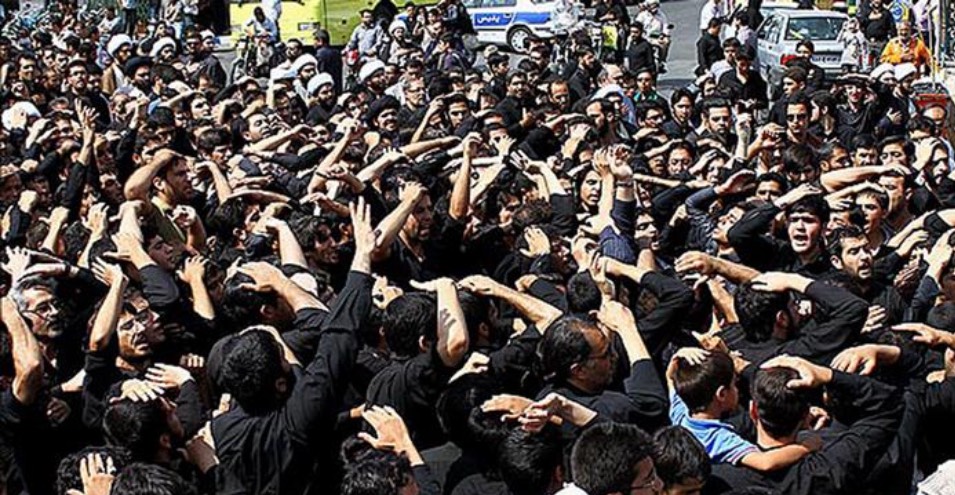
Rouhani’s statements about the necessity of holding mourning ceremonies even in cities with red-alert coronavirus status have faced considerable criticism. Critics argue that maintaining health recommendations during Muharram ceremonies is impossible and public health is at risk.
While officials at the Ministry of Health have attributed the resurgence of coronavirus in recent weeks to lifting restrictions and holding mass gatherings, Hassan Rouhani, Iran’s president, has emphasized that mourning ceremonies during Muharram must be held in all cities “with grandeur and magnificence.”
Hojatoleslam Masih Mohajeri, editor-in-chief of Jomhouri-ye Eslami newspaper, wrote in today’s editorial on Sunday, the fifth of Mordad, that in response to Rouhani’s statement about “holding Muharram mourning ceremonies absolutely and complying with health protocols definitely,” such a thing is not feasible.
The head of the twelfth government said during Saturday’s meeting of the National Coronavirus Combat and Management Headquarters that “one of the important issues” discussed was the matter of mourning ceremonies during Muharram and Safar months.
Rouhani stated at that meeting: “It is possible that a discussion may come up daily, and now that we have reached Muharram, the discussion of mourning or health may be raised. No, both—both the mourning of Imam Hussein and attention to health protocols; these are not mutually exclusive, we must combine them and place them side by side.”
He added that according to the decision of the national coronavirus management headquarters, Muharram ceremonies should be held “in cities and villages in all areas where red, yellow, and white status exists” with less density and compliance with health guidelines such as wearing masks and maintaining distance.
Masih Mohajeri in his note, emphasizing that such a thing is not possible, wrote: “This reality has been proven in the past two or three months through holding weddings, condolence gatherings, travels, attendance at mosques, Friday prayers, restaurants, halls, intra-city and inter-city travels by metro, bus and airplane, lifting restrictions from bazaars, markets, and so on.”
The editor-in-chief of Jomhouri-ye Eslami newspaper states that coronavirus control, after initial successes, slipped out of the control of the national coronavirus combat headquarters, and daily deaths increased from 34 people on the fifth of Khordad to over 220 people in Tir month, due to this lifting of restrictions.
Endangering Public Health for a “Recommended Act”?
This is a matter that is both confirmed by official statistics from the Ministry of Health and has been repeatedly stated by officials of that ministry and local authorities involved in combating coronavirus in Tehran and other parts of Iran.
Hojatoleslam Mohajeri, in response to Rouhani’s repeated emphasis on the importance of Muharram mourning ceremonies for Shias, states that holding these ceremonies is not religiously obligatory, and the result of the national headquarters’ decision will be that “due to performing a recommended act, public health is endangered.”
He noted that Rouhani’s statements about the necessity of holding mourning ceremonies were made on the same day the Ministry of Health announced that 25 of Iran’s 31 provinces are in red alert status regarding coronavirus prevalence, and the remaining provinces are not “completely clear and problem-free.”
25 Provinces Still in Red Alert Status
The spokesman for Iran’s Ministry of Health announced in his latest press conference that in the 24 hours up to noon on the fifth of Mordad, 2,333 new cases were identified and 216 COVID-19 patients died.
Sima Sadat Lari stated that the total number of COVID-19 cases reached 291,172 on Sunday, and “as in previous days,” 12 provinces remain in red status and 13 provinces in alert status.
According to official Ministry of Health statistics, the number of COVID-19 victims in Iran reached 15,700 people, and currently 3,695 COVID-19 patients are under care in severe condition.
It appears that the national coronavirus combat headquarters’ decision regarding Muharram ceremonies has been made under pressure from individuals and institutions that have strongly opposed every health recommendation from the beginning of the official confirmation of coronavirus outbreak in Iran if it resulted in restricting religious ceremonies.
“Secular Coronavirus” and Hassan Rouhani’s Responsibility
The editor-in-chief of Jomhouri-ye Eslami newspaper apparently, considering this issue, asks Rouhani to “drop the formalities,” and writes to him: “You, as the commander-in-chief of the coronavirus combat headquarters, are responsible for people’s lives. It is absolutely clear that the new decisions of the headquarters will bring exactly the same calamity that lifting coronavirus restrictions brought.”
According to IRNA news agency, Hojatoleslam Abbas Mousavi Motlagh, in his speech before Friday prayer sermons in Qom, criticized those who he said “unnecessarily” raise concerns about holding Muharram ceremonies, saying: “Coronavirus is a secular virus that seeks to push religious countries toward irreligion with its harmful effects.”
Mousavi Motlagh, referring to the fact that some people in the early weeks of the coronavirus outbreak “pursued a project to close pilgrimage sites and religious associations,” stated that Muharram and Safar ceremonies should be held with the usual zeal and compliance with health protocols, and “no one can prevent the holding and establishment of these ceremonies.”
Apparently, the Cultural Commission of the Islamic Consultative Assembly has also been pursuing the holding of Muharram ceremonies despite the resurgence of coronavirus.
Hojatoleslam Majid Nasiri, spokesman for this commission, told ISNA news agency on the first of Mordad: “Given health issues in fighting coronavirus, we cannot overlook the issue of public health, but we must also pay attention to the fact that everything we have and don’t have comes from these shrines and Muharram and Ashura. This is not a matter that someone wants to deal with simply and easily say that Friday prayers are suspended, so let’s suspend condolence associations and Muharram too.”
Pressure from Some Clerics, Warnings from Health Officials
Similar statements have previously been repeated by many other influential clerics such as Ahmad Alamolhoda, representative of the Supreme Leader in Khorasan Razavi and Friday prayer imam of Mashhad. It is likely that the national coronavirus combat headquarters’ decision about holding Muharram ceremonies even in red-status areas, which contradicts all Ministry of Health recommendations, stems from pressure from these individuals and Rouhani’s “formality” with them.
Iraj Harirchi, deputy minister of health, on the second of Mordad, referring to a 50 percent increase in coronavirus victims in Iran compared to the first wave of the epidemic in Esfand and Farvardin, warned that the death rate in autumn and winter will be higher than summer.
Harirchi described holding gatherings as a factor in increasing the risk of coronavirus transmission and, considering the upcoming Muharram month, called for “minimizing gatherings during these days.”
Aliireza Zali, commander of the coronavirus combat headquarters in Tehran province, has repeatedly warned in recent days and weeks that given the increase in cases and deaths following the lifting of restrictions, if this situation continues, “autumn will be a dangerous season.”
Given these statements by senior health and medical officials, the suspicion that the national coronavirus combat headquarters’ decision about holding Muharram ceremonies was made due to pressure from religious authorities and circles is strengthened.
Source: DW