Reporters Without Borders Points to Islamic Republic as Top Cyber Repression Country

On the eve of “World Day Against Cyber Censorship,” the Reporters Without Borders organization has published a list of 20 state and non-state entities with the worst performance in cyber repression, which includes Iran’s Supreme Council of Cyberspace.
Reporters Without Borders on Wednesday, March 12, released a report identifying companies and government organizations that use digital technology to spy on and harass journalists in 2020.
The list includes state and non-state entities in Iran, Russia, China, Saudi Arabia, Venezuela, Egypt, the Philippines, Algeria, Mexico, Brazil, Sudan, and India under the title “Internet Hunting.”
The organization noted in its report cyber freedom suppression in Iran, selective access restriction, filtering of news websites, and applications such as Telegram, Signal, WhatsApp, Facebook, and Twitter.
According to the report, “the Supreme Council of Cyberspace, which was launched in March 2012 and is composed of senior military and political figures, is the architect of halal internet, meaning a national Iranian internet that is disconnected from other parts of the world.”
The report states that Iran is building a firewall using internet filtering techniques, and in this process, authorities “increasingly use internet shutdowns to suppress and quell waves of street protests and restrict the transmission and dissemination of independent information that is considered counter-revolutionary or sabotage in nature.”
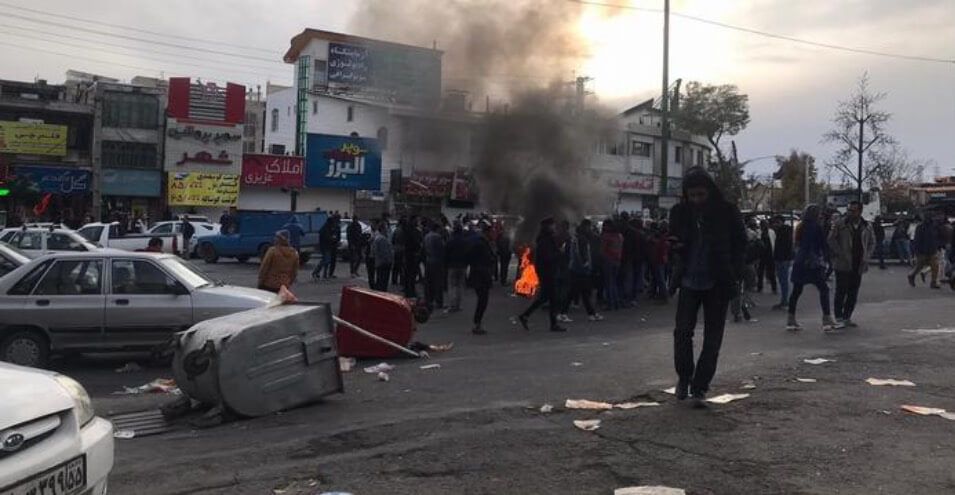
The suppression of protests in Iran in November led the Iranian government to cut off the internet to prevent the spread of reports about the crackdown, with reports indicating widespread arrests in various cities.
Human Rights Watch announced in December that Iranian authorities have kept the widespread suppression of protesters hidden and refrained from announcing accurate casualty figures.
The Iranian Writers Association also stated in a statement that the government, by implementing the “national internet” operation, wants the “state-controlled media to be the only voice with the right to speak and rule over people.”
Earlier, the U.S. State Department published content titled “40 Years of Unfulfilled Promises” by the Islamic Republic on its Persian Twitter account, writing about corruption, lack of freedom of speech, lack of justice, and unfulfilled economic promises by Islamic Republic officials.
The U.S. State Department wrote in these tweets that “Forty years ago, Ayatollah Khomeini promised freedom of speech and freedom of the press. Today, Iran has one of the most repressed media spaces. The ruling regime has only brought forty years of failure.”
Source: Voice of America