Clerics Who Obstructed Qom Quarantine Should Be Summoned
The governor of Qom called for declaring a semi-quarantine status in the city. Meanwhile, a parliamentary representative called for summoning clerics and religious authorities who created obstacles to implementing restrictions and preventing coronavirus in Qom.
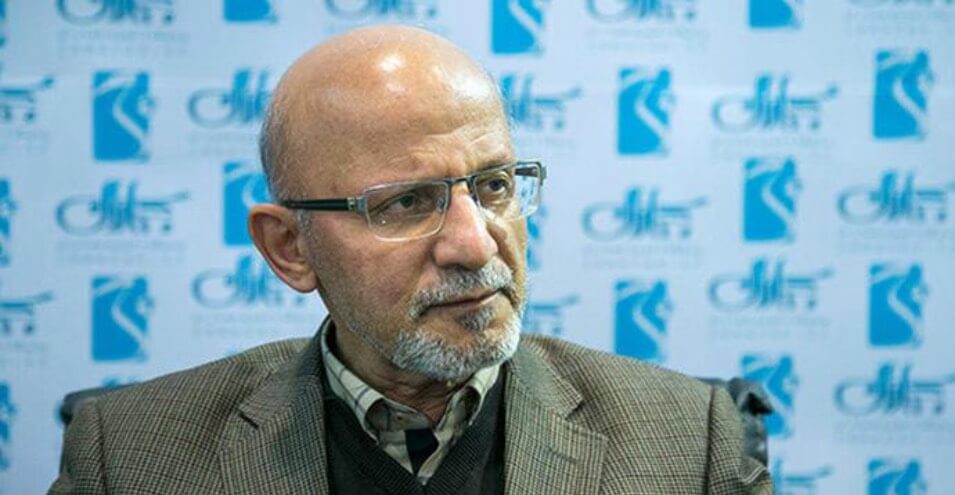
With the rising death toll from coronavirus in Qom and the failure to permanently ban visits to religious centers in the city, Gholamreza Heidari, a reformist parliamentary representative, called on the judiciary to intervene and summon clerics and religious authorities who have resisted measures to impose restrictions and prevent the spread of coronavirus.
Gholamreza Heidari, a member of the Hope faction in parliament, said on Monday, Esfand 19 (March 9), in an interview with Etemaad Online, that he criticized the failure to implement preventive restrictions and bans in Qom and the entry of people into pilgrimage centers in the city, saying: “The judiciary should be asked what is the ruling for the cleric and scholar who resisted and did not allow preventive measures and restrictions for public places to begin earlier?”
The latest official statistics from the Ministry of Health indicate confirmed cases of 7,161 people with COVID-19 (caused by coronavirus) and 237 deaths from those infected. Kianush Jahanbpur, spokesman for the Ministry of Health, said on Monday, Esfand 19 (March 9), regarding new deaths from coronavirus patients that 595 new confirmed cases of coronavirus infection have been registered by noon on Monday.
According to Jahanbpur, in the past 24 hours alone, 43 newly infected COVID-19 patients have died. Cases of this disease continue to be higher in Tehran, Qom, Isfahan, Gilan, and Mazandaran provinces than in other parts of the country.
Obstruction by “Clerics and Scholars” to Quarantine
According to official statistics, Qom ranks second after Tehran with 712 patients. Unofficial sources have reported higher numbers of coronavirus cases and deaths. A short while ago, the governor of Qom announced at the crisis management headquarters that a semi-quarantine status should be imposed at Qom’s entrances.
According to Shafaqna’s report, in this meeting it was proposed that entry and exit points of Qom be placed under semi-quarantine and seriously controlled. The severity of the situation in Qom has even led to the closure of some classes in seminaries despite some opposition.
According to Heidari, the representative from Tehran, the situation Qom has faced is a result of obstruction by “clerics and scholars.” He said that if they had not created obstacles to quarantining the city and implementing restrictions and bans from the beginning, this situation could have been prevented.
Referring to a recent letter from the Prosecutor General to the Minister of Health stating that “disruption of the people’s health system is tantamount to spreading corruption on earth,” he asked the judiciary officials: “What is the ruling for those who obstructed imposing restrictions in Qom and prevented coronavirus from being nipped in the bud?”
Heidari also emphasized that “some scholars and authorities had made certain rituals a taboo,” and told Etemaad Online: “Some people thought there should be no concessions under any circumstances. As if it were infidelity, an infidelity whose sentence is execution. But the health of the people is important and people’s health cannot be played with based on ideologies. In any case, the scholars agreed that some congregational prayers and Friday prayers would be closed, but some did not.”
“Recommendations” by Scholars Instead of Issuing Rulings
But the reality is that among the sources of emulation in Qom, only Yusef Ali Saanei and Asadollah Bayat Zanjani have so far explicitly stated that attendance at religious places is “not permissible.” Other sources of emulation in Qom have not so far directly and transparently warned their followers and the people against going to pilgrimage centers, using only the word “recommendations.”
Earlier, Ali Akbar Hosseini Nezhad, an advisor to the superintendent of the Masumeh pilgrimage site in Qom, told IRNA, the state news agency: “Closing the shrine has a bitter message, this is the people’s refuge and people sitting in a corner of the shrine and courtyard does not cause any problem.”
Another official of this superintendency had considered the structures of the pilgrimage site and mausoleum to have “antibacterial and healing properties.”
The reflection of these same statements became an excuse for Heidari, the Tehran representative, to tell Etemaad Online that “people’s health cannot be played with based on ideologies and officials should have imposed restrictions on travel to Qom earlier.”
Despite warnings from the Ministry of Health, to date, a permanent ban on people’s movement and presence at religious centers in Qom has not been implemented. Some provincial officials have recently indirectly alluded to their unwillingness to confront the closure of these centers. The silence of some authorities also seems not unfounded, as apart from the budget item for the administration of offices and seminaries within the framework of the country’s budget bill, the provision of other expenses is the responsibility of other state centers.
Closure of Pilgrimage Centers Until End of Ordibehesht 99
The situation at pilgrimage centers under the supervision of the Ministry of Cultural Heritage, Tourism and Handicrafts is somewhat different. Fakhreddin Saberi, secretary of the “Headquarters of Blessed Sites” in this ministry, told Mizan news agency, which is affiliated with the judiciary, today that “the closure of blessed sites will continue until Ordibehesht month.”
Saberi, referring to the unscientific nature of some statements that “shrine sites are antibacterial,” said that “these discussions have no scientific justification and most of these statements are made based on religious prejudices.”
He did not consider it possible to disinfect all blessed sites in Iran, and meanwhile it seems that to align with believers in the “healing center” nature of pilgrimage sites, he added that helping spread and expand coronavirus disease is “a sin.”
The spread of coronavirus has so far prevented Friday prayers from being held in the past two weeks. Officials also announced that to prevent further spread of this virus, several collective religious ceremonies such as “meditation” and the tradition of attending the graves of the deceased on the last Thursday of the year would not be held for the sake of the country’s interests.
“Belated Measures”
Recent measures by Iran, from the perspective of some officials and parliamentary representatives, could have been taken in the early days of the coronavirus outbreak. It is said that the Ministry of Health had announced at that time that Qom should be quarantined so that the entire country would not be affected by this virus, but reports were published suggesting that Hossein Taeb, head of the Intelligence Organization of the Islamic Revolutionary Guard Corps, opposed Qom’s quarantine. Officials of this organization have not responded to these reports so far.
The continuation of these negligences has had many other consequences for the country. Closure of the borders of Iran’s neighbors and prevention of imports and exports and disruption of Iran’s commercial structure in the public and private sectors are some of the consequences of these negligences and the failure to quarantine some cities; just as Turkish officials announced that “if Iran had quarantined Qom, there would be no need to close borders.”
Source: DW