Sepideh Ghilian’s Account of Her Arrest and Details of Forced Confession: They Told Her to Sit Without a Headscarf in Front of the Camera; A IRIB Journalist Was Also Present
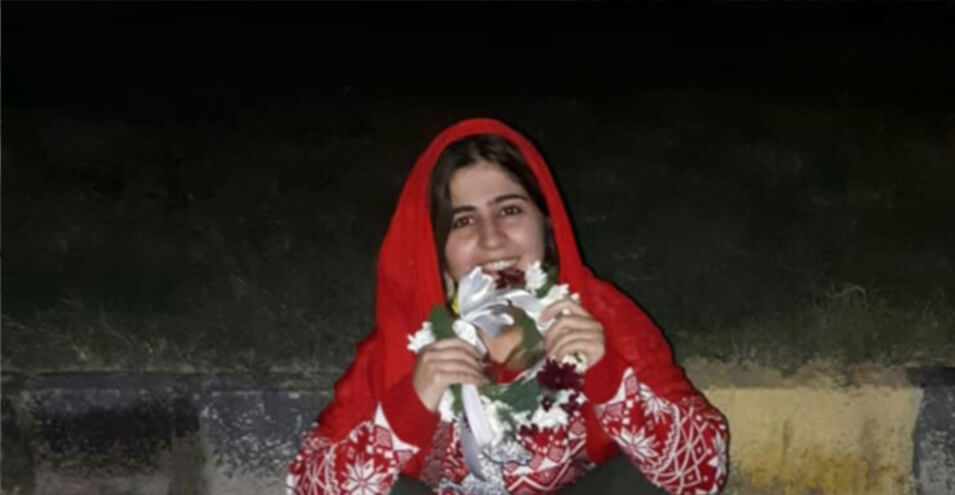
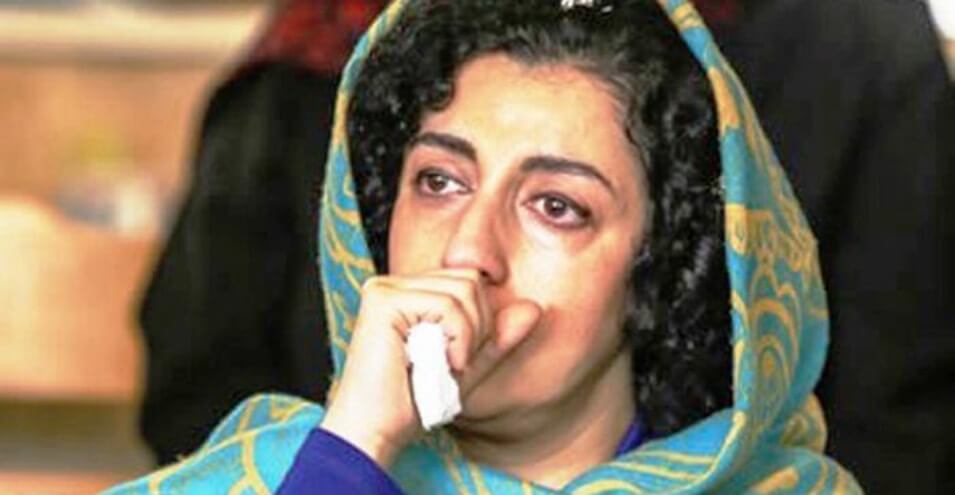
Sepideh Ghilian, a civil activist who has been temporarily released on bail, posted a series of tweets on Monday, the 30th of Dey, coinciding with the anniversary of her arrest and her brother’s arrest, detailing the circumstances of their arrest and the renewed presence of Ameneh Sadat Zabihpour, an IRIB journalist, to record forced confessions.
In these tweets, Sepideh Ghilian wrote that approximately 50 armed officers stormed her location on the 30th of Dey of the previous year (2018) to arrest her, and beat her brother severely in front of their mother and father’s eyes.
She wrote: “I went upstairs and said, please don’t kill anyone, I’ll come myself. I had witnessed killings several times during that autumn and winter.”
Sepideh Ghilian continued her thread of tweets with a sketch of a chador-wearing hand pulling another woman’s hair—a woman who in this sketch has neither eyes nor a mouth—and wrote: “A female officer wearing a mask on her mouth came and grabbed my hair and dragged me down the stairs. My back was breaking apart. They didn’t even let me put on shoes and took me away without a headscarf in my nightclothes. The last image was the bloodied face of my brother Mehdi.”
She also described how her brother Mehdi was arrested, writing that the officers “were hitting him in the face with their boots.” Ms. Ghilian, emphasizing that the officers were armed and no one dared approach, wrote that one of them told people they had captured a Daesh member, and stressed that the officers beat her during her arrest and threatened her with death.
This civil activist again raised the issue of forced confessions and, stating that after her arrest, following several transfers and notification of charges, she was moved to Shush, wrote that they pressured her into forced confessions through threats and intimidation.
This civil activist also referenced again in her tweets the presence of Ameneh Sadat Zabihpour, an IRIB journalist, to record forced confessions, writing “Ameneh Sadat came again, to film a video following a different script this time.”
This civil activist had previously mentioned on Twitter her personal experience regarding television confessions during her detention, writing that an IRIB journalist named “Ameneh Sadat Zabihpour” had provided her with a pre-written text during the production phase of a television program called “Charred Design” in the interrogation room for her to recite as a televised confession in front of the camera.
Ms. Ghilian described on Monday, the 30th of Dey, in her tweets that despite considerable pressure to make televised confessions without wearing a headscarf, she “did not allow their scenario to be created this time.”
She continued in these tweets, writing that she had witnessed the “torture and slaughter of defenseless Arabs” who were “repeatedly placed in front of the camera to confess against themselves.” She then referenced an Instagram post by Ameneh Sadat Zabihpour stating that a “dignified and noble interrogator” had come to meet Ghilian, writing that the interrogator was the same person who “tore Mehdi apart before my eyes and brought me to the detention center so I would be pressured to give that televised confession. I constantly wonder why these people are so devoid of humanity?”
Ms. Ghilian, who was arrested alongside Esmail Bakhshi following her exposure of forced confessions and torture, and who was temporarily released on the 4th of Aban along with several labor activists in Iran on a bail of 500 million tomans, was re-arrested on Saturday night, the 25th of Aban, at her father’s home while participating in popular protests, and after several days was finally temporarily released on the 12th of Azar upon posting a bail of 200 million tomans.
Recently, this civil activist, who is temporarily released on bail, reported that her court hearing regarding the charge of her participation in the Aban protests has been postponed.
Some time ago, representatives of 33 countries, including the United States, at a periodic session reviewing the human rights situation in Iran, criticized violations of women’s rights, ethnic and religious minorities, and the continuation of child executions in Iran.
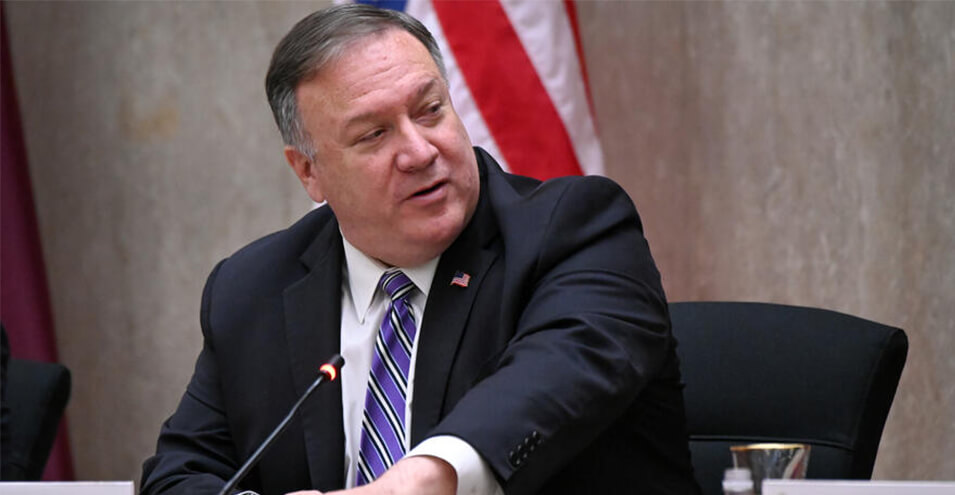
The U.S. State Department has repeatedly condemned violent crackdowns on protesters in various instances and the continuous violation of the rights of Iranian citizens by the ruling regime of that country.
Source: Voice of America