Bill to Prohibit ‘Direct Shooting of Porters’ on its Way to Iranian Parliament
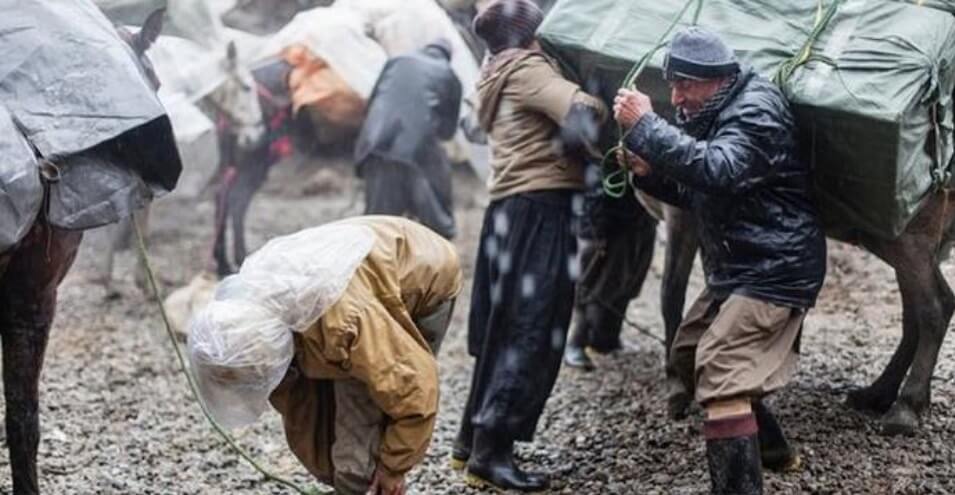
The representative of Piranshahr says the bill prohibiting direct shooting of porters with two urgencies will be placed on the parliament’s agenda next week. The representative of Sanandaj in parliament also believes that if the government drafts legislation to solve the porter problem, it would be much more effective.
Following the tragic death of two teenage porters from Marivan who froze in the mountainous Uramantis region on the border between Iran and the Iraqi Kurdistan Region, the discussion about the plight of deprived people in these areas who face various dangers to earn a living for their families has intensified once again.
Rasoul Khazri, representative of Piranshahr in the Islamic Consultative Assembly, told ISNA on Monday, December 2nd: “For years, in border areas, a number of porters have been killed or wounded due to frostbite, avalanches, or gunfire from military and law enforcement officials.”
According to Khazri, a number of parliament members have drafted a bill that, if passed, could at least reduce the risk of porters dying as a result of shooting by law enforcement officials.
The Piranshahr representative says he and several other parliament members have prepared a bill titled “Prohibition of Direct Shooting at Porters” and this bill is scheduled to be placed on parliament’s agenda next Sunday with two urgencies.
The bill’s drafters have requested the addition of a note to article three of the law “Use of Weapons by Armed Forces Personnel in Emergency Cases” for cases other than sections one, two, four, and seven of this article.
In these four sections, the cases in which law enforcement officials have the right to shoot directly at individuals are described as follows: “To defend oneself against someone who attacks with a cold or hot weapon, to defend oneself against one or more people who attack without weapons but the circumstances are such that personal defense would not be possible without using weapons, to arrest a thief and a highwayman and someone who has committed assassination or sabotage or explosion and is fleeing, and to protect a weapon that is provided to them for mission execution.”
Criticism of “Merciless Killing of Porters”
The bill’s drafters believe that law enforcement and border guard forces should not be allowed to shoot directly at porters except in these cases.
The killing and wounding of porters as a result of law enforcement shooting has repeatedly faced severe criticism. In one such example, about two years ago, 250 civil activists signed a statement criticizing the “merciless killing of porters,” and representatives from western Iranian cities submitted a note to the Interior Minister requesting an explanation for the shooting of porters by law enforcement.
In recent days, the death of Azad and Farhad Khosravi, 14 and 17-year-old teenagers from a deprived Marivan family, due to freezing received widespread coverage in media and cyberspace.
“A Shame for Us Contemporaries”
Parvane Salehshouri, a parliament member, in a Twitter message reposting an image of one of these two brothers’ body, called their death “a shame for us contemporaries.”
Meanwhile, Hasan Norouzi, representative of Robat Karim and spokesman of the parliament’s Legal and Judicial Commission, criticizing those who defend the legalization of porter work and “teh-lenji” trade, called this activity the defense of smuggling.
Norouzi told “Etemaad Online” on December 2nd: “Instead of defending porter work and teh-lenji in Kurdistan or the south, we should obligate the government to develop agriculture in these areas, establish factories, and provide loans for animal husbandry, agriculture, and so on, so we can properly witness exports of products and imports. When we legalize porter work and teh-lenji, it means smuggling.”
Contrary to this view, the Piranshahr representative in parliament says that according to official statistics, porter work constitutes only half to one percent of unauthorized goods imports.
Ehsan Alavi, representative of Sanandaj in parliament, believes that if the government can present legislation to solve the problems of porters and organize their activities, it would be “much more important and impactful.”
Alavi told ISNA: “The number of porters across the country is more than 500,000 people who should be recognized and their working conditions should be legalized and organized.”
Unfulfilled Government Promises
Regarding the exact number of porters and incidents that happen to them, different statistics are published. The representative of Sardasht and Piranshahr in parliament says that around 75,000 porters make a living this way in this region. Etemaad newspaper reported in early December, quoting Mohsen Bigları, a parliament member, that about eighty percent of the population of five border provinces engage in porter work due to the lack of welfare and financial facilities.
The Sanandaj representative, referring to the recent promise of Ishaq Jahangiri, First Vice President, regarding the “out-of-turn” review of establishing and launching border bazaars to organize porter activities, emphasized that this important promise must be implemented and “not be lost and forgotten amid economic disputes.”
The Interior Ministry’s information portal reported last spring, quoting Interior Minister Abdolreza Rahmani Fazli, about the approval of a plan by the government cabinet for “organizing porter activities” and announced that he asked his security and law enforcement deputy to review the obstacles facing porter activities in border provinces in a joint meeting with border governors and responsible agencies and present proposed solutions within “one week.”
The death of two Marivan porters in border mountains occurred approximately 20 months after that “one week,” when the Interior Ministry’s deputy was supposed to present proposed solutions to remove obstacles to porter activities to him.
Source: DW