Human Rights Watch Report on Suppression of Protests in Iran in 2019
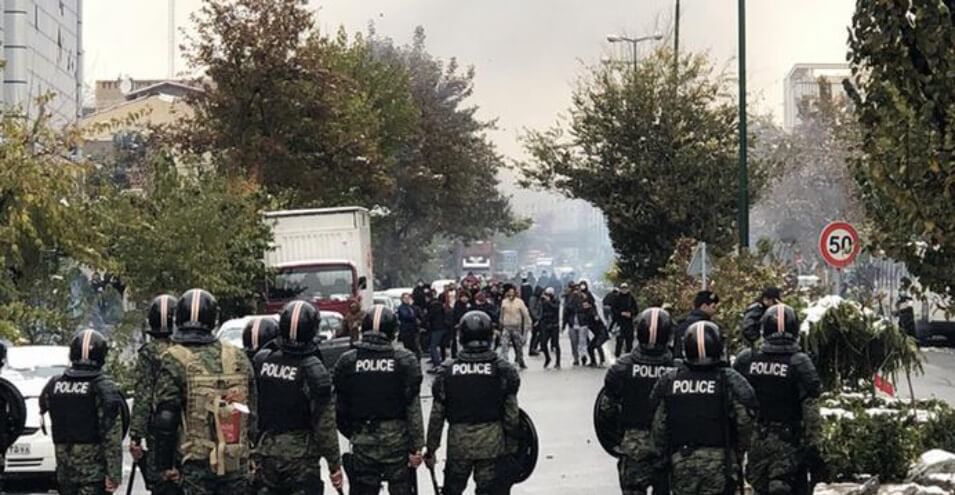
Human Rights Watch reported in its annual report on the intensification of suppression of protests in Iran last year. The human rights organization attributes the protests in Iran to severe economic conditions, widespread corruption, and the absence of political and social freedoms.
Human Rights Watch stated in its annual report that authorities of the Islamic Republic intensified mass arrests of protesters and the use of violence in suppressing protests across Iran during last year (2019).
According to the report, protests by the Iranian people stem from deteriorating economic conditions, public belief in widespread corruption, and the absence of political and social freedoms.
In Human Rights Watch’s 652-page annual report addressing human rights conditions in the world in 2019, the extent of respect for these rights was examined in nearly 100 countries.
The human rights organization specified in its section on Iran that the judiciary of the Islamic Republic in 2019 severely increased the cost of peaceful opposition and sentenced dozens of human rights activists to long-term prison sentences. In one of the bloodiest crackdowns since the February 1979 revolution, Iranian authorities responded to widespread protests following a sudden fuel price increase in November 2019 (November 1398 in the Persian calendar) by directly targeting protesters who posed no mortal threat to anyone with deadly attacks.
Michael Page, Deputy Director of Human Rights Watch’s Middle East Division, said: “Iran’s leaders have responded to widespread discontent with corrupt and tyrannical governance by cracking down and silencing all domestic opposition for fear of threatening their power.” Mr. Page characterized the use of lethal violence against protesters as indicating “complete disregard” by Islamic Republic authorities for the impact of severe economic conditions on Iranian citizens.
Exploiting the Death of Qasem Soleimani for Suppression
Human Rights Watch, referring to the killing of Qasem Soleimani, commander of the Quds Force of the Islamic Revolutionary Guard Corps, in a U.S. drone strike in Iraq, emphasized that beyond its serious regional and international consequences, the Islamic Republic is exploiting this incident to suppress its opponents, particularly in the sphere of regional issues and foreign policy.
The human rights organization also, referring to the bloody suppression of November protests in Iran, emphasized that the Islamic Republic has not been willing to disclose the number of those killed and arrested. According to Amnesty International, at least 304 people were killed during these protests. Reuters put the number of victims at around 1,500. A member of the Iranian Parliament also reported approximately seven thousand arrests during the protests. According to Human Rights Watch, the arrested face the risk of mistreatment and torture in Iranian prisons.
According to the organization, U.S. sanctions, which have made it difficult for Iranians to access vital medicines and pose a serious threat to their health, are also concerning. Furthermore, “humanitarian exemptions” in the sanctions regime have been ineffective and have largely led to medical shortages, from the lack of vital medicines for epilepsy patients to restrictions on chemotherapy drugs for cancer patients.
Long-Term Prison Sentences Against Civil Activists
The report, stating that revolutionary courts in 2019 sentenced dozens of civil activists in Iran to prison for their peaceful activities, names several labor and civil activists such as Sepideh Ghilian, Ismail Bakhshi, Marzieh Amiri, as well as human rights lawyers such as Nasrin Sotoudeh. Also, in July and August of last year, one branch of the revolutionary court in the primary stage sentenced four women (Yasaman Aryani, her mother Monireh Arabshahi, Mojgan Keshavarz, and Saba Kordafshari) who challenged mandatory hijab law to prison sentences of over ten years.
Human Rights Watch also emphasized that Islamic Republic authorities arrest dual-national Iranians and foreign nationals on vague charges of “acting against national security” while exploiting them to achieve their political objectives in negotiations with Western countries.
The human rights organization in its annual report also referred to long-term prison sentences against environmental activists in Iran, noting that in November 2019, a primary court sentenced eight environmental experts who had been detained for over two years on charges of “cooperating with the hostile U.S. government” to prison sentences ranging from four to ten years. It was also noted that on February 8, 2018, Kavous Seyed Emami, an Iranian-Canadian university professor who was arrested with this group, died in detention under suspicious circumstances.
The report cites the number of executions in Iran until the beginning of November of last year as at least 227 people and adds that two of these individuals were executed for crimes committed before they reached legal age. Iran executed 253 people during the corresponding period in 2018.
The report, while pointing to discrimination against women “in law and practice,” specified that despite this, the Guardian Council finally approved an amendment to Iran’s citizenship law on October 2 of last year, which allows Iranian women married to foreign men to apply for Iranian citizenship for their children under 18 if there is no “security problem.”
The report also, referring to the fact that the Islamic Republic permits girls from age 13 and boys from age 15 and even at younger ages with court approval to marry, emphasized that the judicial commission of the Iranian Parliament has blocked efforts to raise the minimum marriage age.
Human Rights Watch in its annual report also referred to multiple obstacles that children with disabilities in Iran face in the field of education.
Source: DW