“Day of Cyrus the Great”: Cyrus, Sleep Well, While Neighbors Stay Awake!
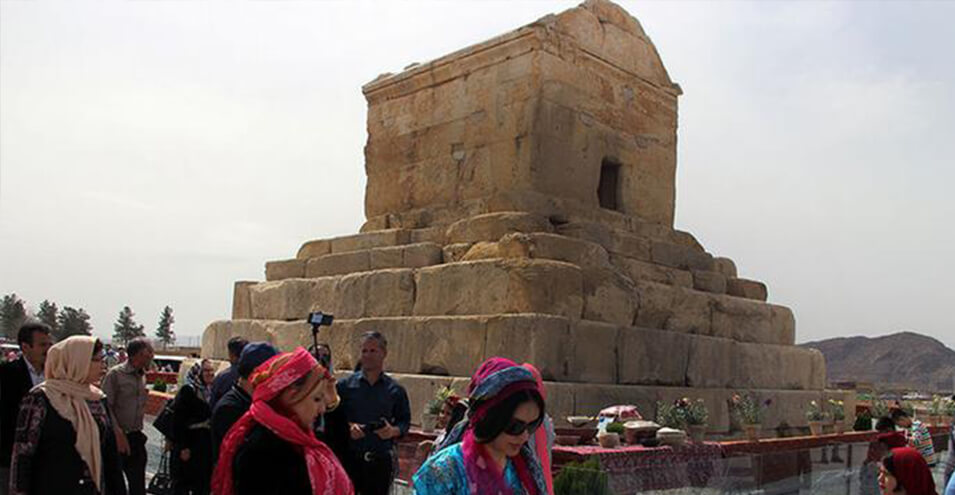
As November 7th approaches, social media users write about Iran’s old version of government in dealing with gatherings commemorating Cyrus the Great Day: summons, written commitments, and deployment of forces in Pasargadae. Tajikistan wants to celebrate Cyrus the Great Day in a big way.
This year too, as November arrives and the seventh day of this month approaches, social media users report the presence of security forces on roads leading to the tomb of Cyrus the Achaemenid in Pasargadae. According to these posts, the presence of security forces is intended to prevent any ceremonies related to “Cyrus the Great Day.”
Cyrus enthusiasts, the Achaemenid king, call November 7th Cyrus Day. In recent years, this occasion has become a reason for many people to gather in Pasargadae and commemorate the founder of the Achaemenid dynasty in Iran.
On the other side, the government has also exerted all its efforts in recent years, as the movement to commemorate this day grew, in preventing and suppressing any kind of gathering on this matter; from intimidating and threatening ceremony participants to arresting them. This year, it has resorted to the same approach again: summons, written commitments, and deployment of forces in Pasargadae in dealing with the commemoration of this day.
According to the “Hrana” news agency, several journalists, lawyers, and former political prisoners have been summoned to Tehran’s security police in recent days in this regard. The news organ of the Iranian Human Rights Activists organization reported the summons of figures such as Behman Ahmadi Amoui, Mohammad Hossein Aghassi, and Atena Daemi’s sister on Sunday, October 26th to the security police.
Mohammad Hossein Aghassi, in a tweet published about this, writes about “a written commitment to refrain from attending the Cyrus the Great ceremony in Pasargadae.”
Behman Ahmadi Amoui also published a tweet about his summons “for some clarifications to the Jannatabad police station.” The reason: a report about this journalist and former political prisoner’s statements regarding Cyrus.
Other users on social media such as Instagram and Twitter have published images of text messages sent to them by the security police in recent days; messages that, according to users, refer to “legal prosecution” for “attending any unauthorized gatherings on November 7th at the Pasargadae historical complex.”
“Cyrus the Great” Day in Tajikistan
While the Iranian government prevents the formation of any gathering to commemorate Cyrus Day in Pasargadae each year using every tool at its disposal, Iran’s neighboring countries are trying to keep Iran’s national symbols alive in a different geographical scope, celebrate them, and associate them with their own names.
Tajikistan is one of these countries. Recently, news was released about the opening of a large park with an area of approximately 5 hectares in Dushanbe, the capital of this country, which has been named “Cyrus the Great.”
Last week, on October 22, this city also hosted the international conference “Research in Ancient Culture, From Yesterday to Today”; a meeting at which it was proposed that henceforth October 29 (November 7) be celebrated annually in Tajikistan as “Cyrus the Great” Day. This year, the country also engraved the name “Cyrus the Great” on a military academy in Tajikistan. Among other proposals raised at the recent cultural meeting in Tajikistan, one can refer to the establishment of the Cyrus the Great Research Institute in this country.
Iranians and the Issue of “National Identity”
The government’s confrontation with national symbols and great figures and their commemoration occurs while, with the expansion of social media, one can observe Iranians’ attachment to their national identity more prominently than before.
Findings from surveys that have been conducted so far in “four phases” as part of the “National Survey of Iranian Values and Attitudes” commissioned by the Ministry of Culture and Islamic Guidance are worth reading, including in the category of “identity and national pride.”
Sohend Iranmehr refers on Twitter to the results of one of these surveys and writes that 98 percent of respondents indicated that they place very high value on their Iranian identity.
The question arises as to how the government defines “Iranian identity” and to what extent it sees this identity in contrast with “religious identity.”
Source: DW