75% of Iran’s Population Will Be ‘Affected by Dust and Dust Storms’
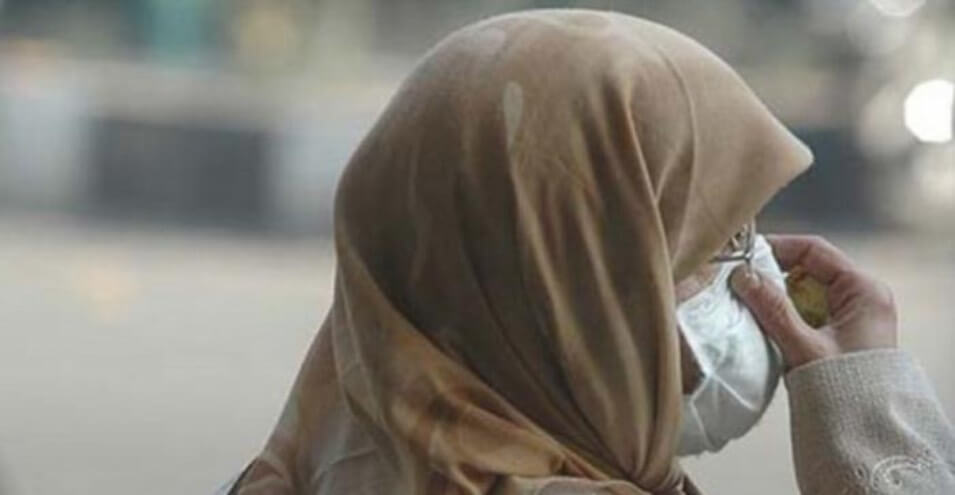
An expert at the Presidential Office estimates that “in the not-too-distant future” three-quarters of Iran’s population will be affected by dust and dust storms. He says that currently 57% of Iran’s total population is struggling with the environmental challenge of air pollution.
While senior officials at the Meteorological Organization are reporting the continued increase in pollutant concentrations and declining air quality in densely populated and industrial cities of the Islamic Republic, an expert from the Scientific and Technological Deputy of the Presidency has reported that a large portion of the population will face the problem of air pollution in the near future.
Nadergholi Ebrahimi, Secretary of the Water, Drought, Erosion and Environment Technology Development Headquarters of this deputy, told the ISNA news agency on Monday, December 2, that currently 57% of Iran’s population is experiencing the effects of increased dust and dust storms.
Ebrahimi says the forecasts of this headquarters indicate that in the not-too-distant future, the problem of increased dust and dust storms will affect 75% of Iran’s population across various provinces.
In recent days, Iranian media have published shocking statistics about air pollution and its adverse consequences on citizens’ health. According to reports, between the 3rd and 8th of Azar, 12,838 people across Iran visited medical centers due to respiratory and cardiac diseases caused by air pollution.
Mashhad: Doubling of Unhealthy Days in Azar Month
In recent days, primary schools in some major Iranian cities, including Tehran, have been closed due to worsening air pollution. Reza Esmaili, head of the Mashhad Environmental Pollutant Monitoring Center, says that in this city, during the first ten days of Azar month, there was not a single clean day, and the number of unhealthy days for sensitive groups was double the unhealthy days in Azar month of the previous year.
Among the important factors in increased dust and dust storms, along with the drying of wetlands and lakes due to mismanagement and excessive extraction of groundwater, one can point to the expansion of deserts.
Nadergholi Ebrahimi said in this regard: “The country has about 10 million hectares of desert, and the deserts of Khuzestan are considered one of the centers of dust in the country.”
Khuzestan is one of the provinces that in recent years has faced severe air pollution and increased dust and dust storms more than other regions of Iran.
Unhealthy Air in Eight Khuzestan Cities
Shehriyar Askari, Public Relations Director of the Khuzestan Department of Environment Protection, announced on Monday afternoon that the level of pollutants and suspended particles in the air of eight cities in the province, including Ahvaz, Abadan and Andimeshk, exceeded standards and the situation is unhealthy for sensitive groups.
One way to combat dust centers is mulching with oil-based substances, which was carried out before the 1979 Revolution, but afterward for various reasons, including financial constraints, lack of agreement with neighboring countries for cooperation in this field, and concerns about its negative environmental consequences, it has not been pursued.
Nadergholi Ebrahimi called the use of non-oil mulches a common solution for stabilizing dust centers and added: “We are looking to replace biological mulches compatible with nature with oil-based mulches, and in this field many products have been produced and claimed to be capable of stabilizing dust centers.”
The Scientific and Technological Deputy’s colleague of the Presidency says a working group on non-oil mulches has been formed in the Environment Organization, which is the only authority to verify the quality of these products, and so far has approved 2 produced biological mulches.
Non-standard and worn-out vehicles and the very high fuel consumption of vehicles manufactured and assembled in Iran, along with officials’ lack of attention to developing public transportation fleets in megacities proportional to population growth, are other problems that have been much discussed for years but have not led to improving the air quality of densely populated cities.
AliReza Raisi, Deputy Minister of Health, confirming these shortcomings, says strengthening public transportation infrastructure, reducing single-occupancy vehicles, improving fuel quality, installing air pollution reduction filters on diesel vehicles and public transportation means are among the most important solutions to combat air pollution.
People: Victims of Officials’ Inefficiency and Mismanagement
This official said combating air pollution is not the work of one organization or agency, and all agencies, organizations, and people should help reduce air pollution and cooperate with each other.
He did not allude to the fact that most effective solutions to combat air pollution are in the hands of executive and legislative bodies, and people are merely victims of this situation against their inaction.
The Health Ministry’s Public Relations, quoting Raisi, cited another “solution” to combat air pollution as restricting citizens, and recommends: “It is necessary for people at risk, such as children under 5 years, pregnant mothers, and elderly people over 65 years, chronic respiratory and cardiac patients, refrain from traveling on days of peak air pollution, especially in megacities. Using special masks can also help people’s health.”
The Deputy Minister of Health implicitly admits officials’ ineffectiveness in combating air pollution and says that surveys show that in Mehr and Aban 1398 (September-October 2019), the air quality index declined more compared to the same months of the previous year.
Based on these surveys, this year the number of healthy days decreased compared to last year, and in Tehran, the amount of suspended pollutant particles in the air was 3.3 times the standards of the World Health Organization.
Source: DW