Two Wards at Vakil Abad Prison in Mashhad Allocated for Corona-Suspected Inmates
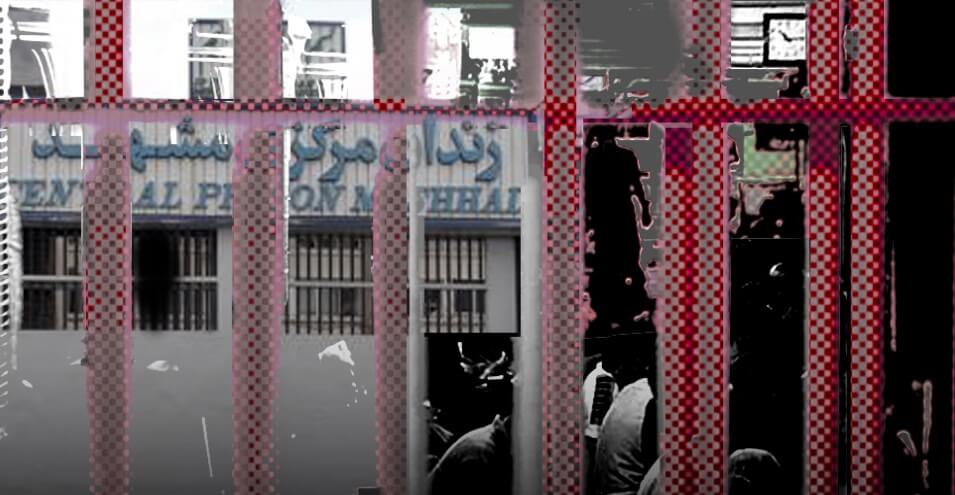
Families of political prisoners at Vakil Abad Prison in Mashhad have informed the Iran Human Rights Campaign in interviews that two wards in this prison have been allocated for inmates suspected of having coronavirus, and some political prisoners have been transferred to these wards. They stated that none of the inmates have been tested for coronavirus and a dangerous situation prevails in the prison.
Concerns about the health of political prisoners and their non-release on bail under these dangerous conditions and amid the spread of coronavirus are growing day by day. Although judicial authorities have claimed the conditional release of seventy thousand prisoners across the country, political and ideological prisoners continue to languish in prisons.
Yesterday, March 10, UN officials, including Javaid Rehman, UN Special Rapporteur, followed up on these concerns and requested that the Iranian government immediately include political and ideological prisoners in these releases.
Hengameh Vahedian Shahrudi, daughter of Abbas Vahedian Shahrudi, reported the transfer of her father to the ward for corona-suspected inmates and told the Iran Human Rights Campaign that more than 30 inmates suspected of coronavirus are being held together while none of them have been tested for coronavirus and they have no access to any sanitary facilities.
Abbas Vahedian, 49 years old, is one of the signatories of a statement published in late June 2019 by 14 political and civil activists from Mashhad and Tehran in some media outlets. In a letter addressed to the Leader of the Islamic Republic, these individuals called for his resignation and constitutional reform. Part of this letter stated: “The time has come for the people, activists and well-meaning intellectuals, setting aside expedient tendencies that have paved the way for the destruction of the country’s culture, civilization and wealth, to openly enter the arena and, by calling for fundamental constitutional change and the resignation of leadership that unlawfully expands its authority every day, lead this national movement.”
Hengameh Vahedian Shahrudi, who spoke with her father by phone on Tuesday, March 10, told the Campaign in an interview: “My father was transferred to the prison’s health ward five days ago, and although the health doctor said my father should be granted medical furlough, he was transferred to a ward where coronavirus-suspected inmates are held.”
Abbas Vahedian Shahrudi’s daughter told the Campaign: “My father called today and he is still coughing, his lungs are infected and he is experiencing respiratory attacks. The health doctor told prison security that he should be granted medical furlough, but the head of security told my father that your file is open and bail has not been set so you cannot be furloughed. I went to follow up with the judge handling my father’s case and told him that my father has been in limbo for 7 months. Since August 18 when he was arrested, you have neither issued a verdict nor granted furlough, and now you have imprisoned him in a ward suspected of coronavirus. The judge told me that he has reviewed my father’s file and has not yet made a decision and cannot handle the files under the current circumstances.”
According to Hengameh Vahedian Shahrudi, coronavirus testing is not performed on inmates at Vakil Abad Prison in Mashhad: “Coronavirus testing is not done in the prison. Inmates suspected of coronavirus are held in one ward. A quarantine ward, meaning when newly arrived inmates are initially held there for one week before being transferred to other wards, has been emptied and those suspected of coronavirus are brought to this ward. There are about thirty of them and none of them have been tested for coronavirus, and if one person is infected, it will infect everyone. They have not provided any facilities, no gloves, no masks and nothing else. They have not even provided a simple ordinary mask and we are very worried, and the response to our follow-ups is threats. When I reported that they have provided no facilities and sanitary measures are not observed in the prison, the head of the general prison administration complained against me for spreading falsehoods. We really do not know what to do.”
Kamal Jafari Yazdi, Mohammad Mehdifarr, Javad Lal Mohammadi, Reza Mehrgan, Mohammad Hossein Sepahri, Mohammad Nourizad and Hashem are among other signatories of the statement calling for the resignation of the Leader of the Islamic Republic who are imprisoned.
At the same time, Asghar Sepahri, brother of Fateme Sepahri, informed the Campaign in an interview that one ward in the women’s ward of Vakil Abad Prison in Mashhad has been allocated for corona-suspected inmates and expressed concern about his sister’s health condition in this prison.
Fateme Sepahri is among 14 female activists who, by publishing a statement, called for the resignation of Ayatollah Khamenei, the Leader of the Islamic Republic, and the drafting of a new constitution.
On August 5, 14 female activists, by publishing a statement titled “Resignation of the Leader and Transition from the Islamic Republic and Drafting a New Constitution” addressed to the Iranian people, wrote: “We, 14 civil activists and women’s rights advocates, are determined to continue our struggle in a civil and non-violent manner, like the vanguards of our nation’s freedom, by saying ‘No to the Islamic Republic’ until we achieve our complete demands.”
Fateme Sepahri is the only signatory of this statement who remains imprisoned while other detainees have been released on bail. She was arrested on August 20 and has been sentenced to 6 years in prison by the Mashhad Revolutionary Court, Branch 4, headed by Judge Mansouri.
Asghar Sepahri, Fateme Sepahri’s brother, told the Campaign in an interview: “Since coronavirus became prevalent, inmates do not have in-person visits and we tried very hard through my sister’s lawyers, Mr. Aghasi and Mr. Maki, to get her temporarily released by any means. But we had no results. In a call from my sister from prison, she said they have evacuated their ward and transferred inmates suspected of having or having coronavirus to this ward, and my sister along with other inmates in this ward have been transferred to another very crowded ward that has limited phone contact restrictions.”
Mr. Sepahri told the Campaign that “coronavirus has reached Vakil Abad and we are very worried. In general, the sanitary condition of Vakil Abad Prison is very poor and this has added to our concerns. The situation is really very critical and worrying. The appeals court has not yet issued a ruling. Judge Mansouri, who issued my sister’s initial verdict, when we went to him for bail, said I have only issued the verdict and have no obligation to issue a bail order, go to appeals. The appeals judge is essentially at a loss, he had said bring a document for one billion and two hundred million tomans, and they have effectively decided not to release her.”
Source: Iran Human Rights Campaign