Twenty Days After Execution of Political Prisoner; Judiciary Official Denies Existence of Political Prisoners in Iran
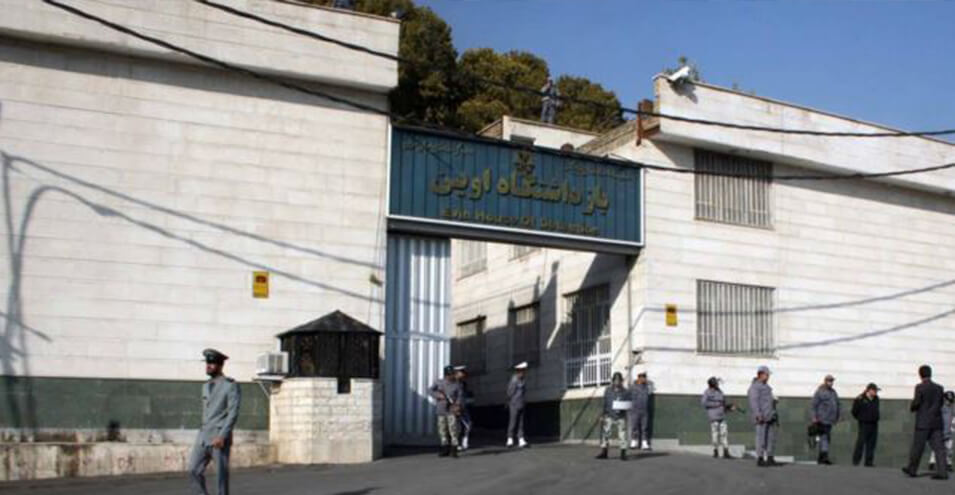
While several weeks have passed since the execution of a political prisoner in Fashafuyeh Prison in Iran, a senior official of Iran’s judiciary denies the existence of any political prisoners in Iran.
Gholamhossein Esmaili, spokesman for the Judiciary, said Sunday night on July 30 on a television program in response to the execution of a political prisoner in Fashafuyeh Prison and the reason for holding political prisoners alongside other inmates: “We do not have political prisoners in Iran, and these are people who have committed crimes against security.”
This is not the first time Iran’s judiciary has denied the existence of political prisoners. Previously, Sadegh Amoli Larijani, the former head of the Judiciary, had rejected this in February 2019, saying that “if someone has committed an act against security, it has a separate criminal charge that must be addressed.”
Islamic Republic officials have been categorizing political defendants under the term “security criminals” for several years and violating their rights. Article 168 of the Islamic Republic’s Constitution states that political and press crimes must be tried publicly and with a jury present, but over the past four decades, under the pretext of not defining political crimes, political defendants are still tried in closed courts without a jury.
The denial of the existence of political prisoners in Iran by officials comes at a time when the Law on Political Crimes was issued for implementation in June 2016 and it was announced in November 2017 that the jury of the Court of Political Crimes had begun its work, but the trial of political prisoners continues in Revolutionary Courts.
However, according to this law, a person is considered subject to a “political crime” only if they did not intend to strike at the fundamental nature of the system.
A definition that appears to be used by Islamic Republic officials as a pretext, and by charging political prisoners with actions against national security, to deny the “existence of political prisoners” in Iran.
Dissenters and ideological prisoners are not exempt from this view of Iranian government officials either. Islamic Republic officials have repeatedly denied the imprisonment of individuals for their thoughts and beliefs, including Mohammad Javad Zarif, Iran’s Foreign Minister, who told Charlie Rose, an American journalist, that “no one is imprisoned in Iran for their beliefs.”
Although there is no official statistics on the number of political and ideological prisoners in Iran, in December 2018 the U.S. State Department announced on its Persian Twitter page that approximately 800 Iranians promoting human rights were imprisoned by the Islamic Republic.
Beyond all this, various prisoners have complained of lack of medical attention to their condition, deprivation of access to lawyers, and deprivation of telephone contact and the ability to visit with family members.
Amnesty International in February 2019 in a detailed report on the state of human rights in Iran called 2018 the “year of shame” for the Islamic Republic.
Source: Voice of America