Judiciary: Executive bodies have neglected their duties regarding hijab
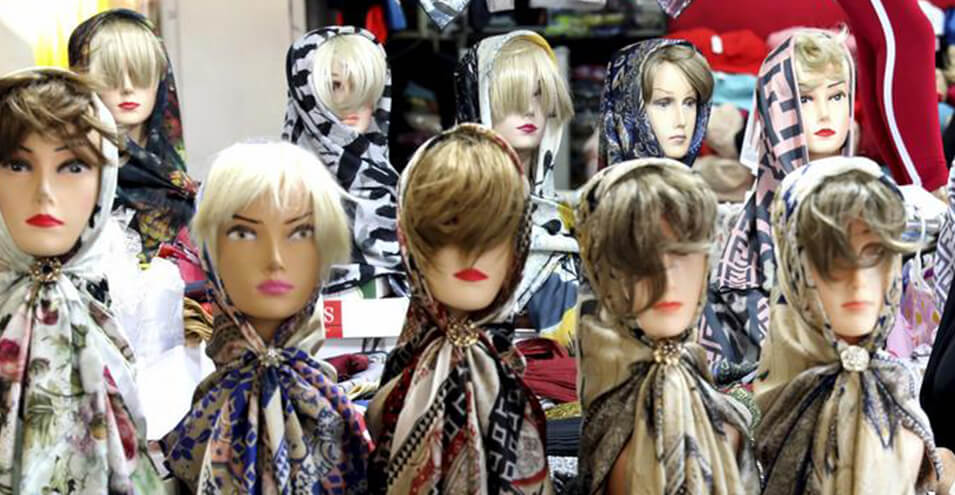
Guidance patrols have gone underground to monitor women’s appearance in the metro, and police are reporting a special plan to combat “improper hijab.” Nevertheless, judicial authorities are complaining about the negligence and violations of executive bodies in the matter of “hijab and chastity.”
As protests against mandatory hijab have expanded in Iranian cities, judiciary officials have been engaged in emphasis and threats. This time, the recipients of criticism and accusations are not citizens but administrative and government agencies. The judiciary is reminding these agencies of the decisions of the Supreme Council of the Cultural Revolution and drawing a line regarding negligence in implementing these decisions.
Gholamhossein Ismaili, spokesperson for the judiciary, said: “All our efforts are focused on improving the status of chastity and hijab in society; both as a religious matter and as a legal obligation. The Supreme Council of the Cultural Revolution has made decisions in the field of chastity and hijab in various years and has approved duties for different government sectors that must be implemented, but preliminary evaluation shows that most of the 26 agencies have not performed their duties well.”
He called the review of the Supreme Council of the Cultural Revolution’s decisions and the implementation of assigned duties as the responsibility of these agencies, and added: “Perhaps new managers have come and are not aware of these duties.” The judiciary spokesperson reported that the General Inspection Organization of the country has been tasked with examining the performance of these agencies.
The law enforcement force, Ministry of Culture and Islamic Guidance, Ministry of Interior, and the Islamic Republic of Iran Broadcasting Organization are among the agencies that have responsibilities in pursuing, promoting, or dealing with the hijab issue.
Warning to “violating agencies”
Ismaili’s statements came in continuation of remarks by Gholamreza Mohseni Ejei, First Vice President of the Judiciary. Ejei stated in a harsher tone that the decisions of the Supreme Council of the Cultural Revolution are like law and any agency that fails to perform its duties will be dealt with: “All agencies must fulfill their duties and the General Inspection Organization must also act on this decision, which is equivalent to law. In this process, violating agencies should first be warned and then identified.”
The deputy and spokesperson of the judiciary have warned government agencies while police are sending warning text messages to owners of vehicles whose occupants engage in “intentional improper hijab” and ultimately seize the vehicle. Guidance patrols have now gone from the ground to the underground to monitor the appearance of girls and women at metro stations. Alongside guidance patrols, groups called “commanding to do good” issue reminders here and there, and educational banners have been installed in the metro asking female passengers to enter the metro with a hijab.
At the same time, Hossein Rahimi, commander of police in the capital, says the police are implementing a special plan for Tehran’s metro. The law enforcement force is among the agencies targeted by the “hijab and chastity” plan of the Supreme Council of the Cultural Revolution. Rahimi told FARS News Agency: “Those who promote improper hijab in the metro and deliberately violate norms in a calculated manner will face strict action.”
Mahmoud Mirloohi, member of Tehran City Council, says: “I haven’t gone into the details but I know it has nothing to do with the metro and metro management. These things sometimes happen, for example, similar incidents can occur in stadiums, such discussions are raised in the summer season, of course we return to the previous point again and recently major agencies are being convinced that dealing with issues in this way, attributing everything to women, having a masculine perspective on the issue of women, chastity, hijab, and taking a mechanical approach, and law enforcement measures are not the solution.”
“Hijab and Chastity” Plan
The hijab and chastity plan was approved by the Supreme Council of the Cultural Revolution in winter 2005 and identified tackling the increasing trend of “improper hijab” as a priority in the programs of the country’s executive agencies. “Reviving and promoting the good tradition of commanding to do good and forbidding evil” is among the points emphasized in this plan.
The judiciary’s call to mobilize various agencies to monitor the clothing of women and girls in society comes as the Revolutionary Court has sentenced three women’s rights activists, who removed their headscarves in the metro on International Women’s Day and distributed flowers among women, to prison. Yasmine Aryani, Monire Arabshahi, and Mozhan Kavari have each been sentenced to ten years in prison on charges of “providing grounds for corruption and obscenity.”
The head of Revolutionary Courts in Tehran has threatened that sending videos related to “removing hijab” abroad will be subject to punishment and will result in up to 10 years imprisonment. The headquarters for reviving commanding to do good has accused Masih Alinejad, organizer of the “White Wednesdays” campaign, of collaborating with hostile countries and warned citizens that sending videos to enemies is considered a crime.
Criminalizing protests against mandatory hijab in Iran has been condemned repeatedly by human rights organizations. Currently, at least eight people are imprisoned for supporting the “White Wednesdays” campaign and face charges such as “promoting obscenity and corruption,” “propaganda against the system,” and “actions against national security.”
Source: DW