Tajzadeh: National Extremists Get Away, Trump Cascades
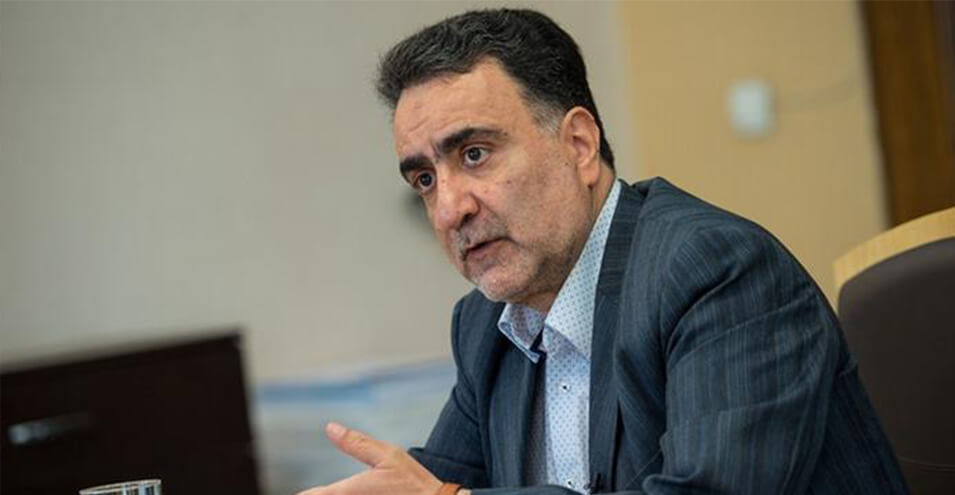
Mostafa Tajzadeh says the role of the hidden government in creating problems in the country is no less than the legitimate government. According to him, changing Iran’s regional policies and negotiating with America to lift sanctions is necessary.
Mostafa Tajzadeh, a prominent reformist figure in Iran, defended the strategies and performance of the “reform” movement in the past and present in a detailed interview with the Iran Students News Agency (ISNA).
In this interview, he first responded to criticism by some principlist representatives regarding the Hope faction members’ visit to former President Mohammad Khatami in the final days of Esfand. One principlist representative, criticizing the faction’s meeting with the former president, had said “Khatami has shed blood”.
Defense of Khatami and Reformists
Tajzadeh, who is currently one of Mohammad Khatami’s advisors, says “Mr. Khatami’s victory in the second election of Khordad (1997) prevented a U.S. military attack on Iran and did not allow Iran to fall into the vicious cycle of war and poverty. The world knows him as a champion of dialogue among civilizations.”
Tajzadeh considers another of Khatami’s achievements to be preventing Iran’s nuclear file from being sent to the Security Council and Iran facing international sanctions, because when a country’s file is referred to that council, it means that country must either surrender or endure war.
In his view, the few representatives who made a fuss in parliament in reaction to the Hope faction’s visit to Khatami are “people who do not want the society’s situation to become normal and the country’s affairs to proceed through dialogue and free elections. They want the state of emergency and security to continue so that a small minority can control the country’s destiny”.
Tajzadeh adds, “They know they can only have a say in extraordinary and chaotic conditions; as soon as society calms down, people expect politicians to have plans and programs for managing the country, dealing with the world, and developing Iran, and extremists have nothing to say in these areas.”
Defense of Reformists’ Vote for Rouhani
In his interview with ISNA, Tajzadeh defends reformists’ support for Hassan Rouhani in the 2017 presidential election and explains the reform movement’s current policy toward the Rouhani administration.
He says if reformists had not seriously supported Hassan Rouhani, he would not have won votes. “Because the hidden government came to the field with all its might to seize power and make it unified and advance its goals”.
Tajzadeh adds: “If Mr. Rouhani had not won votes, we would have been condemned by the people both today and in the future. In that case, they would have told us that due to Rouhani’s partisanship and absolutism, we left him alone and he failed, and they would hold us responsible for this failure. They would say once again with multiple candidates and lack of consensus in the 2005 elections, you left the country trapped in cultural narrow-mindedness, political blockade, sanctions, and systematic economic corruption.”
According to this political activist, reformists had no reason not to support such a candidate. “If we had not supported Rouhani in the 2017 presidential election, we would have been history’s perpetual accused; absolutists or puritans ignorant of the times who took away a historic opportunity from the people.”
Reformists’ Position on Ibrahim Raisi
Regarding Ibrahim Raisi’s appointment as head of the judiciary, people affiliated with the reformist movement in Iran took different positions. Some supported it but others, including Tajzadeh himself, did not find him suitable for this position. However, Tajzadeh presented a fresh summary of his approach toward the new head of the judiciary in his interview with ISNA.
Mr. Tajzadeh says: “Despite my criticisms of Mr. Raisi and not considering him a suitable choice for the head of the judiciary, since I am a reformist, I consider correcting processes and procedures to improve the country’s and people’s affairs more important than individuals.”
This political activist adds: “If this Mr. Raisi dedicates himself to reforming the judiciary, changes its factional composition and performance, ensures the independence of the judicial system from intelligence and security sectors, fights internal corruption in the judiciary, and works on improving courts and prisons, despite my criticisms, I will support him. Especially if he takes fundamental steps toward ensuring citizens’ rights. Reforms and democratizes jury panels, removes restrictions on choosing lawyers for political detainees, and accepts that we have political prisoners and does not call them security detainees so their rights are not lost.”
The Role of the “Hidden Saboteur Government”
Tajzadeh says not all problems stem from government performance. He adds, “Yes, there is inflation, but the role of the hidden government in creating it has been no less than the legitimate government.”
According to him, “the legitimate government (Rouhani’s administration) could have prevented sanctions, but due to the sabotage of the hidden government and of course American warmongers, it could not. Therefore, we do not think it is ethical to only criticize the government for why meat costs 100,000 tomans per kilogram”.
He adds: “In fact, national extremists and warmongers get away with it, and Trump also cascades. So while criticizing the government, we address the factors and roots of problems that others create for the government and the Iranian nation, and at the same time, we also criticize Rouhani’s mistakes.”
He says, “I do not deny the government’s weaknesses. I also agree with criticizing the government, but I warn that the hidden government wants to exploit people’s justified dissatisfaction to overthrow the legitimate government, and then by creating exceptional conditions, effectively open the way to political blockade, inefficiency, corruption-fostering, and graft, and make Iran a paradise for merchants of war and sanctions.”
Necessity of Correcting Regional Policies
In continuing his interview with ISNA, Tajzadeh considers correcting Iran’s regional policies and negotiating with America necessary for bringing America back to the JCPOA.
He says: “I predict a very difficult year for the country in the economic field, especially if sanctions are not broken and continue, economic conditions will become more complicated and harder.”
According to Tajzadeh, the Rouhani government’s room for maneuver under sanctions is very limited unless it breaks the sanctions game and instead of claiming “we will circumvent sanctions,” finds a way to break sanctions and by using all Iran’s regional and global capabilities, negotiate with America.
He adds: “For example, by correcting our regional policies, we can bring America back to the JCPOA and lift sanctions.”
In his view, the Rouhani government “by simultaneously establishing communication with anti-Trump officials, intellectuals, peacemakers, the academic community, and public opinion in America, most of whom are opposed to war, should pressure Trump to return to the JCPOA. The government should explain to the world that canceling the JCPOA means stepping toward war.”
He says, “Those who propagandize that all problems are from the government do not intend to replace Rouhani with Amirkabir or Mossadegh, Khatami, or Mousavi. They want Rouhani gone so the government becomes unified and secures the conditions. Once again align Europe with America and give Russia’s and China’s vote to the White House.”
Source: DW