Iranian-American Accounts of Meeting with Mike Pompeo in Texas
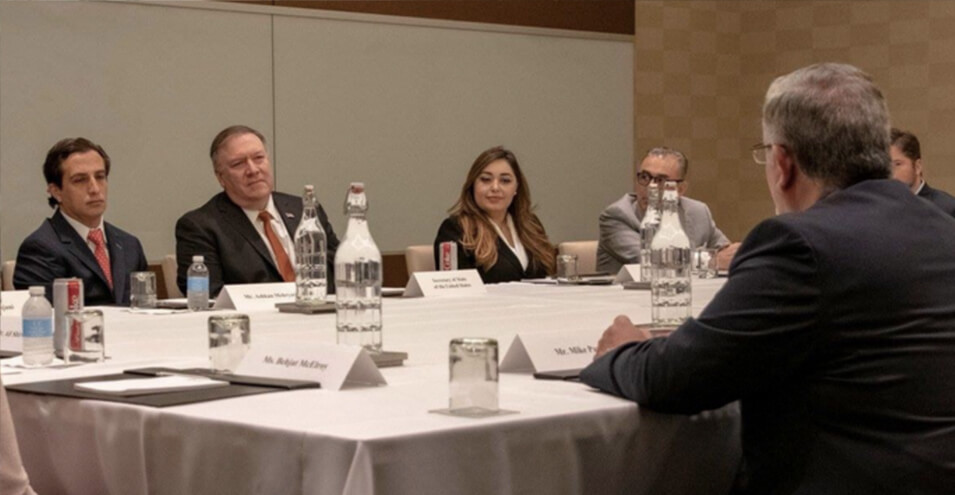
The Farsi page of the U.S. State Department posted a video on Twitter of a meeting between Iranian-Americans and Mike Pompeo last Monday. In the video, those present at the meeting expressed their views about the gathering.
On Monday, April 15, after returning from a four-day trip to South America, Mike Pompeo held a private meeting with a group of Iranian-Americans in Dallas, Texas.
The U.S. Secretary of State, after meeting with a group of Iranian-Americans, said that the United States will always stand with the people of Iran. They deserve better than this.
No details were released from the meeting, but Pompeo wrote on his Twitter account Monday night Washington time: “Enjoyed meeting with an impressive group of Iranian-Americans in Dallas. Discussed the IRGC designation as terrorists—which goes in effect today—and the regime’s 40 years of disregard for the people’s needs.”
Enjoyed meeting with an impressive group of Iranian-Americans in Dallas. Discussed the IRGC designation as terrorists—which goes in effect today—and the regime’s 40 years of disregard for the people’s needs. The U.S. will always stand with the Iranian people. They deserve better. pic.twitter.com/ToCz72nqDp
— Secretary Pompeo (@SecPompeo) April 15, 2019
This was Pompeo’s second meeting with Iranian-Americans.
Fox News also mentioned Pompeo’s meeting with Iranian-Americans in part of its Monday report, noting that the U.S. Secretary of State said in response to reporters after this meeting that on the day the IRGC was placed on the terrorist list, he wanted to be with this group of Iranian-Americans to hear their views on the impact of our policy on the lives of the Iranian people and how we hope our policy will lead to changes in the nature and conduct of the Islamic Republic and its leadership.
According to the U.S. State Department website, the U.S. Secretary of State also told reporters after meeting with a group of Iranians: “A major flood occurred in Iran, but Iran’s leaders continue exporting terrorism. In fact, they’re using their dollars to support Maduro, while their own people are suffering.”
Last year, the U.S. Secretary of State also met with a group of Iranian-Americans in Los Angeles.
The current U.S. administration, criticizing the Obama administration, says it seeks maximum pressure on the Islamic Republic to change its behavior. The U.S. says the Islamic Republic disregards the rights of its own people and uses the country’s budget to support terrorist groups instead of spending it on them.
U.S. Concerns About Islamic Republic Actions and Increased Pressure
The United States says the nuclear agreement with Iran has not had a positive impact on that country’s behavior. President Trump issued orders to reinstate nuclear sanctions against the Islamic Republic of Iran at two points in August and November of last year.
The United States says the Islamic Republic is the world’s largest state sponsor of terrorism, continues its ballistic missile program in violation of UN Security Council Resolution 2231, and is a source of instability in the Middle East. The Islamic Revolutionary Guards Corps is responsible for Iran’s missile program.
In recent months, several plots by individuals affiliated with the Islamic Republic to assassinate political opponents in Europe were discovered, leading to diplomatic action by France, Germany, Denmark, and the Netherlands against the Iranian regime.
Iran’s missile tests have previously faced reactions from Western countries, which have repeatedly asked the Islamic Republic to stop producing and testing these missiles.
In recent years, Iran has conducted missile tests, some of which were inscribed with slogans of “Death to Israel” in various languages, including Hebrew.
The U.S. Secretary of State announced a new American strategy toward Iran on June 21 of last year, outlining 12 U.S. conditions for an agreement with the Islamic Republic, which are essentially a list of American demands from the Islamic Republic, or in other words, details of changes in the behavior of the Iranian regime.
Some of these conditions include stopping support for terrorism and refraining from destabilizing activities in the region such as supporting Lebanon’s Hezbollah and interfering in regional countries.
Source: Voice of America