Iran’s Markets Stagnate Amid Sharp Fluctuations in Dollar and Gold Prices
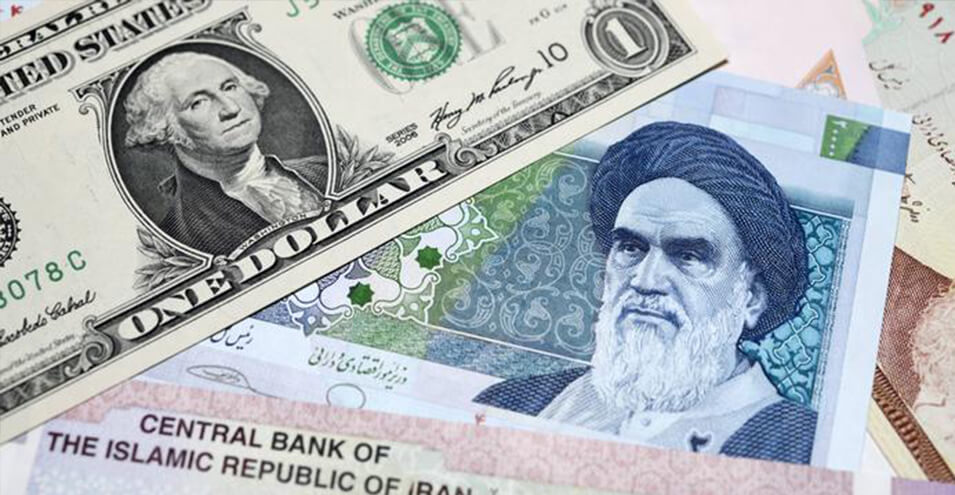
Iranian media outlets have reported renewed increases in dollar and coin prices in the markets. It is said that coin prices have experienced unusual increases. On the other hand, foreign currency and coin trading has come to a standstill. A look at a tumultuous week in Iran’s markets.
The rise in coin prices as well as dollar and other foreign currencies in Iran’s market has once again fueled concerns stemming from uncontrolled market fluctuations in Iran.
The website “Khabar Online” on the second of Esfand (February 21) wrote about the increase in dollar and coin prices in Iran’s domestic markets: “Iran’s markets have gone through a tumultuous week. The growth in currency prices coupled with unusual increases in coin prices created conditions for trading halts in the markets.”
The question that has captured the minds of both the public and officials is whether the current week’s turmoil will continue or if the government and central bank will be able to control and contain the fluctuations.
Some conservative representatives have also taken advantage of the opportunity and again spoken out against Iran joining FATF (Financial Action Task Force).
For example, Mohammad Dehqan, Deputy Head of the Wilayah Representatives Faction in the Islamic Consultative Assembly, stated: “What sensible person bans dollar imports when the country has currency problems?”
This conservative representative claimed that the implementation of FATF requirements had caused the dollar price in the country’s domestic markets to reach 19,000 tomans.
Experts on Iran’s economic issues have repeatedly spoken about the damages resulting from Iran’s non-accession to the Financial Action Task Force. Among the damages resulting from this policy, one can point to the difficulties in using the European financial solution, INSTEX.
Market Stagnation
“Khabar Online” in a report on coin and currency transactions in Ferdowsi Square and Sabze Meydan published news of a complete halt in buying and selling coins and currencies. The website’s correspondent wrote in this regard: “The volume of coin trading in the market has reached zero and few people are willing to buy and sell coins and gold.”
Coin prices on Wednesday, the first of Esfand, crossed the 4,700,000 toman mark. The gap between buying and selling prices for coins on the same day fluctuated between 100,000 to 180,000 tomans.
Ibrahim Mohammadvali, Head of Tehran’s Gold and Jewelry Union, told the correspondent of the aforementioned website about the stagnation in coin trading: “At these prices, few people are willing to take the risk of buying and selling.”
The dollar price has also crossed the 13,000 toman mark and is being traded between 13 to 14 thousand tomans. The atmosphere prevailing in the coin and currency markets suggests concerns about further increases in dollar and gold prices.
The correspondent of “Khabar Online” wrote about the way money changers operate: “When [brokers] were faced with a question about the dollar price, they would first make a telephone inquiry and then quote a price between 13 to 14 thousand tomans. However, they emphasized that this is the current price and if you come back an hour later, prices will definitely have gone up.”
Upward Trend in Inflation Rate
On the other hand, based on official statistics announced by the Statistical Center of Iran, the inflation rate in the month of Bahman of the current year in a 12-month period has reached 24 percent.
The official news agency of the Islamic Republic of Iran, “IRNA,” on Thursday, the second of Esfand, quoted the Statistical Center of Iran as announcing the inflation rate for the month of Bahman at around three percent compared to the previous month.
Iran’s official Statistical Center announced the highest inflation rate of last year in the “Food, Beverages and Tobacco” sector.
Based on the news published by “IRNA,” the prices of goods in the aforementioned group in Bahman of the current year showed an increase of more than 64 percent compared to Bahman of last year. The same report indicates that the price of “non-food goods” in the aforementioned time period showed an increase of about 33 percent.
Analysis by Iran’s Central Bank Governor
Meanwhile, Iran’s Central Bank Governor, while confirming the increase in dollar prices, attributed this increase to the government’s decision to liberalize the entry of goods from borders. He wrote on his Instagram: “One reason goes back to the decision to liberalize the entry of dozens of goods through border residents and sailors. Under sanctions and currency limitations, this category of decisions increased the import of unnecessary goods during the sanctions period and certainly caused increased currency demand in Sulaimani, Dubai and Herat…. and consequently in Iran’s market.”
Hemati did not consider insignificant the psychological situation resulting from the non-approval of bills related to FATF and ambiguity regarding the extension of the current session’s decision on whether to add or remove Iran from the blacklist, although he predicted that once again Iran would remain safe from the risk of being added to the blacklist pending further notice.
I will urgently request the esteemed Council of Ministers to reconsider this decision. Another method must be found for this.
Today, currency market stability is very necessary for the country. Of course, the important psychological factor of the session has also added to the cause. Which, of course, the information received indicates that at this juncture too the likelihood of extension of suspension is high.
Source: DW