Guardian Council Rejects Bill on Iran’s Accession to Counter-Terrorism Financing Convention
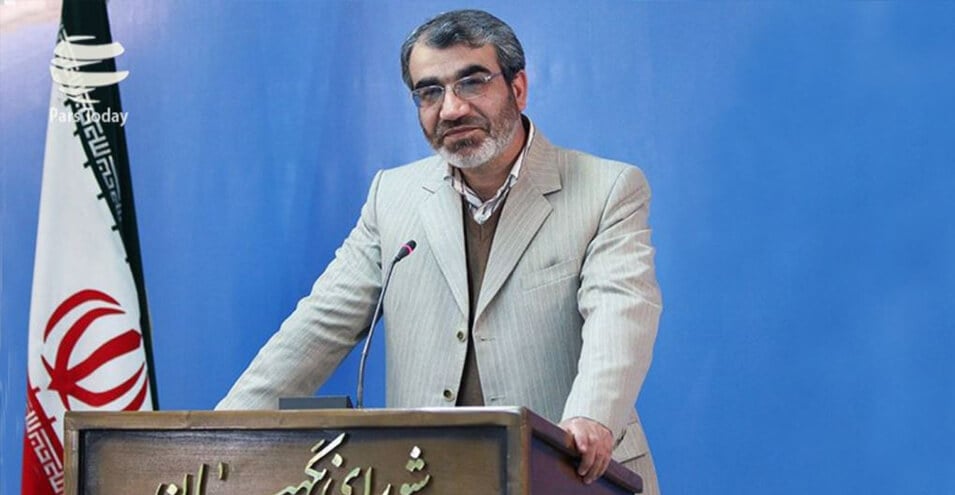
The spokesman of the Guardian Council of the Islamic Republic announced that the council has rejected the bill on Iran’s accession to the Convention Against the Financing of Terrorism (CFT). While Iran’s accession to this convention has been accompanied by considerable controversy in Iran, the Guardian Council spokesman also stated that this rejection is not final and implicitly indicated that the parliament’s insistence could pave the way for reviewing it in the Expediency Discernment Council of the System.
Abbas Ali Kadkhodaei wrote on his Twitter account that the Guardian Council considers this bill to contain “defects and ambiguities” including “violation of religious law, violation of the constitution and ambiguity,” and these objections have been “submitted within the prescribed time” to the parliament.
The Guardian Council spokesman added that the council’s opinion does not mean a final rejection of this bill, and if parliament insists on its previous position, the bill will be sent to the Expediency Discernment Council of the System for further review.
Iran’s accession to the Convention Against the Financing of Terrorism has been a controversial topic in recent weeks.
The Iranian government, accused by the United States of supporting terrorism, requires legislation to be removed from the blacklist of the Financial Action Task Force (FATF), but three months ago Supreme Leader Ayatollah Khamenei opposed any action in this regard.
U.S. Secretary of State Mike Pompeo says the Islamic Republic of Iran is the world’s largest state sponsor of terrorism. Iran supports groups such as Hamas and Hezbollah of Lebanon, which are recognized as terrorist organizations by the United States.
Supreme Leader Ayatollah Khamenei, in June of the current year, referring to “certain recently proposed international conventions in parliament,” stated that representatives should draft their own laws in areas such as “fighting terrorism or combating money laundering,” because in his view, while “some provisions of international treaties may be good,” there is “no necessity to join conventions based on these provisions if we are not aware of the depth of their objectives or know they have problems.”
From a month ago, rumors circulated in parliament that Ayatollah Khamenei had announced his approval for passing new bills to exit the FATF blacklist.
Khamenei’s office, in response to a letter from Ali Larijani, parliament speaker, stated that it has no objection to reviewing these bills in parliament, and what was said previously “concerned the principle of conventions and not specific conventions.”
After that, parliament representatives passed in September of the current year the bill on Iran’s accession to the Convention Against the Financing of Terrorism with conditions, including non-recognition of Israel.
The Rouhani government submitted four bills to parliament to prevent Iran from being placed on the FATF blacklist: “Accession to the Convention Against Organized Crime,” “Accession to the Convention Against the Financing of Terrorism,” “Amendment to the Anti-Money Laundering Law,” and “Amendment to the Law Against Financing of Terrorism.” However, to date, only the amendment to the Law Against Financing of Terrorism has been approved.
Previously, supporters of the Rouhani government had stated, referring to the constitution, that the legal deadline for the Guardian Council to review and express its opinion on the bill on Iran’s accession to the Convention Against the Financing of Terrorism had expired, and given the Guardian Council’s silence, the bill was considered approved. This matter was also mentioned by IRNA, the government’s official news agency. The spokesman’s emphasis on submitting the bill’s objections within the “legal deadline” appears to refer to this matter.
Several months ago, it was announced that Hassan Rouhani, in a confidential letter to the secretary of the Guardian Council, described the approval of the four bills as “necessary” and requested “assistance” in passing them. Mohammad Javad Zarif also said in the summer of this year that the approval of the three remaining bills related to the Financial Action Task Force (FATF) would be “one of the most important pretexts” for enemies to confront Iran in “banking operations and cooperation.”
The Financial Action Task Force Against Money Laundering and Terrorist Financing (FATF) announced last month that it would give Iran four more months to comply with the group’s demands and suspended precautionary measures against Iran.
Simultaneously with the announcement of the rejection of this bill in the Guardian Council, some media reported that Iran’s stock market index collapsed due to this announcement and the rejection of the bill.