Netanyahu’s Response to Khuzestan and Other Protests: Iran’s Economy is Collapsing
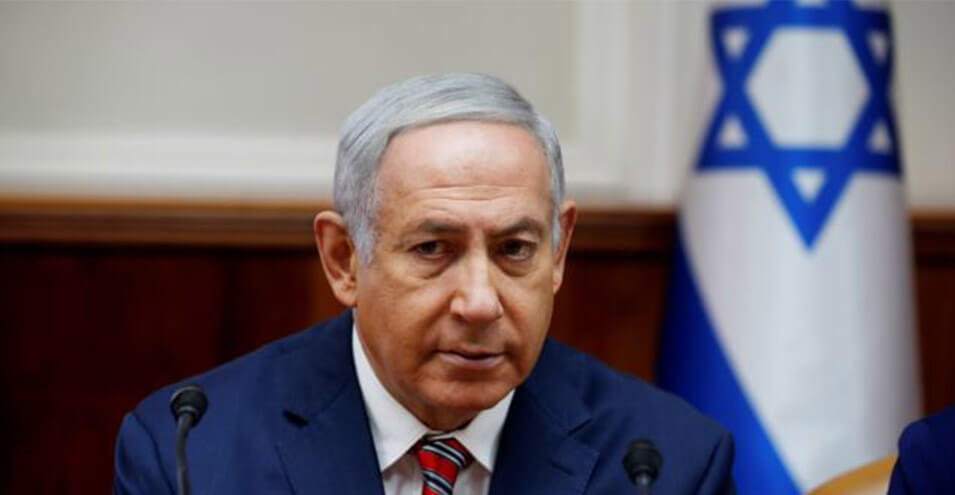
Following recent protests by residents of Khuzestan over water shortages and economic turmoil and water scarcity issues in various parts of Iran, Israel’s Prime Minister responded to these demonstrations.
Benjamin Netanyahu on Sunday, June 30, during remarks at the weekly session of the Israeli cabinet, described the protests and public demonstrations in Iran as a reaction to Iran’s collapsing economy.
He said: “The Iranian regime is feeling the impact of imminent economic sanctions. Iran’s economy is collapsing. You have to see the data in this regard to believe it. Iran spends billions of dollars financing terrorism in the world and its aggressive policies in the region. Instead of investing in its people, and Iranians, rightfully protest.”
In recent days, protest gatherings were held in Tehran’s bazaar and several Iranian cities in protest against the sharp rise in exchange rates, inflation, and economic recession.
Protesters chanted: “Leave Syria, think about us.” Some protesters also shouted slogans against Islamic Republic policies regarding Palestine.
On Friday and Saturday, residents of Khuzestan also gathered to protest water shortages and salinity of drinking water and chanted slogans.
The gathering of Khuzestan citizens turned violent Saturday night, and videos of tear gas being fired and police shootings were shared on social networks.
One day after the protests in Khuzestan over water shortages and police shooting at protesters, local authorities in Khuzestan announced the removal of water salinity and improvement of its quality.
According to reports by Iranian news agencies, Gholamreza Shariati, the Governor of Khuzestan announced on Sunday, June 30 that the water transmission pipeline to Khuzestan, which had ruptured, was reconstructed and with the resumption of this pipeline’s operation, the water quality in the city has improved.
The Mayor of Khuzestan also stated that the salinity of Khuzestan’s water had reached 3000 micromhos, saying that the water situation is completely satisfactory.
According to local officials in Khuzestan, with the opening of the second phase line of Ghadir water transmission to Khuzestan and Abadan in the coming days, the water problem of these two cities will be completely resolved. This is while some Iranian journalists have written that this project began in 2008 and was supposed to be completed in two to three years, but is still not complete. According to the Interior Minister, the contractor for this project is the Khatam al-Anbia Headquarters of the Revolutionary Guards.
Water Crisis in Different Parts of Iran
One day after protests over water shortages in Khuzestan, reports indicate that various parts of Iran are facing water cuts or poor quality water distribution.
IRNA news agency reported from the CEO of Yazd Water and Wastewater Company that water salinity in the city has doubled or tripled in recent days.
The director of the water quality control office of Yazd Province Water and Wastewater Company also said that in some areas of Yazd, drinking water has become severely salty.
Ali Sari, a member of Khuzestan Province’s parliament, also said that although Abadan and Khuzestan have the most severe water situation, the cities of Ahvaz, Karun, Bawie, Hamidiyeh, and Susangerd also face water problems.
He said: “In Ahvaz there are public gatherings regarding drinking water shortages, but these gatherings are not in the form of Khuzestan, Abadan, and Shadegan.”
In another report, the prosecutor of Ramhormoz city announced that 230 people in three villages of this county have been poisoned due to drinking contaminated water. He said a case has been opened in this regard.
Earlier, various reports had been published about the distribution of drinking water by tanker in different areas of Sistan and Baluchestan and Hormozgan.
The water crisis in Iran has intensified following severe droughts in recent years, reckless use of underground water resources, and mismanagement of water resources.
The escalation of this crisis comes as some experts believe that water shortages in Iran have solutions and measures should be taken as soon as possible to achieve them.
Nevertheless, amid the peak of environmental problems and the water shortage crisis, Kaveh Madani, a water resources specialist and professor at Imperial College London, who returned to Iran at the government’s invitation and worked as the research deputy of the Environmental Protection Organization, was forced to leave the country last March following pressure from security institutions.
Source: Voice of America