Iran’s Complaint Against US Begins Proceedings at The Hague Court
Iran has filed a complaint with the International Court of Justice against the United States due to the reimposition of sanctions and violation of the “Friendship” treaty between the two countries, which was signed between Tehran and Washington in 1955. The issuance of a final ruling could take years.
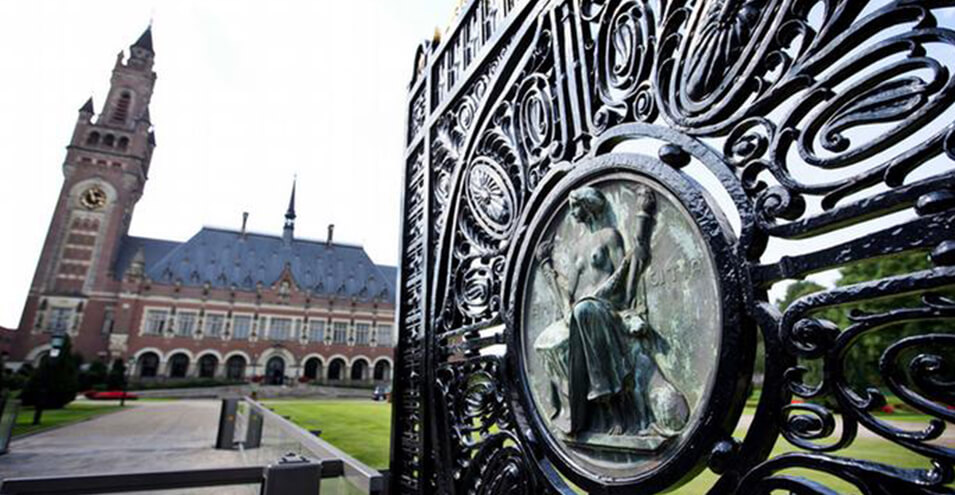
On Monday, August 27, proceedings on Iran’s complaint against the United States regarding the reimposition of sanctions will begin at the International Court of Justice headquartered in The Hague. Iranian officials submitted their complaint to the Hague court in late July and asked the court’s judges to rule on the swift lifting of American sanctions, as these sanctions result in “irreparable damages.”
In its complaint, Iran emphasized that the United States is not authorized to reinstate sanctions, and therefore Tehran is seeking compensation for the damages incurred.
Iran also considers the reimposition of sanctions that were lifted following the nuclear agreement in 2015 a violation of the Treaty of Friendship between Iran and the United States, which was signed on August 15, 1955. The “Treaty of Friendship, Economic Relations, and Consular Rights” was signed two years after the August 28 coup, during the presidency of Dwight D. Eisenhower and the premiership of Hossein Ala in Tehran, between representatives of the United States government and the government of the Iranian monarchy.
According to the French news agency, it is expected that the Hague court will need several months to decide on accepting Tehran’s request for an interim ruling. The announcement of the final result could take years.
Fulfilling an Electoral Promise
Donald Trump, the President of the United States, announced in May of this year the United States’ withdrawal from the nuclear agreement between Western countries and Iran. With this move, Trump fulfilled a promise that he had repeatedly emphasized implementing during his election campaigns.
During that period, he severely criticized the nuclear agreement that had been signed with Iran during the time of Barack Obama, and referred to it as “one of the worst agreements in American history.”
Simultaneously with announcing America’s withdrawal from the JCPOA, Trump reinstated sanctions against Iran that had been lifted with the signing of the JCPOA. The first set of these sanctions came into effect on August 6, and the second set, which also includes oil sanctions, is scheduled to be implemented starting in November.
European countries had previously asked the United States to maintain its commitment to the JCPOA. After the United States’ withdrawal from the JCPOA and the imposition of sanctions against Iran, the European Union announced it would not cooperate with Washington in implementing these sanctions.
Officials from Germany, France, and Britain also emphasized the necessity of maintaining the nuclear agreement with Tehran. However, many European companies have ended their operations in Iran despite assurances from the European Union.
American government lawyers are scheduled to present their country’s position at the Hague court on Tuesday, August 28. Experts believe American lawyers will likely question the jurisdiction of the International Court of Justice to hear this case.
The International Court of Justice is a forum for resolving disputes between countries. However, countries have the right not to recognize the jurisdiction of this court in general or in specific disputes.
Neither the United States nor Iran recognizes the “compulsory jurisdiction” of the court. This means that the court’s decisions to hear a civil case between these two countries will not have binding force.
Source: DW