Protesting HEPCO Workers Block North-South Railway Again; Governor Promises to Change Factory Situation
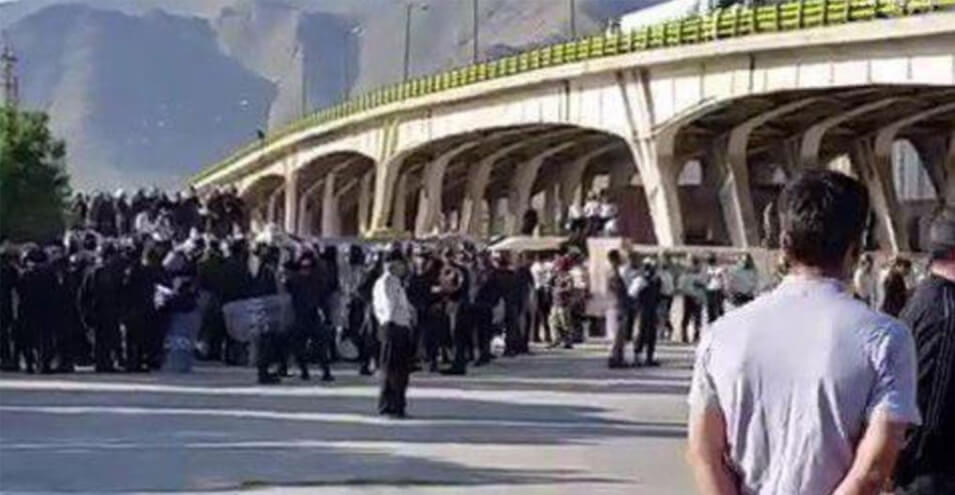
Workers at HEPCO machinery manufacturing plant held another gathering and blocked the north-south railway.
Based on images and news published on social media, HEPCO workers held a protest gathering on Monday, May 21st in objection to not receiving their outstanding claims and the uncertain status of the factory.
The workers this time, like the gatherings last week, held their protest gathering on the north-south railway line.
These workers have held numerous gatherings in recent weeks to realize their occupational demands and had temporarily blocked the north-south railway in protest.
HEPCO is one of the largest heavy machinery manufacturing plants for road construction, which started its operations before the revolution and came under government control after the revolution. Since privatization and from 2007, the factory’s problems intensified.
News agencies previously cited the reason for these protests as the indifference of the factory’s employer regarding payment of workers’ claims and the condition of the company.
According to workers, the problems at HEPCO Arak factory increase every day and the private sector of this factory, which recently took responsibility for this industrial unit, is negligent toward the factory’s problems and its workers, and pressure from problems increases every day.
After the transfer of this factory to the private sector, HEPCO Arak workers have repeatedly protested against delayed wage payments and demanded the return of ownership to the government.
However, it is said that the workers’ second demand has been realized and economic recession, bankruptcy of production units, and mismanagement have caused many workers to be deprived of receiving salaries and work benefits. To the extent that during recent months, almost daily one or several protest gatherings have been held by workers.
Some reports indicate that approximately six thousand worker gatherings have been held over the past year, mostly in protest against unpaid wages for several months, mass layoffs, uncertainty following the transfer of factories to the private sector, and low wages.
Source: Voice of America