Call Made to Rouhani to Stop Water Transfer Projects from Khuzestan
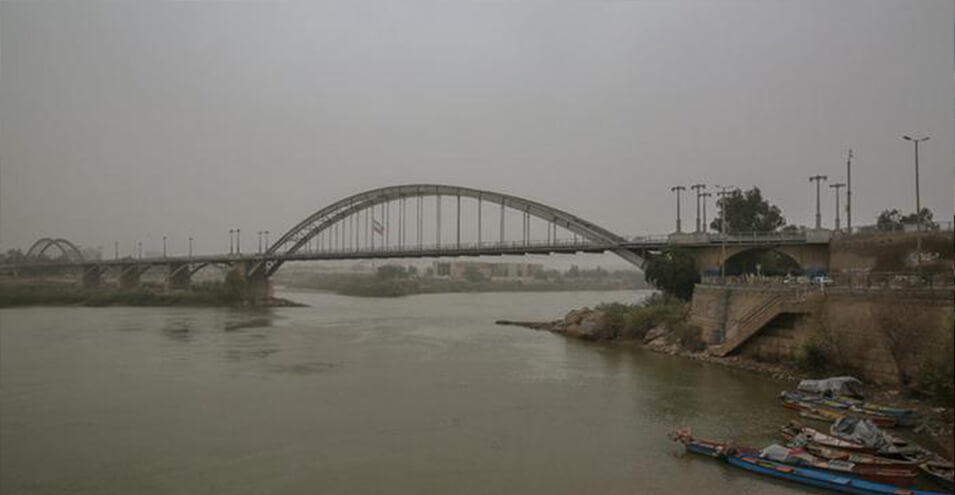
Environmental organizations in Khuzestan have requested that the president issue an order to stop “destructive” water transfer schemes from the province. The Coordinating Council of these organizations says most of these projects lack environmental permits.
The first meeting of the Coordinating Council of Environmental Organizations in Khuzestan ended with the drafting of an open letter addressed to President Hassan Rouhani. The meeting was held in Ahvaz.
The letter’s authors state that an “exploitative approach” to Khuzestan’s resources has pushed the province’s environmental conditions beyond the crisis threshold.
Khuzestan’s environmental organizations believe that programs implemented contrary to sustainable development principles and due to “mismanagement of the country’s water resources and inter-basin water transfer” will have irreversible consequences and, aside from increasing public hardships and expanding migration from Khuzestan, will impose heavy costs on all of Iran.
According to ISNA news agency’s report from Tuesday, April 18, representatives of environmental organizations in their letter to the president described their protested projects as “the product of structural thinking by exclusive consultant companies, employers, contractors and implementers of this one-sided development.”
Increased Tension, Outcome of Destructive Plans
The Coordinating Council of Environmental Organizations in Khuzestan expressed regret that while the province’s wetlands are declining and dust storms are intensifying, river water levels have reached their lowest point in recent years, yet the implementation of “multiple and destructive dam construction and water transfer schemes on the Karun River’s tributaries” continues.
Opposition to water transfer projects from Khuzestan has a long history and has intensified in recent years as the water and climate crisis in the province has worsened. Opposition to inter-basin water transfer schemes has repeatedly led to tensions and conflicts in Khuzestan and other provinces such as Isfahan.
About seven years ago (September 7, 2011), Sharif Hosseini, representative of Ahvaz and secretary of Khuzestan’s representatives assembly in the eighth parliament, warned in an interview with Mehr news agency that if the implementation of the Karun River water transfer plan to other areas was not halted, all Khuzestan’s representatives in the Islamic Consultative Assembly would resign.
According to this still-disputed plan, water from one of the Karun River’s tributaries at “Behesht-Abad” in Chaharmahal and Bakhtiari Province was supposed to be transferred to central plateau areas and the Zayandeh River basin.
Projects Without Environmental Permits
Members of the Coordinating Council of Environmental Organizations in Khuzestan also emphasized in their letter to Hassan Rouhani that several Khuzestan water transfer projects, such as the “Behesht-Abad” plan, fundamentally lack the necessary environmental permits, and the permit for another project (Kohrang Tunnel project) has been revoked.
In the closing section of this letter, the president has been asked: “Considering the dangerous consequences of this practice that has shrouded the continuation of life in the Khuzestan plain in uncertainty […] please order the immediate cessation and review of water transfer plans and projects, particularly from the Karun River’s tributaries, and the revision of incomplete studies to respect the water rights of rivers, wetlands and the Khuzestan plain.”
Representatives of Khuzestan’s environmental organizations reminded that “responsibility for the social, economic, security and [other] consequences” and the continuation of implementing these “destructive” projects will rest with the responsible authorities, particularly the Ministry of Energy.
Powerful Contractors and Persistent Problem
In March 2017, a conference titled “Deliberation Meeting on Inter-basin Water Transfer in the Country” was held in Ahvaz, in which a number of university professors and experts from several provinces, some parliamentary representatives, a number of local officials, including the governor of Khuzestan, and representatives of environmental organizations participated.
According to IRNA news agency’s report, in the final statement of this conference, participants “while emphasizing the principle that all inter-basin water transfer projects directly cause problems and social, economic, environmental and security damages in both source and destination basins” called for halting these projects until further research is conducted.
Until now, neither the emphasis of conference participants from over a year ago, nor the threat made seven years ago by parliamentary representatives, nor the increasing protests of citizens in Khuzestan have prevented the continuation of the controversial water transfer schemes.
Apparently, as representatives of Khuzestan’s environmental organizations wrote in their letter to Rouhani, these projects are “the product of structural thinking” by powerful companies and contractors, and the government either lacks the will or the ability to confront them.
Source: DW